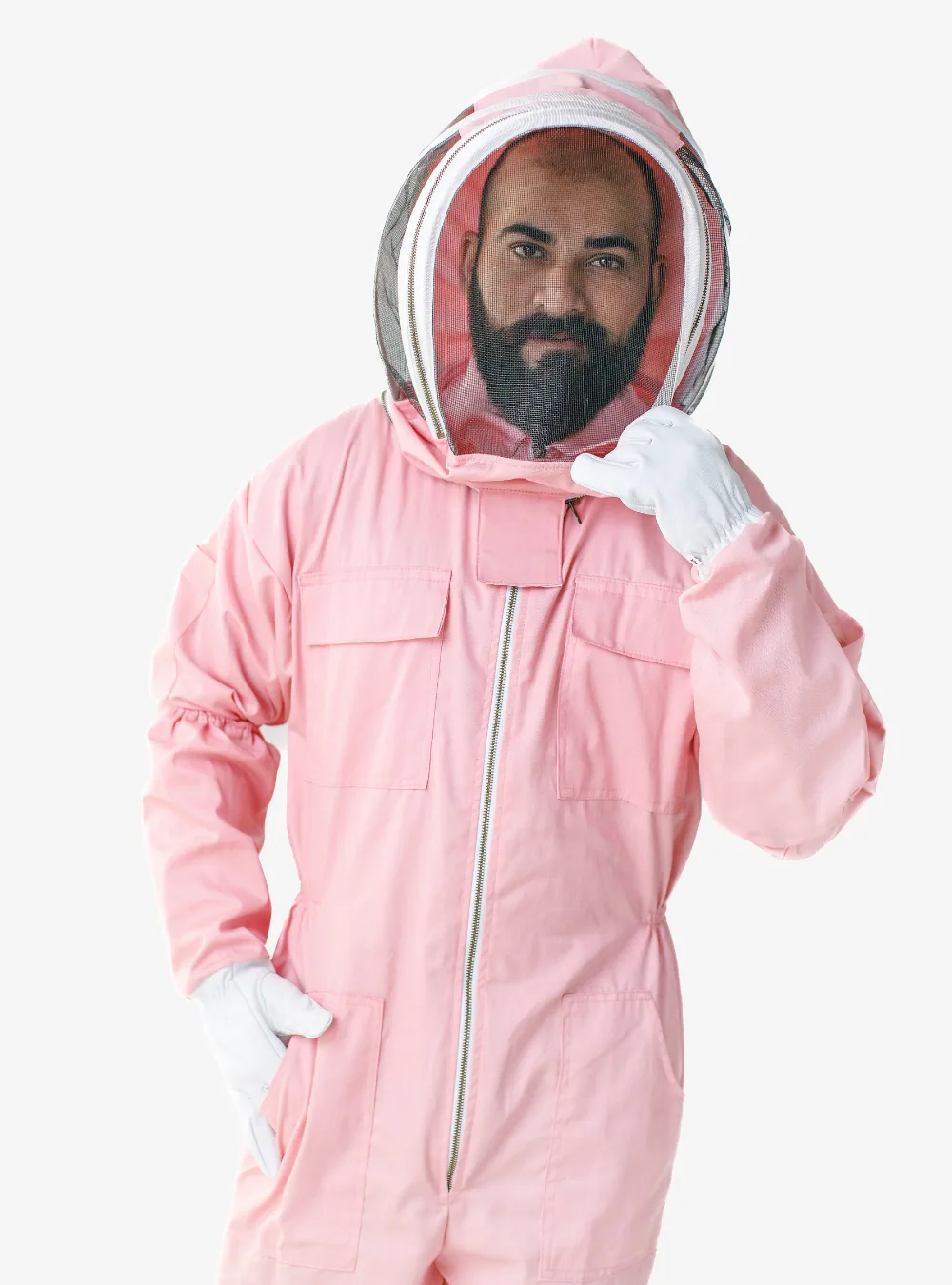
What to wear beekeeping in the rain
Wet cotton clings, and a sting reaches through fabric pressed to skin. If an inspection cannot wait for the weather, the clothing has to change.

Beekeeping in the rain has one clothing problem that outweighs every other. Wet fabric clings, and a sting goes through fabric pressed against skin as if it were not there. A cotton suit that protects you perfectly when dry becomes close to useless soaked.
The bees are also in a worse mood, which is the other half of the problem.
Why a wet suit stops working
A dry bee suit protects by holding a gap. Either the fabric is thick enough that a sting cannot reach through it, or layers of mesh hold the outer surface away from you.
Beekeeping in the rain removes that gap. Cotton absorbs, gets heavy and drapes onto skin. Mesh collapses, because the layers wet out and stick to one another. In both cases the distance that was doing the work is gone, which is why a sting reaching through a suit is mostly a question about contact rather than thickness.
Should you be out there at all?
Usually not, and this is worth settling before the clothing question. Opening a colony in rain chills brood, and foragers are home, so you are inspecting a full and irritable hive.
There are real exceptions. A swarm will not wait, a fallen hive will not wait, and strapping down before a storm cannot wait. Everything else can.
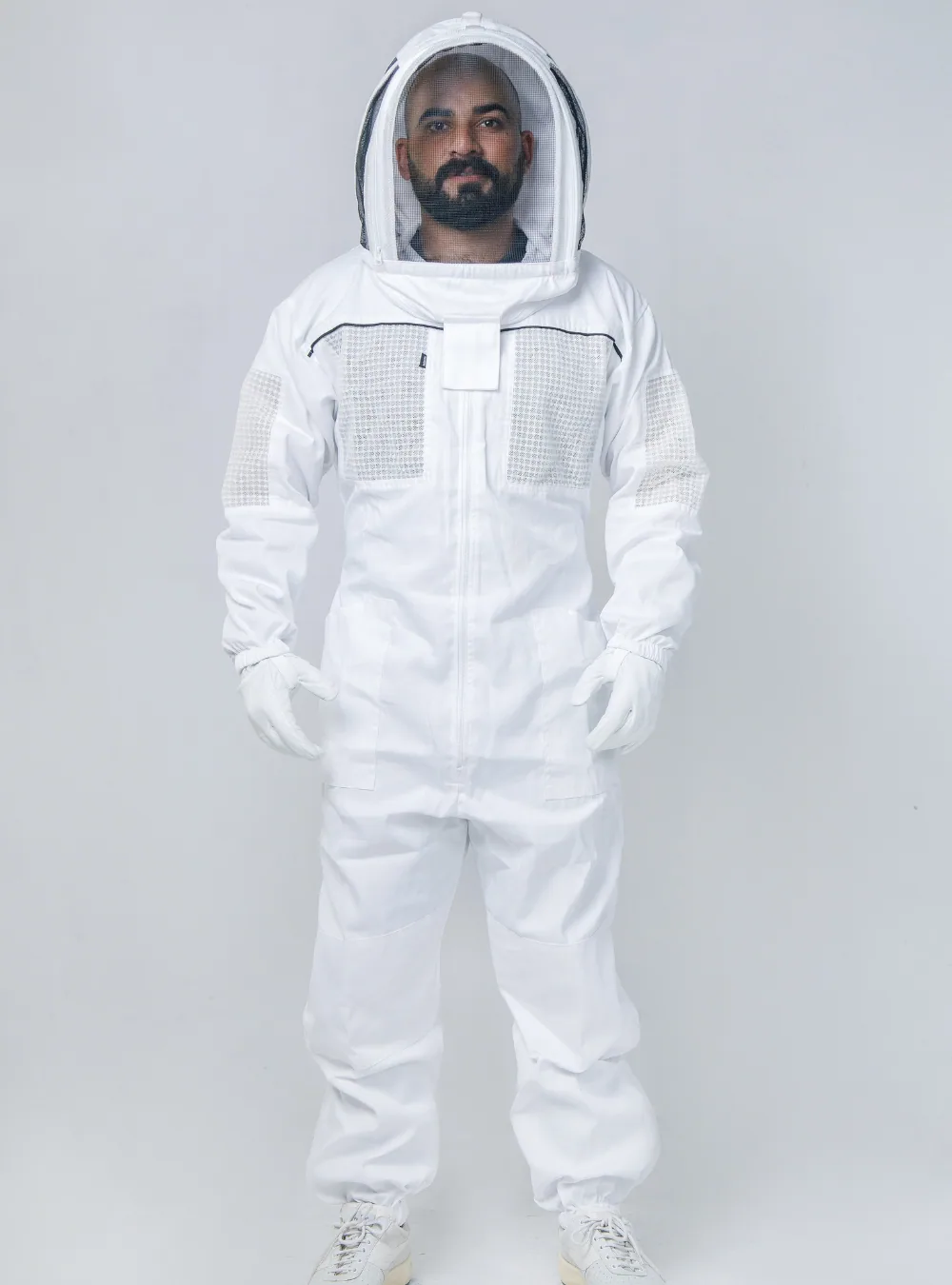
What to wear for beekeeping in the rain
The aim is to keep the protective layer dry, which means a separate waterproof over it rather than a waterproof suit.
- Your bee suit as normal, and a loose pale waterproof over the top. Loose is the operative word; a tight shell presses the suit onto you and recreates the problem.
- Pale and smooth for the waterproof, for the same reason the suit is - dark and fuzzy is what a colony reacts to, and most rain jackets are both.
- Veil outside the hood. Never a rain hood over a veil: it pulls the mesh onto your face.
- Wellingtons over the suit ankles, so water runs off rather than into the boot.
- Nitrile gloves, which do not absorb. Wet leather gauntlets are heavy, slow to dry and stay damp for days. Nitrile against leather covers the rest.
Cotton or mesh for beekeeping in the rain?
Neither is good, and they fail differently.
| Fabric | In rain | Afterwards |
|---|---|---|
| Heavy cotton | Absorbs, gets heavy, clings. Worst for protection when soaked | Slow to dry; can mildew if bagged wet |
| Polycotton | Absorbs less; still clings | Dries noticeably faster |
| Three-layer mesh | Layers collapse together; sheds water fast once out of it | Dries fastest of the three |
So mesh is the better choice for a short wet job and cotton for a long one under a waterproof. In practice a semi-vented suit splits the difference better than either.
The veil in rain
Beekeeping in the rain does to a veil what your breath does: water bridges the gaps in the mesh and you stop seeing through it. A brimmed veil keeps most rain off the panel, which a close hood does not.
This is the same geometry as veil fogging, and it has the same fix - distance and a brim. A fencing veil sheds water reasonably; a round veil over a hat sheds it best.
Afterwards matters more than during
Most of the damage from beekeeping in the rain happens afterwards. A wet suit put in a bag smells in two days and grows mildew in a week. Hang it, veil removed, somewhere with moving air.
Do not dry it on a radiator. Heat sets propolis into the weave and shrinks synthetic mesh. Washing a bee suit and storing it over winter both go into what heat does to the fabric.
The short version
Beekeeping in the rain is usually a decision to postpone rather than a clothing problem. When it genuinely cannot wait, keep the suit dry under a loose pale waterproof, wear nitrile rather than leather, keep the veil outside any hood, and hang everything to dry properly afterwards.
If your weather is wet more often than not, a semi-vented suit or a cotton suit with a separate shell beats a full mesh one. Penn State Extension and Cornell's pollinator network both cover inspection timing and colony handling.