
How to wash a bee suit
Cool wash, no softener, veil out, line dry in the shade. The detail that matters most is the one nobody mentions: heat is what kills a suit, not dirt.

Wash a bee suit cool — 30°C or below — on a gentle cycle, with the veil unzipped and taken out, no fabric softener, and line dry it out of direct sun. Never tumble dry it. Heat is what ends a suit, not dirt, and a tumble dryer applies more of it in an hour than a season in the apiary does.
Why heat is the enemy
Three of the parts you depend on are heat-sensitive, and all three fail quietly rather than visibly.
Elastic. The cuffs and ankles are what close the suit. Elastic loses its recovery when it is heated, and a cuff that has gone slack is an open sleeve — it looks the same and it stops working.
Mesh and its bonding. A ventilated suit holds its gap because the layers are bonded. Heat softens that bond, the layers flatten, and the standoff that stops a sting goes with it.
Thread. Synthetic thread shrinks before the fabric does, which puckers seams and puts them under permanent tension.
None of this shows up as a hole. It shows up as a suit that fits the same and protects less.
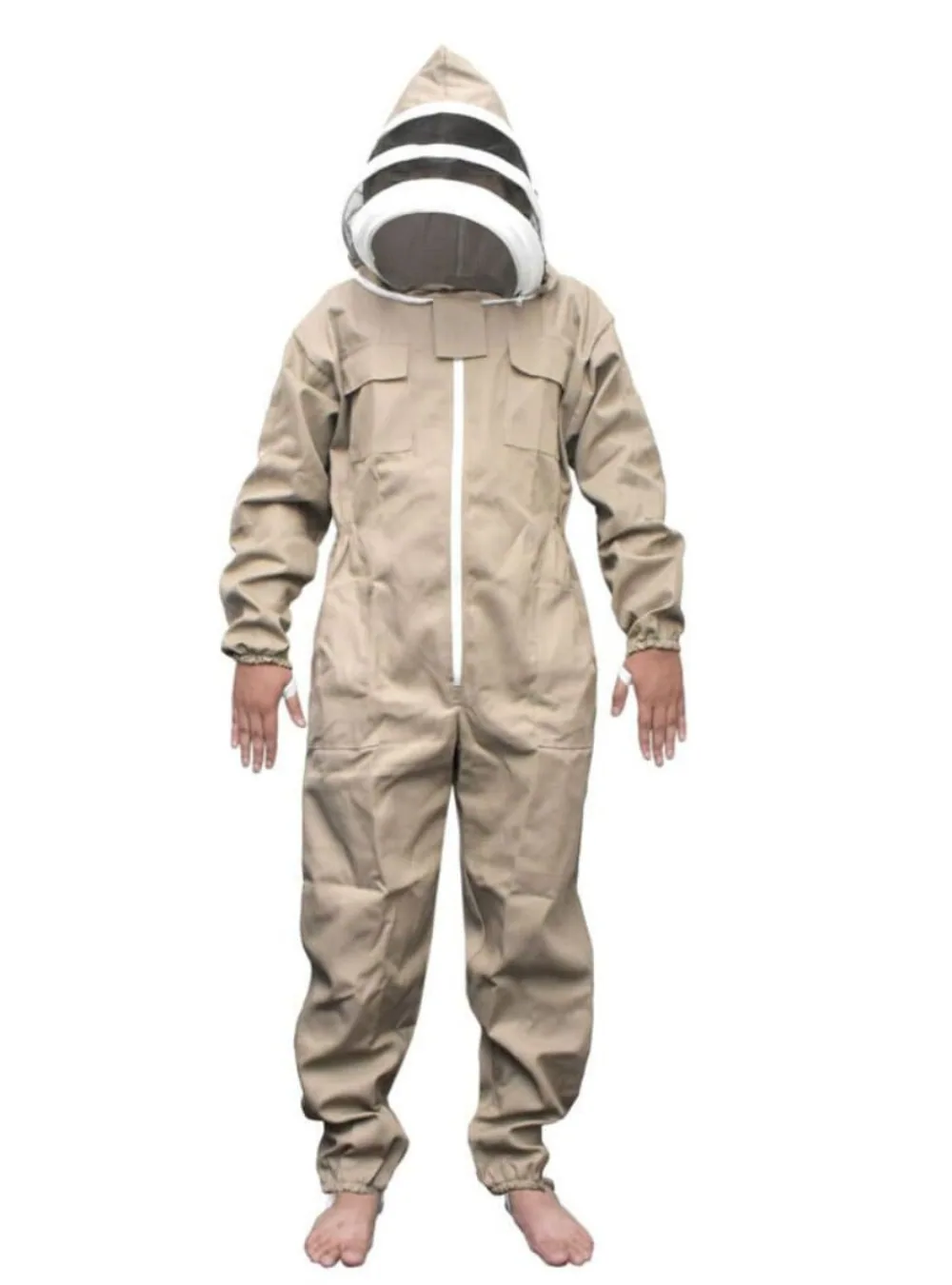
How to wash a bee suit, step by step
- Take the veil off. Unzip it and wash it separately, by hand, or not at all. Mesh in a drum with a zip or a hook in it is how veils get holes.
- Close every zip and fasten every strap on the suit itself. An open zip is a row of metal teeth dragged across fabric for forty minutes.
- Turn it inside out. The dirt is mostly on the outside, and so is the surface you want to protect from abrasion.
- Cool and gentle. 30°C, low spin. A long hot cycle cleans no better and costs you elastic.
- Ordinary detergent, no softener. Softener coats fibres, which on a ventilated suit blocks the airflow you paid for and on cotton leaves a residue that holds smells.
- Line dry in the shade. Out of the sun, because ultraviolet does to mesh and elastic what heat does.
Can you tumble dry a bee suit?
No. This is the one instruction worth being absolute about. A tumble dryer combines the two things that destroy a suit — sustained heat and mechanical agitation — and it does it to the cuffs and the bonded layers first.
A suit hung outdoors on a warm day dries in a few hours. If you need it sooner than that, the answer is a second suit, not a dryer.
How often should you wash a bee suit?
Less often than you would think, and more often than most beekeepers do.
There is one reason that overrides the rest: a suit stung heavily carries the scent of it. Otherwise washing is wear. Every cycle costs a little elastic, so a suit washed after every inspection wears out faster than one washed when it needs it. But there is a real reason not to leave it: a suit carrying alarm pheromone from a bad visit smells, to the bees, like a threat. That is the signal that turns a routine inspection into a defensive one.
A workable rule: wash it when it has been stung heavily, when it is visibly dirty, or at the end of the season — and otherwise air it after every visit rather than washing it. Extension services cover apiary hygiene more broadly — Penn State Extension’s beekeeping resources and the University of Georgia Bee Program are the places to look for regional guidance.
Washing a bee suit by hand
Worth doing for a ventilated suit, and the only sensible option for a veil. A bath of cool water, a small amount of ordinary detergent, fifteen minutes of soaking, and agitation by hand rather than by drum.
The advantage is not cleanliness — a machine cleans as well. It is that you control the two things that damage a suit: there is no heat and no mechanical abrasion. For a three-layer suit whose bonded gap is the protection, that is worth the twenty minutes once or twice a season.
Rinse until the water runs clear. Detergent left in mesh attracts dirt and, on a ventilated suit, sits in the airflow you paid for. Then press the water out rather than wringing it — wringing creases bonded layers, and a hard crease in mesh is a flattened gap.
Which detergent to wash a bee suit with
An ordinary, unscented liquid detergent. Three things to avoid, for specific reasons rather than general caution.
- Fabric softener. It coats fibres. On cotton that traps smells; on mesh it blocks airflow and, over time, stiffens the fabric.
- Bleach and oxygen boosters. They will not shift propolis and they weaken thread and elastic.
- Strongly scented anything. You are about to stand next to fifty thousand animals that navigate by smell. Unscented is not fussiness.
Biological or non-biological makes no practical difference to a bee suit. Temperature and softener are what matter.
What washing a bee suit will not remove
| Mark | Comes out? | What to do |
|---|---|---|
| Propolis | No | Nothing. It is cosmetic and permanent, and it is why a khaki suit looks presentable longer than a white one. |
| Wax | Mostly | Scrape the solid off cold, then wash normally. Do not iron it — heat drives it in. |
| Honey | Yes | Cold rinse first. Hot water sets the proteins in it. |
| Grass and soil | Yes | Let it dry, brush it off, then wash. |
| Smoke smell | Partly | Airing works better than washing. |
Removing propolis is the one stain with its own method, and it is mostly scraping rather than washing. A used suit is the other exception: wash it before the first wear whatever it looks like, because it carries whoever wore it last. Otherwise staining is not a reason to wash a suit. If the marks are what bother you, see which colour hides them before the next purchase rather than scrubbing this one.
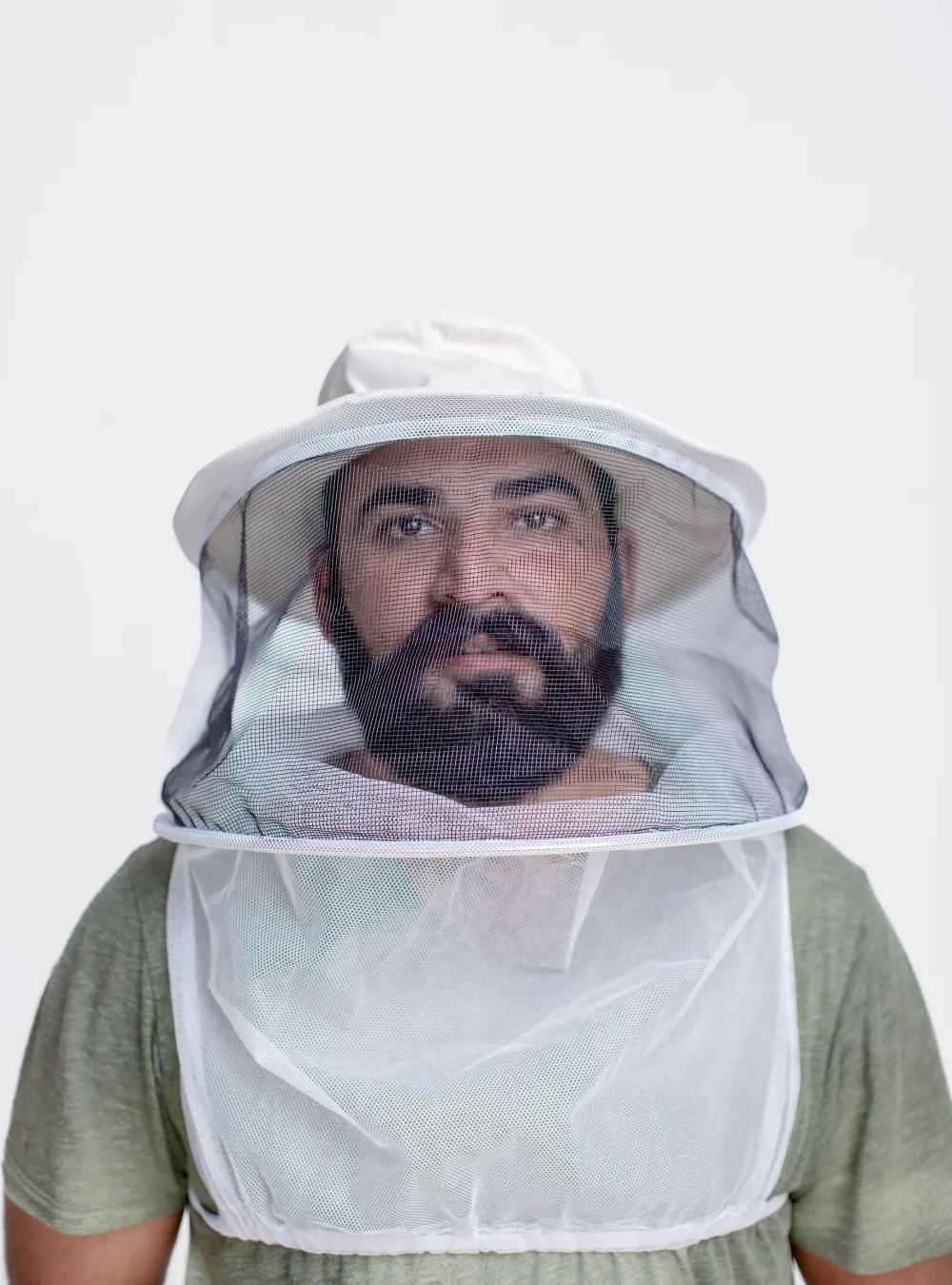
Washing the bee suit veil separately
The veil is the part most often ruined by laundry and the part hardest to replace, so it is worth the extra five minutes.
Hand wash it in cool water with a little detergent, rinse, and lay it flat or hang it to dry with its shape held. Do not wring it, do not fold it into a drawer while damp, and do not put it anywhere near heat. A fencing veil in particular depends on its stiffening to stand away from your face — the shape is the protection, and a veil that has lost its stand is resting on your nose.
Drying when you cannot hang it outside
In winter, or in a wet week, the instinct is a radiator or an airing cupboard. Both are heat, and heat is the thing to avoid.
Hang it on a wide hanger in the coolest room you have, zipped, arms and legs free, with a window ajar or a fan moving air past it. It will take a day or two rather than an afternoon. That is slower and it costs the suit nothing.
What matters is that it finishes properly dry, including inside the cuffs and along the seams, before it goes away. A suit put into storage damp grows mould in the seams, and mould does not wash out.
Cotton and ventilated are not the same job
How you wash a bee suit depends on which one you own. Cotton and polycotton tolerate washing better and need it more often, because the fabric holds smells. They can take a slightly warmer wash, though there is no reason to give them one.
Ventilated mesh needs washing less and resents it more. Rinse rather than wash where you can; the open structure means most of what lands on it falls off or hoses away. Ventilated versus cotton covers the rest of what separates them.
Drying, which is where suits are lost
This is the step that undoes a careful wash. A bee suit dried badly is in worse shape than one never washed at all.
Between seasons this matters most. Hang it by the shoulders on a wide hanger, zipped, with the arms and legs hanging free. Shade, moving air, no radiator and no airing cupboard.
Two mistakes to avoid. A suit dried in direct sun loses mesh and elastic to ultraviolet — the same damage sunlight does in storage, concentrated. And a suit put away damp grows mould in the seams, which does not wash out and does not come back from it.
When it is dry, how to store it over winter is the other half of making one last. Replacement veils and hats and gloves are the parts you will replace long before the suit itself.