
How to replace a bee suit veil
The veil is the part that gets damaged and the part that ends suits. On most modern suits it unzips, which makes this a ten-minute job.

To replace a bee suit veil, first check whether yours detaches — on most modern suits it unzips at the collar, and swapping it is a ten-minute job with no sewing. If it is stitched in, you are choosing between a repair, a tailor and a new suit, and that choice is usually decided by where the damage is.
Why replacing a bee suit veil is the repair that matters
The veil takes more damage than any other part, and wears out from use less. A thorn, a nail, a washing machine, or two years squashed in a bag — any of them finishes a veil while the rest of the garment is barely touched.
So one question decides how long the whole suit lasts: can you buy the veil on its own? Ask it before you buy anything. It tells you more than any warranty length, and it is why a suit's working life turns on parts rather than fabric.
First: can you replace your bee suit veil at all?
Look at the collar. Three arrangements, and they are easy to tell apart.
- Zipped. A zip runs all the way round the collar. Unzip it and the veil comes away entirely. Most ventilated suits and jackets are built this way.
- Hat and veil. The veil is a separate item worn over a hat and tied or zipped to the jacket. The easiest of all to replace, because the veil was always a separate purchase.
- Stitched in. No zip, no join — the hood is part of the garment. Common on cheaper suits, and the reason they are cheaper.
If yours is stitched in, skip to the last section.
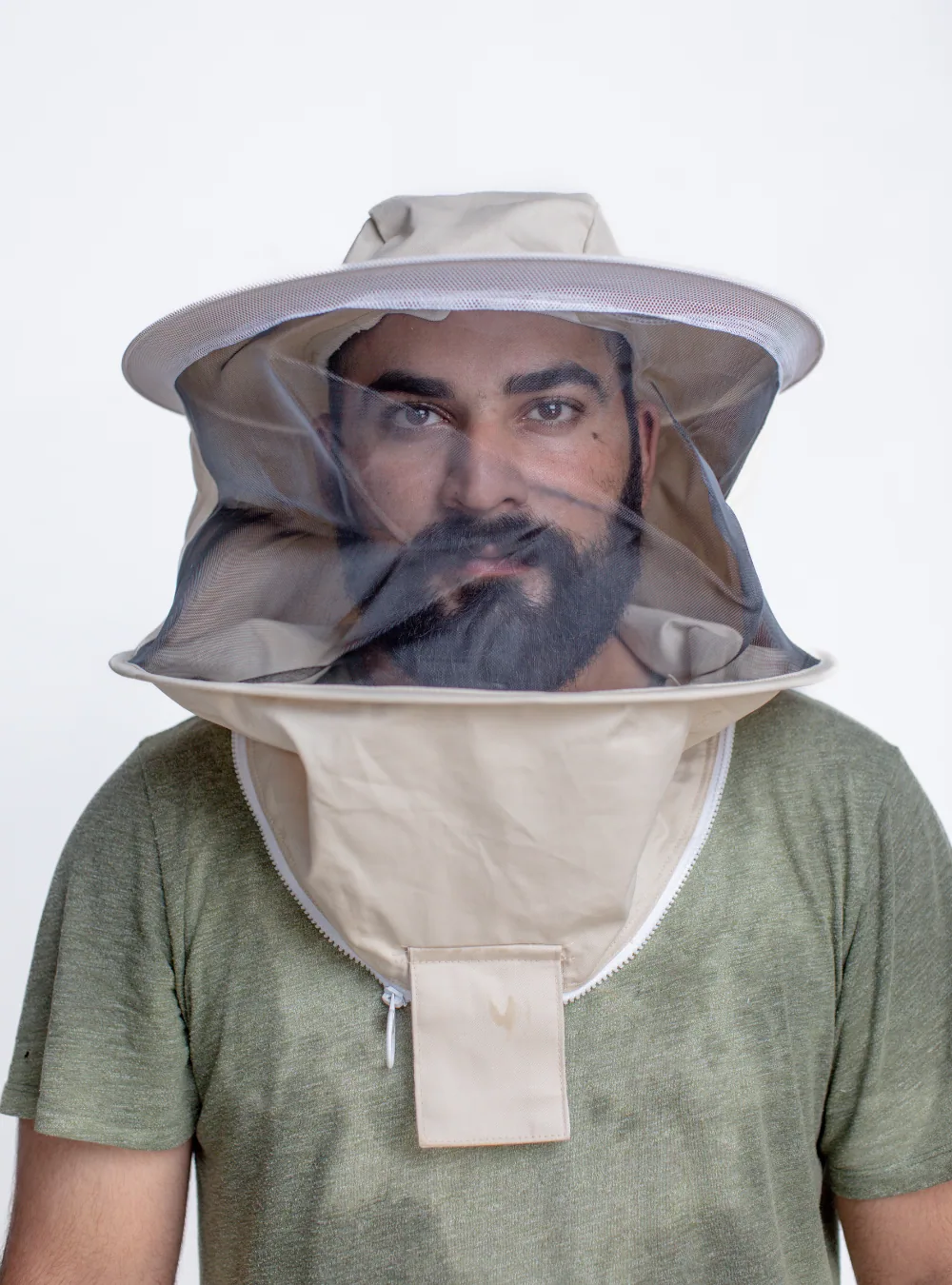
What to check before you replace a bee suit veil
- The attachment. Zip, press studs, or ties — and if a zip, which way round it runs and roughly how long it is. A veil that does not meet your collar is not a veil.
- The shape. Fencing, round or square — and whether it needs a hat. You are not obliged to replace like with like, and this is a free chance to change — fencing versus round is the comparison.
- The mesh colour at the face. Dark at the front. Black mesh is what you can see through, and a pale face panel is a mistake you will notice on the first bright afternoon.
- Whether it stands on its own. On a fencing veil the stiffening is the protection. A floppy one rests on your face.
Zip sizes are not standardised between makers, so a veil from one supplier often will not fit another's suit. Ask before ordering rather than after.
Fitting a replacement bee suit veil
There is almost nothing to it. Two things are worth getting right.
Start the zip carefully at the collar and run it round to the stop. A hood zip travels round a curve, so it starts crooked easily, and forcing it is how zips fail. Meeting resistance? Unzip and start again rather than pulling.
Then put it on and check the throat. Zipped fully home, no gap should show at the collar, and the veil should hold its shape away from your face. Now look down at your own boots. Mesh touching your nose means the wrong shape or size, rather than a bad fitting.
Changing shape while you are at it
| Switch to | If |
|---|---|
| Round | Your colonies are defensive, you work long sessions, you wear glasses, or the old veil kept touching your face |
| Fencing | You want the clearest view and the fastest on and off, and your bees are calm |
| Square | You want front clearance without a hoop to store |
If you wear glasses the choice matters more than usual — a veil for glasses wearers lives or dies on clearance at the lens.
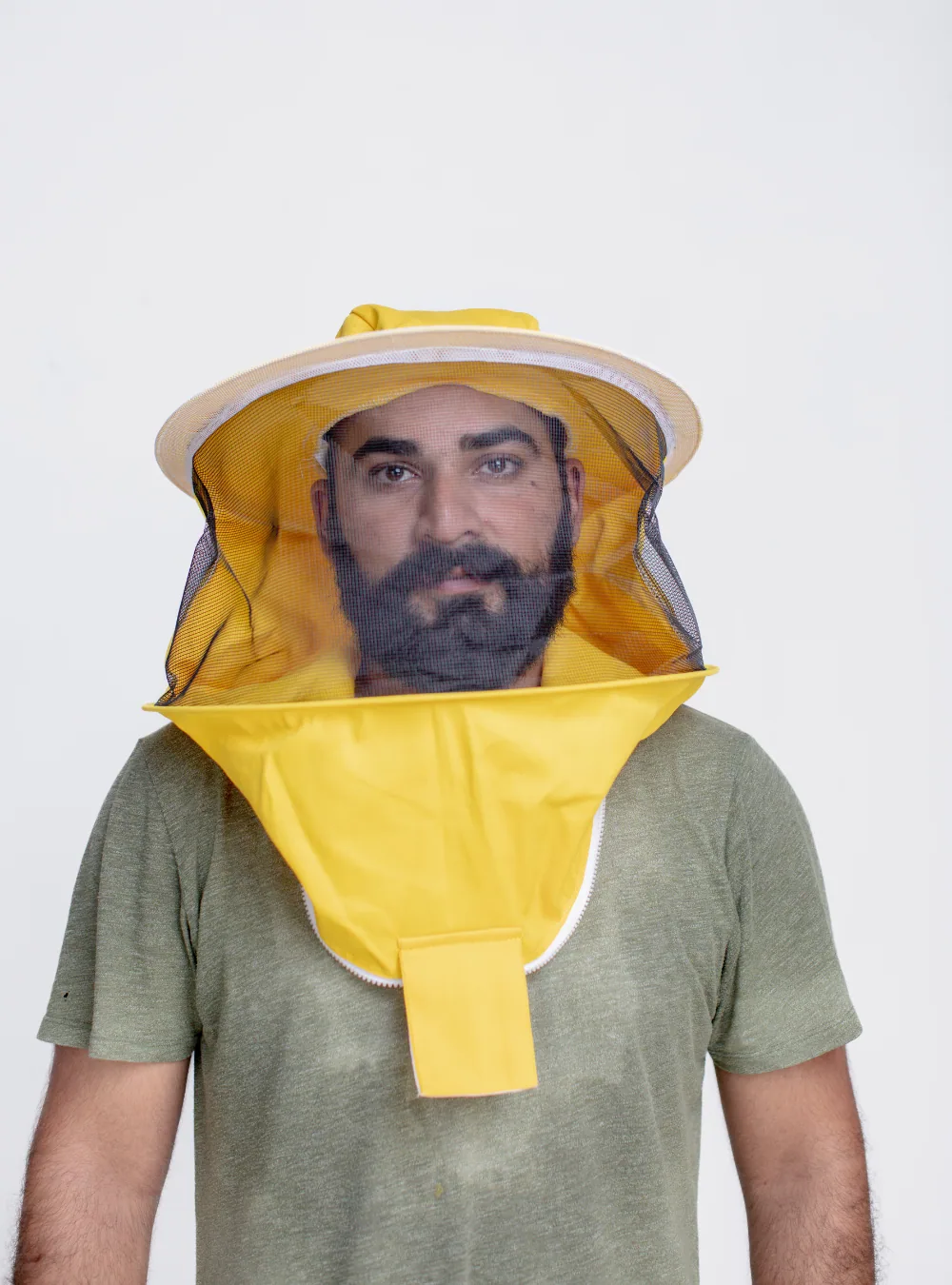
If you cannot replace the bee suit veil separately
Three options, in order of what they cost you.
Repair it, if the damage is away from your line of sight. A patch on the crown is fine; a patch across the face panel is not. Repairing a torn bee suit covers the method.
Have a tailor replace the panel. Possible, and worth pricing against a new jacket before committing — it is fiddly work and the saving is often small.
Replace the garment, and this time buy one with a detachable veil. That is the lesson rather than a defeat: a stitched-in veil makes the whole suit a consumable.
How many to buy
If you can replace your bee suit veil at all, two is the sensible number and most beekeepers have one.
A veil is the part most likely to be damaged and the part that takes a whole suit out of service when it is. A spare in the bag means a torn veil is an annoyance rather than a cancelled inspection, and it costs a fraction of a suit.
It is close to essential if you do removals, where a snag on a nail is a routine event - suits for removal work treats veils as consumable.
Fitting a hat-and-veil instead
If you are moving from a zipped hood to a round veil, the fitting is different and worth a minute.
The hat sets the clearance, so it has to sit properly on your head before the veil goes over it - a hat that is too large rotates, and the veil goes with it. Seat the hat, drop the veil over, then attach it to the jacket at the collar and tie off any cords so nothing can lift.
The test is the same as for any veil: look down at your own boots. If the mesh touches your face in that position, the arrangement is wrong rather than merely unfamiliar.
Looking after the new one
- Unzip it before washing the suit, every time. Mesh in a drum with a zip is how veils get holes — wash the suit cool and the veil by hand.
- Store it hung or flat with its shape held, never squashed under a folded suit.
- Keep it out of the light. Ultraviolet degrades mesh whether it is being worn or not.
- Check it against the light every few visits, when you check the cuffs. A snag found early is a repair.
For protective-kit guidance with nothing to sell you, Penn State's beekeeping basics and the University of Georgia Bee Program are the right sort of source. Our veils and hats are sold separately from the suits for the reason this page exists.