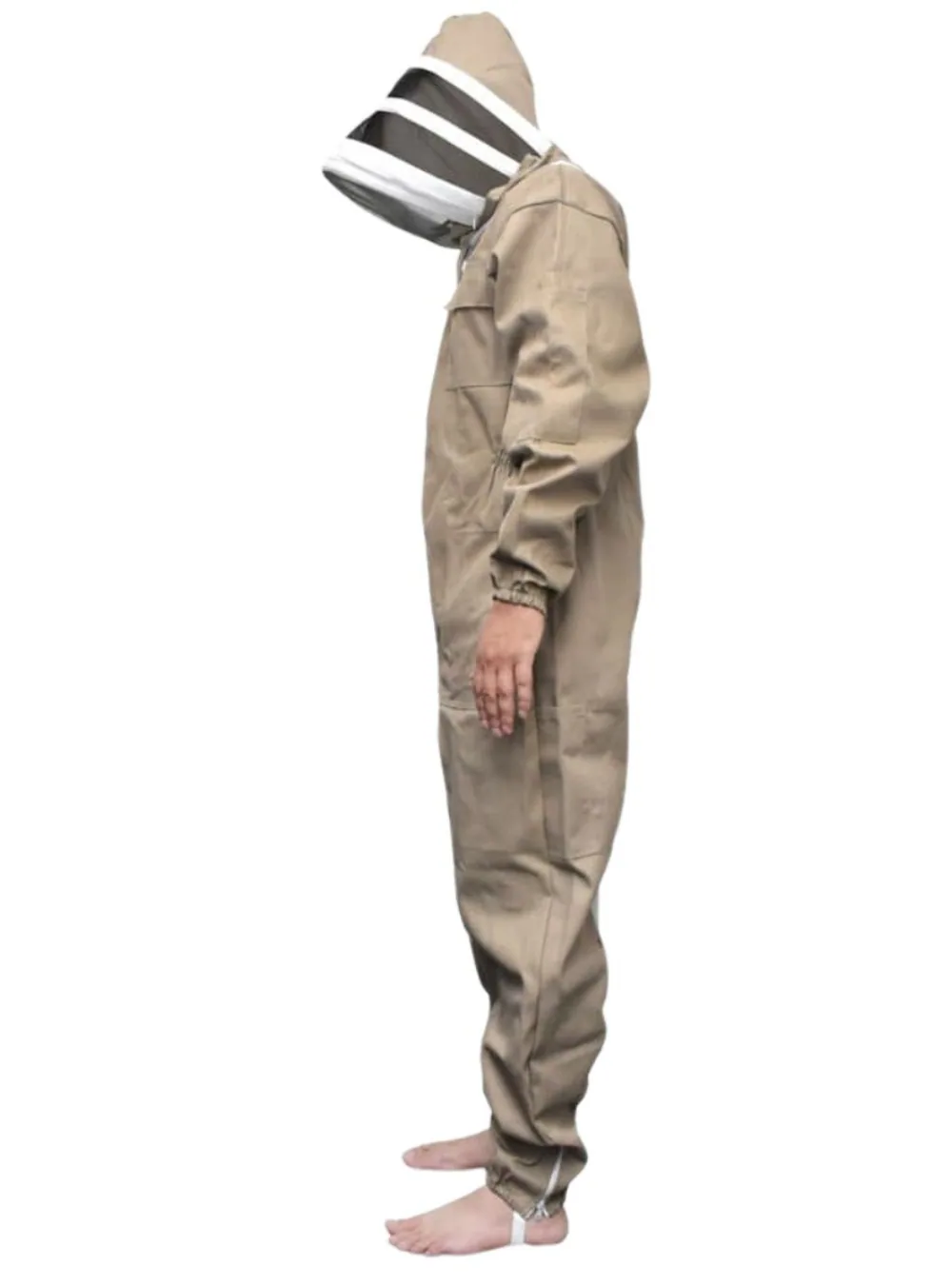
How many bee suits do you need?
One, until a suit needs washing on a day you are beekeeping. Then two. The honest trigger is drying time, not the number of hives you keep.

How many bee suits you need comes down to one question: has a suit ever needed washing on a day you wanted to be in the apiary? If not, one is enough. If so, you already know the answer is two, and have probably been putting on a slightly unpleasant suit instead.
The number of hives you keep has very little to do with it.
Why drying time is the real trigger
A washed cotton suit takes the best part of a day to dry. Longer, if the weather is not helping. That is the whole argument for a second one.
With a single suit the sequence runs: inspect, get propolis and sweat on it, think about washing it, then skip the wash because you are back at the hives on Saturday. Over a season the suit gets stiff, it smells, and it carries alarm pheromone from one inspection to the next.
So the answer to how many bee suits you need is not about protection. A second suit buys you the ability to wash the first one.
When how many bee suits means one
- One apiary, one or two colonies, inspections a week or more apart.
- A ventilated suit, which dries in hours rather than a day - ventilated against cotton covers the difference.
- Nobody else ever comes with you.
That describes most first seasons honestly. Buy one good suit rather than two cheap ones, and whether you need a full suit at all is worth settling first.
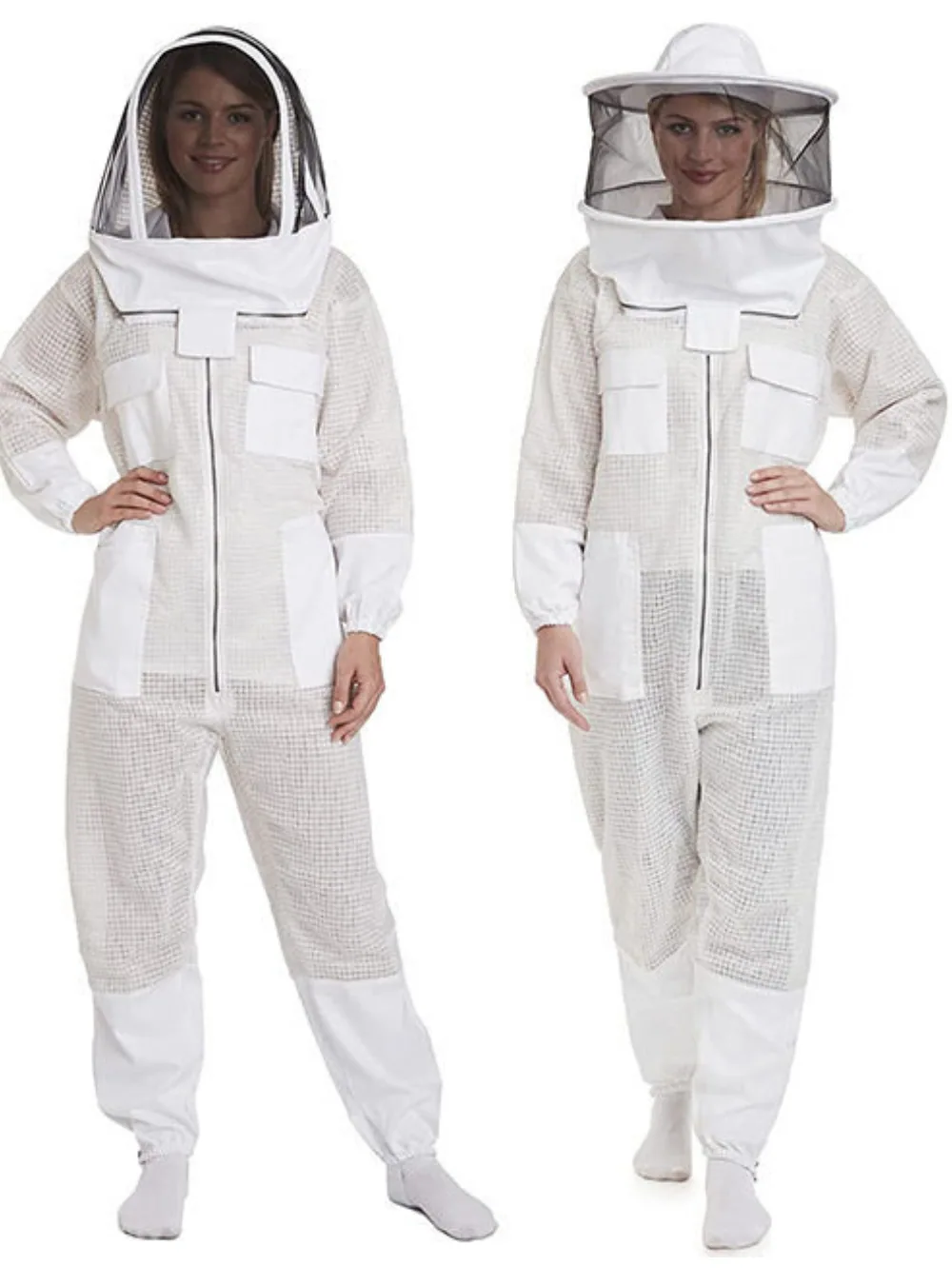
How many bee suits: the four reasons for a second
| Reason | How urgent |
|---|---|
| Washing, without missing an inspection | The common one. Buy the second suit the first time this bites |
| Two apiaries in a day | Not optional - biosecurity between apiaries needs a change |
| Visitors, family, a curious neighbour | Worth it if it happens more than twice a year |
| A suit fails mid-season | A torn veil or a failed zip ends the day with one suit |
The second row is the one that is not really a choice. If you keep bees at two sites, how many bee suits you need is two, and that is a disease-control answer rather than a convenience one.
The second suit does not have to match the first
In fact it is better if it does not. A ventilated suit and a cotton suit cover the whole year between them. Two of the same leave the same gap twice, which wastes half of what you paid for.
A common pairing is a mesh suit for summer and a cotton one for spring and autumn. That also covers the smoker damage problem, since cotton takes sparks far better. Spring against summer goes through the seasonal split.
Suits for visitors
A spare for guests is a different purchase from a spare for you. It wants to be adjustable rather than well fitted. Elasticated everything, a size up, and a fencing veil anyone can work out unaided.
A jacket often serves better than a suit here. It is cheaper, it fits a wider range of people, and a visitor is rarely handling frames - choosing a beekeeping jacket covers what to look for. For a household, a family beekeeping kit is the cheaper way to cover several people.
What about three?
Rarely, for a hobbyist. How many bee suits a club needs is a different sum: three or more makes sense for a teaching apiary or a removal business, where several people are in suits at once and the kit is shared. Bulk suits for clubs covers buying at that scale.
For one beekeeper, a third suit is usually a sign the first two were the wrong ones.
The short version
How many bee suits you need is one, until washing starts getting skipped. Then it is two. Make the second a different fabric from the first, and a jacket rather than a suit if it is mainly for visitors. Two apiaries means two suits regardless of how often you wash.
If you are picking a second now, the ventilated range pairs well with a cotton first suit, and the jackets are the sensible answer for guests. Penn State Extension and the University of Georgia bee programme both cover equipment for a first season.