
Children's bee suit buying guide
A child's bee suit is not a small adult's suit. The closures have to fit the child wearing it today, and the veil needs the same clearance over a smaller face — not less.

Buy the children's bee suit that closes properly on the child today, with a little room across the body and none at the cuffs, ankles or collar. The common shortcut — buy two sizes up so it lasts — is the one that causes most of the problems, because the openings are what keep bees out and they only work when they grip.
Why a children's bee suit is cut differently
Protection comes from the gap between the outer surface of the fabric and the skin. A sting has to cross that gap, and a few millimetres of air defeats most of them.
That distance is absolute, and it does not scale with the person. Shrinking an adult hood to child proportions makes the crown and collar smaller, which brings the mesh closer to a smaller nose rather than further from it. A suit drafted for a child holds the same standoff over a shorter face, which is why it is drawn as its own garment rather than graded down.
Similarly, at the wrist: an adult cuff has elastic sized for an adult forearm. On a child's arm it either slides or has to be turned back, and a turned-back cuff is a cuff with a fold in it — which is a gap.
Age is not a children's bee suit size
Children's clothing is sold by age because it is convenient, rather than because it is accurate. Two eight-year-olds can be a size apart, and a child who is tall for their age usually needs length rather than girth.
Measure instead. First, the four numbers that matter are chest, sleeve from shoulder to wrist, inseam, and height. How to measure for a bee suit is the same method for a child as for an adult — take the sleeve with the arm bent and the inseam with the boots on, because that is how the suit will be worn.
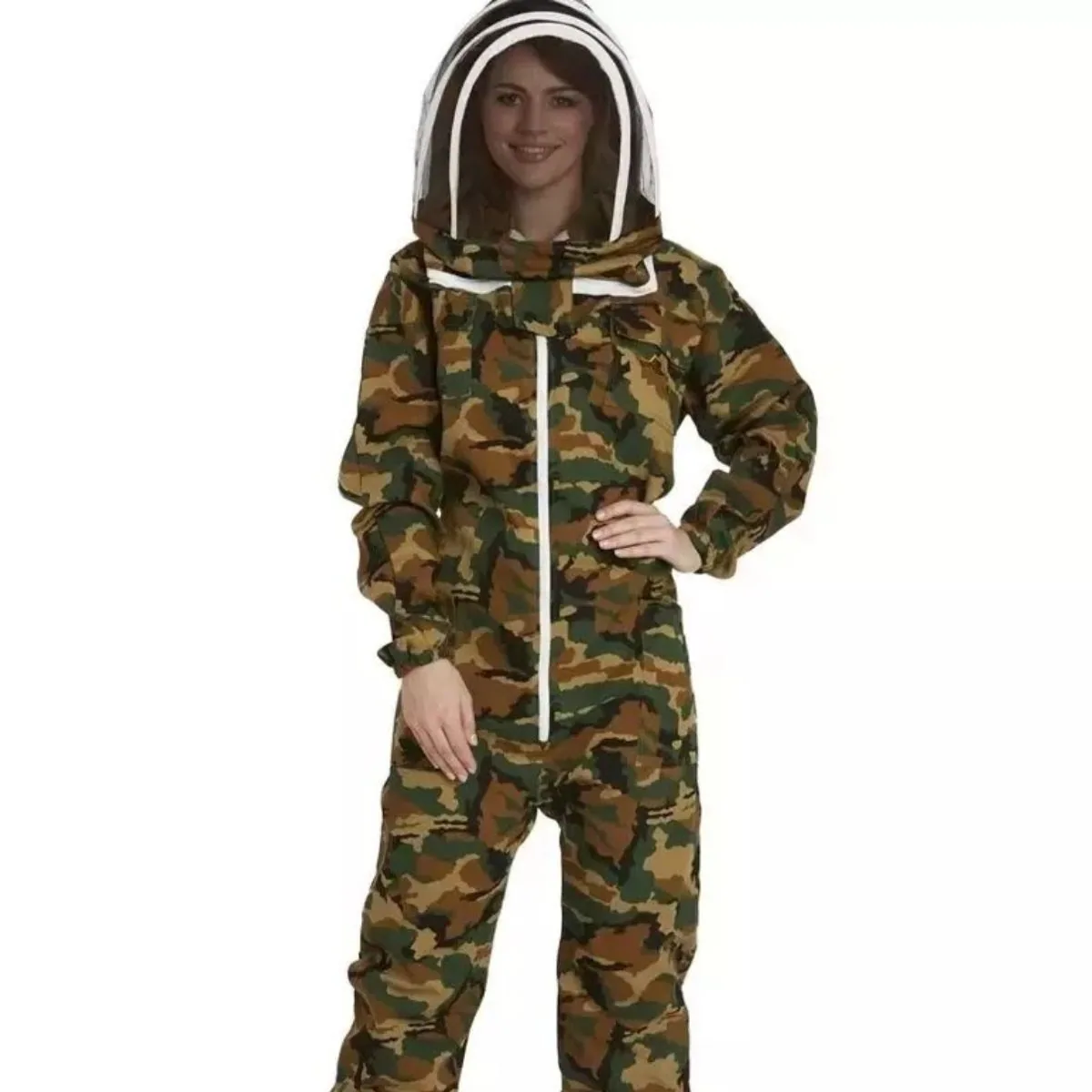
Sizing a children's bee suit: where room to grow belongs
| Part of the suit | Room to grow? | Why |
|---|---|---|
| Chest, back, thighs | Yes, a little | Slack here is the protection. A season's growth costs nothing. |
| Sleeve length | A little, with thumb loops | A loop holds a long sleeve down. Without one, a long sleeve is a sleeve that rides up. |
| Cuffs | No | A loose cuff is an open sleeve. Hands disappear into boxes and bees do not. |
| Ankles | No | They ride up when a child crouches, which is most of the time. |
| Collar and veil | No | A veil standing away from the collar is a gap at the throat. |
So a suit bought two sizes up has slack in exactly the wrong places. Buy for this summer at the openings, and accept that the body will be outgrown — it is a child, that was always going to happen.
Weight and heat matter more, not less
Children overheat faster than adults and are much worse at noticing it. A heavy cotton suit on a warm afternoon turns a first visit to a hive into something a child does not want to repeat — and a child who has pushed the hood back because they are too hot is in a worse position than one who never wore a suit at all.
For example, for anything but a cool morning, ventilated construction is the more sensible choice for a child even where an adult in the same apiary would be comfortable in cotton. The reasoning is the same as in ventilated versus cotton, but the margin for error is smaller. Weight is part of it too: a lighter suit is one a child will keep on.
What a children's bee suit has to allow for
Three things, and all three decide whether the suit gets worn properly.
How much they can see. A dark mesh in bright sun is, in fact, harder to see through than adults remember. A child who cannot see their feet watches the ground instead of the hive, and a child watching the ground walks into things.
Noise. A hood close to the ears makes the colony sound louder than it is. Standoff helps here too.
Whether they can get out. This is the big one. See below.
Two things to do before the first visit
Teach the drill. What to do if a bee gets inside the suit — stop, walk away, then sort it out — matters more to a child than any feature of the garment.
Practise the zips indoors. However capable they seem, a child who cannot open their own veil will panic when they want it open, and panic near a hive is the actual danger — not the bees. Ten minutes at the kitchen table settles it, and it should be practised until they can do it without help and without looking.
Agree what "stop" means. Being able to say "I want to go" and have it happen immediately, without discussion or negotiation, is what makes the whole thing safe. It is also what makes them willing to come back next time.
Gloves and boots for a children's bee suit
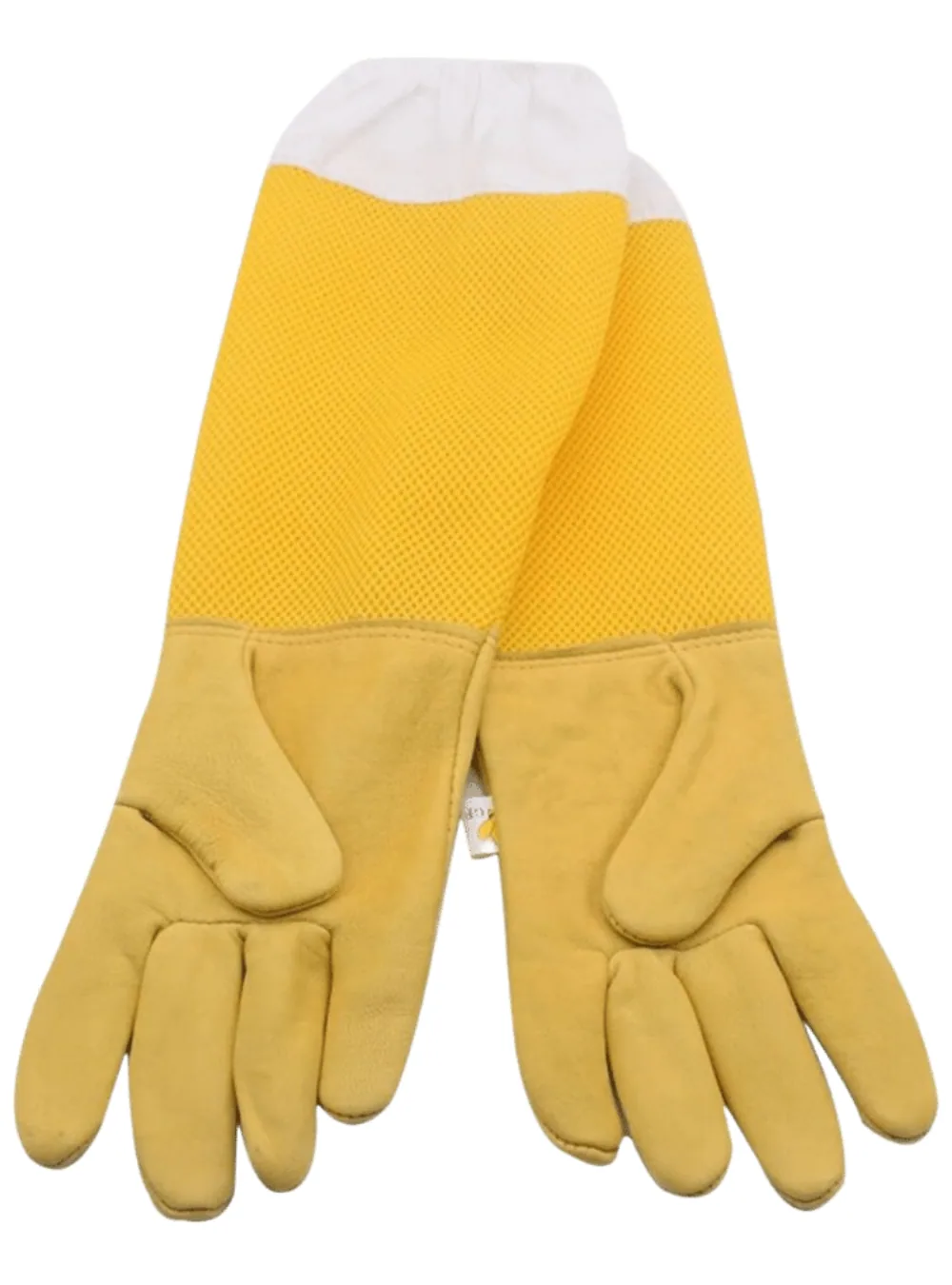
Measure them first — measuring a child covers the hands as well as the body. Buy gloves properly rather than making do with adult gloves rolled back. Thin or oversized gloves make hands clumsy, and clumsy hands crush bees, which is the fastest way to turn a calm colony into a defensive one. A child who has crushed a bee and been stung for it has learned the wrong lesson about bees.
If you are buying for a group of children rather than your own, buying suits for a club covers the size spread that actually works. Boots, meanwhile, need only to cover the ankle, so that the suit's elastic has something to sit over rather than against bare skin. Wellingtons are fine. Trainers are not, because the ankle elastic ends up on the sock.
Children's beekeeping gloves covers sizing and material in full. The short version: dexterity matters more at this size, so the thinner option usually wins — nitrile versus leather comes out differently for a child than for an adult.
What to check when the children's bee suit arrives
- Cuffs grip the wrist with the child's hand through them — not loose, not tight enough to mark.
- Ankles stay down when they squat all the way.
- The veil zip closes fully at the collar with no gap at the throat.
- With the veil on, they can look at their own boots and the mesh does not touch their nose.
- They can see well enough through it to walk over uneven ground without watching their feet.
- They can open and close the veil themselves, wearing gloves.
That last one is the check most often skipped and the one worth doing twice.
Second-hand suits
What to check on a used suit applies here with one addition: it still has to close properly on the child today.
A used children's bee suit is often a sensible buy for a growing child, with three things to look at. Hold the mesh up to the light and look for snags; a centimetre of damage is a hole in a season. Stretch each cuff and ankle and let go — tired elastic does not spring back. Run the veil zip end to end a few times.
Staining, though, does not matter. Propolis marks are cosmetic and will not wash out of any suit, new or used.
When a child is ready
The same question as whether a beginner needs a full suit, asked about readiness rather than kit. There is no age that answers it, but there is a test: a child is ready when they can follow an instruction they do not like, immediately, without arguing. Standing still when told to stand still is the whole of apiary safety for a child. Enthusiasm is not the qualification; the suit only works on a child who will keep it on.
If you are looking for somewhere to start that is not your own hive, university programmes and local associations often run open sessions that children can attend — Cornell's Pollinator Network and the University of Georgia Bee Program are two examples of the sort of outreach worth looking for in your own region.
Our children's beekeeping suits are cut as their own garment rather than graded down, and the Buzzy Buddies suit can be made to measurements if your child is between sizes. A children's bee suit is the one item in a household's kit that cannot be handed down mid-season. If you are kitting out everyone, what a family actually needs sets out which gear is per-person and which is shared.