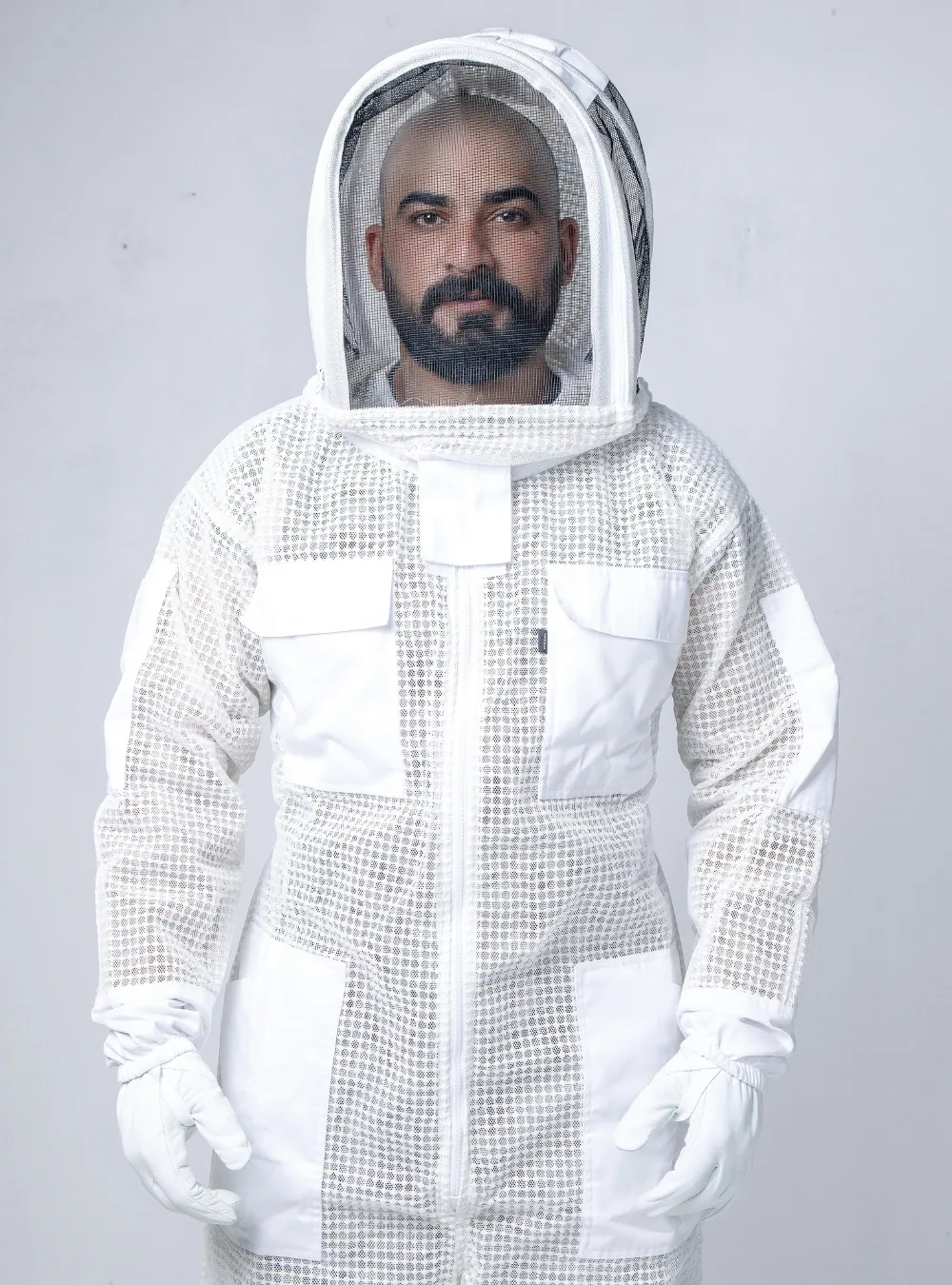
Bee suit biosecurity between apiaries
A suit that has been in a diseased colony can carry spores to the next one. Changing or washing between sites is the cheapest disease control a beekeeper has.

Bee suit biosecurity is the part of beekeeping hygiene most people skip, because the suit does not look dirty. It does not have to. Spores and propolis travel on fabric, and a suit worn in a colony with disease goes straight into the next apiary on your shoulders.
Nothing here is complicated. It is a change of routine rather than a purchase.
What a suit actually carries
Three different things, and they need different responses.
- Spores. The serious one. Foulbrood spores are extremely persistent, survive washing at low temperatures, and do not care how clean the fabric looks.
- Propolis and wax. Sticky, and they hold everything else against the fabric. A suit stiff with propolis is a suit carrying whatever was in that hive.
- Alarm pheromone. Not a disease risk, but it makes the next colony defensive before you have opened anything. Alarm pheromone on a suit is its own problem.
When bee suit biosecurity matters most
Not every inspection needs a clean suit. These do.
| Situation | What to do |
|---|---|
| Two apiaries on the same day | Change suit and gloves, or at minimum change gloves and wash hands |
| Visiting someone else's bees | Borrow their spare, or take a suit you then wash before using again |
| A colony you suspect is diseased | Treat the suit as contaminated; wash hot and separately before any other hive |
| Collecting a swarm of unknown origin | Same as above - you know nothing about where it came from |
| Teaching, or a group handling kit | One suit per person per session; shared suits defeat the point |
| Your own single apiary, routine check | Normal washing is enough |
The row that catches people is the second one. Taking your own suit to a friend's apiary feels polite and is the wrong way round - you are the one who could carry something in, and back out again.
The washing part
Washing is the bit that does the work, and the temperature matters more than the detergent. However, that only holds if the veil comes off first.
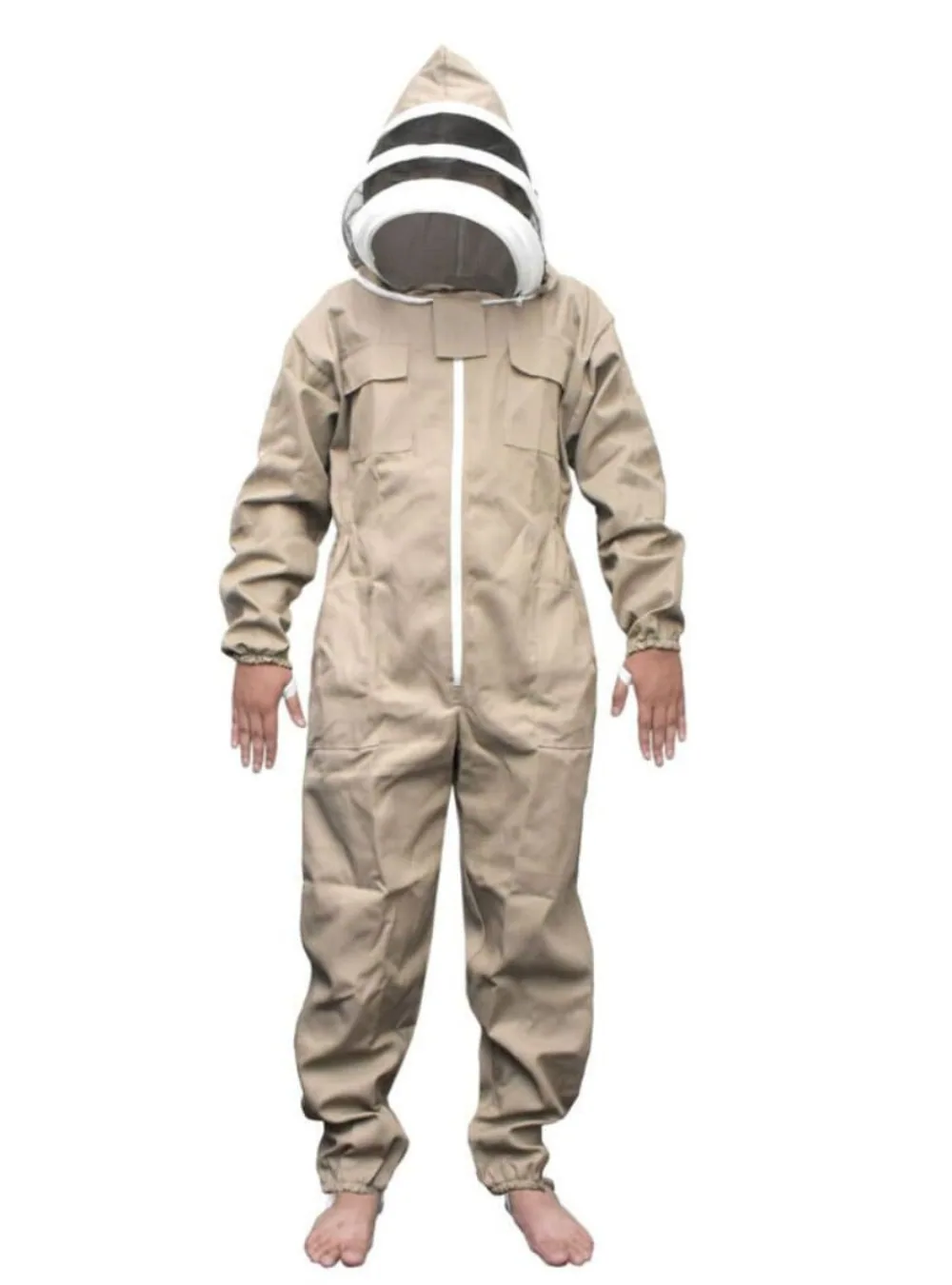
Wash hot where the fabric allows it, with the veil removed. Cold washes are fine for sweat and useless for spores. How to wash a bee suit covers temperatures by fabric, and the veil needs separate treatment - a veil that will not detach limits how hot you can go, which is a real argument for a detachable one.
Line dry in sunlight when you can. It is not a sterilising step. Even so, it is free and it helps.
Gloves are the bigger risk
Worth saying plainly: your gloves touch comb, and your suit mostly does not. Leather gloves cannot be washed hot and absorb everything, which makes them the worst item in the kit for bee suit biosecurity purposes.
Two answers, therefore. Nitrile gloves, changed between apiaries and thrown away - nitrile against leather compares them properly. Or a dedicated leather pair per apiary, which is cheaper than it sounds. Cleaning beekeeping gloves covers what is possible with leather.
What else travels
The suit is not the only carrier, so fixing only the suit is half a routine. For example, hive tools, boots and the car boot all move between sites.
- Hive tool. Scrape and flame it, or carry one per apiary.
- Boots. Scrub the soles. They stand in dropped comb.
- The boot of the car. A bag for dirty kit and a separate one for clean is the whole solution.
How many suits this implies
Two, if you keep bees at more than one site, and that is the practical conclusion of bee suit biosecurity rather than a sales pitch. One suit cannot be clean and worn on the same afternoon. How many bee suits you need goes through the arithmetic.
A second suit also solves the problem that a washed suit takes a day to dry, which is the real reason single-suit beekeepers skip the wash.
The short version
Change gloves between apiaries, wash hot with the veil off, bag dirty kit separately, and keep a second suit if you work more than one site. For colony disease itself, your national or state inspection service is the authority; the University of Georgia bee programme and Penn State Extension both publish on recognising brood disease.
For a second suit that washes easily, the cotton range takes hot washing best, and a polycotton suit dries fastest between sites.