
Do coloured bee suits work?
Pale ones do, on exactly the same evidence white ones do. The line that matters is dark against pale, and almost nothing sold crosses it.

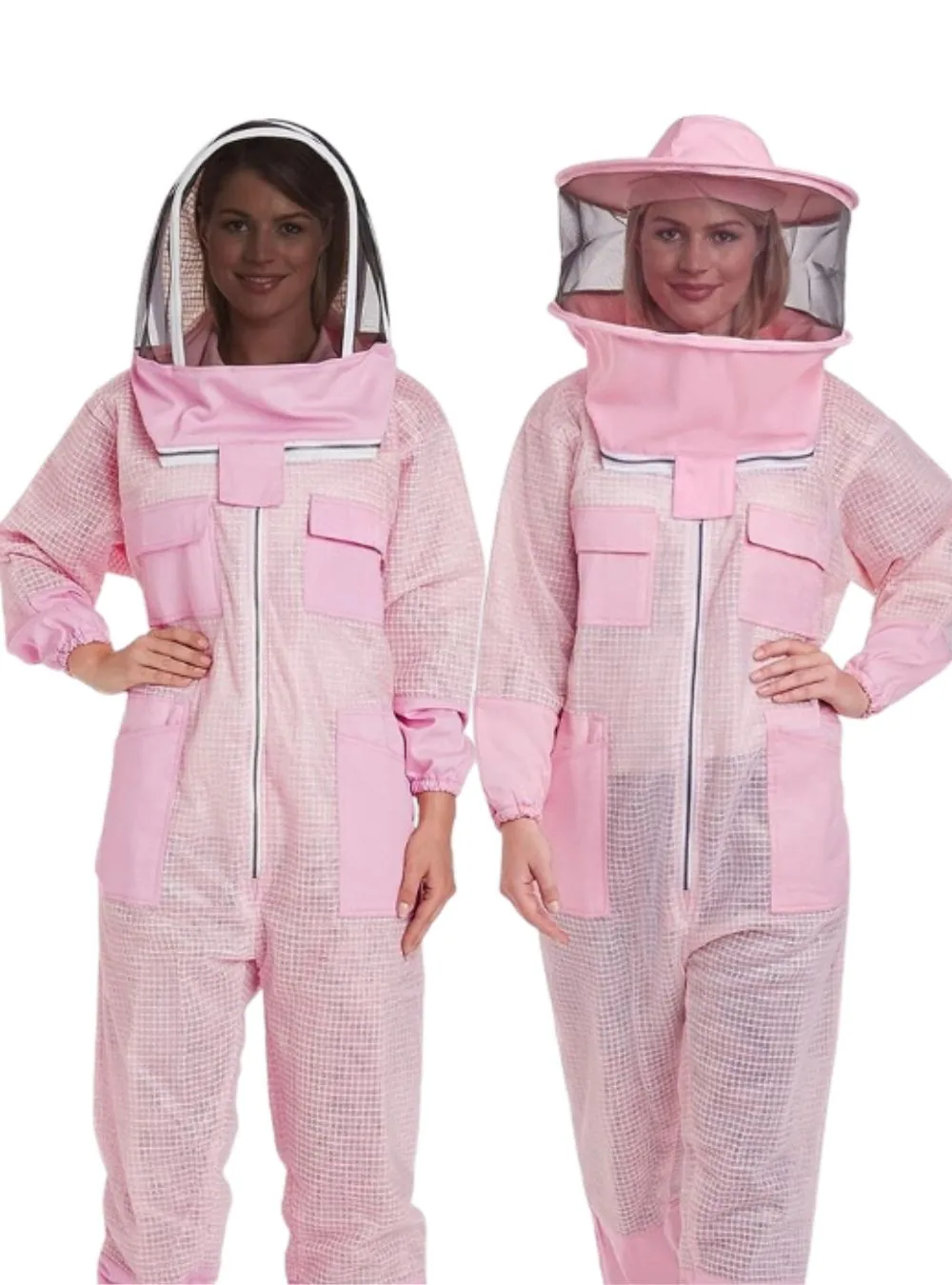
Coloured bee suits work provided they are genuinely pale. The beekeeping convention has never been about white specifically — it is about avoiding dark colours, and pale blue, pink, cream, khaki and pale yellow all sit on the same side of that line. Colour is a preference. Construction is the decision.
What the convention actually says
Bees respond to dark colours and to fast movement. That is the basis for pale beekeeping clothing and it is why suits have been white, cream or khaki for as long as they have existed.
Note what it does not say. It does not say white, and it does not rank pale shades against one another. The distinction is dark against pale, and a pastel is pale. Why bee suits are white covers where the convention came from and how far it reasonably goes.
Which coloured bee suits are pale enough
| Shade | Fine? |
|---|---|
| White, cream, ivory | Yes — the default |
| Pale pink, pale blue, mint, pale yellow | Yes, same bracket |
| Khaki, sand, light olive | Yes, and they hide propolis better |
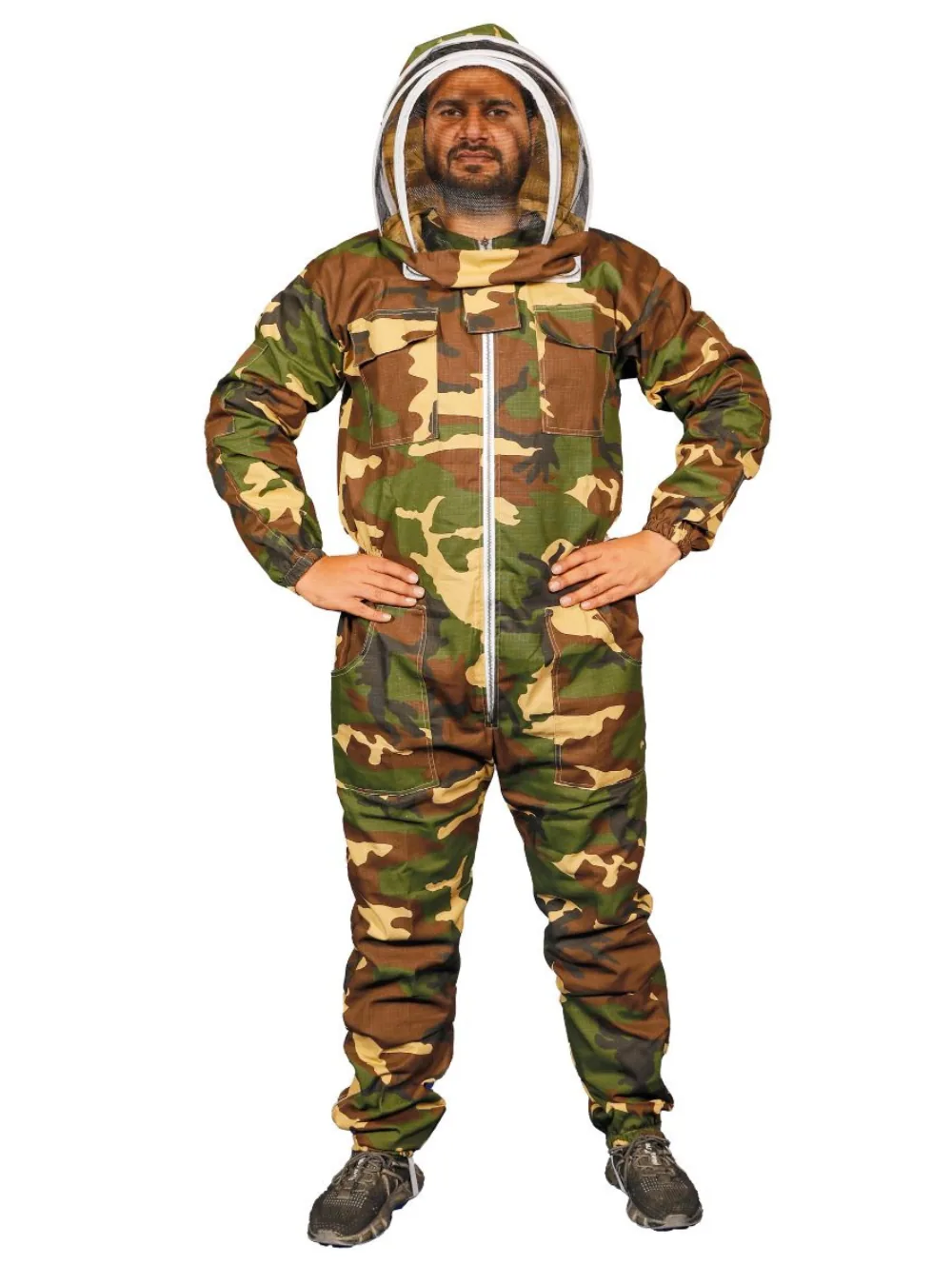
| Mid-tone camouflage | A step darker, for a specific reason — see below |
| Navy, black, dark brown, red | No |
The test for a shade you are unsure about: does it read as pale in a daylight photograph? A saturated colour is not a pastel.
What coloured bee suits do not change
Three things people expect coloured bee suits to change, and they barely do.
How hot you get. A pale surface reflects more sunlight, which is real and small. Most of the heat you have to lose is your own, generated by lifting boxes in a sealed garment, and reflecting sunlight does nothing about that. Colour in hot climates ranks it properly: construction first, colour a distant fifth.
How well it protects. A sting is stopped by the gap between fabric and skin — that is the whole mechanism, and it is identical in every colour.
How long it lasts. Ultraviolet degrades mesh and elastic whatever the dye. Colour only changes whether you notice, because a faded patch is visible damage on a coloured suit and invisible on a white one.
The one real trade-off with coloured bee suits
Laundry. Propolis stains permanently and will not come out of anything, so the only question is whether it shows.
White and pale pastels show it plainly. Khaki, cream and sand hide it, which is why they look presentable for longer in identical use. That matters where customers see you — removal work is the case where a suit's appearance is money — and not at all in your own apiary.
There is a quiet advantage to pale, though: it shows wear, snags and thinning early, so you repair them early. Removing propolis covers what can and cannot be done about the marks.
Camouflage, the one case for darker
Within pale, colour is free. Camouflage exists for a reason that has nothing to do with bees: a white suit advertises that there are hives there. Beekeepers who have had equipment stolen, or who keep bees on roadside or borrowed land, buy them for concealment.
That is a step darker than the convention prefers, and it is a genuine trade rather than a free choice. In ventilated construction it matters less, because the construction is doing the work — but it is a trade, and worth making knowingly. When a camouflage suit makes sense goes through it.
The veil is the exception
Whatever colour the suit, the veil's face panel should be dark — and that is an optical decision rather than a bee one. Black mesh absorbs light instead of reflecting it into your eye, so you see the hive rather than the weave.
A pale veil photographs better and is harder to work behind in bright sun. Why veil mesh is black covers it, and it is the one part of a suit where there is a right answer rather than a preference.
Coloured bee suits and the veil exception
A separate question with a firmer answer. Suits can be any pale colour; veil mesh at the face should be dark.
You will see veils with white or pale mesh, and they look better in photographs. Behind one in bright sun you are looking at a lit screen a few centimetres from your eyes rather than through it — veil visibility covers how much that costs when you are reading a frame.
Many veils are built with a dark face panel and pale mesh at the sides and crown, which is the sensible compromise: dark where you look through it, pale where the bees see it.
Coloured suits for children
The case where the argument is strongest, and it is not about bees.
A child who likes their suit wears it properly and asks to come back. A child in a suit they find ugly or frightening takes the hood off, and a hood pushed back is worse than no suit at all because it teaches them that the kit is optional.
So within the pale bracket, let them choose. The children's buying guide covers everything that is not negotiable — the closures, the veil clearance, the fit today rather than next year — and colour is not on that list.
Why coloured bee suits are worth having at all
One reason that is not frivolous: a suit you are pleased to put on is a suit you put on. That matters most for children easing into beekeeping and for anyone who finds the kit intimidating.
And in a household or a club, colour is the simplest way for everyone to find their own suit without labelling — a family kit is four suits that get mixed up constantly.
Our pink suit, camouflage range and made-to-measure suits cover the spread. For guidance from somewhere with nothing to sell, Penn State Extension's beekeeping resources and the University of Georgia Bee Program both cover protective clothing.