
Camouflage bee suits: when they make sense
Concealment, not comfort. A camouflage suit is bought so the apiary is not obvious from the road, and that is a real problem for some beekeepers.

A camouflage bee suit is bought for one reason: so that you, and by extension your hives, are not obvious from a road or a footpath. It is a step darker than the pale-clothing convention prefers, so it is a genuine trade — and for beekeepers who have had equipment stolen or who keep bees on exposed land, it is a trade worth making.
The problem a camouflage bee suit solves
A white suit is visible from a long way off, and it tells anyone looking exactly where the hives are. For most beekeepers that does not matter at all.
It matters if your apiary is on roadside land, on a public footpath, on borrowed ground you cannot secure, or anywhere equipment has gone missing before. Hives are valuable, portable and hard to identify once moved, and the thing that draws attention to them is often the beekeeper rather than the boxes.
It also matters where a visible apiary invites interference rather than theft — curious visitors, children, or neighbours who would rather not know bees are there.
What you are trading
Be clear about this rather than pretending it is free.
Bees respond to dark colours, which is the basis for pale beekeeping clothing. A camouflage pattern is mid-tone by design, and the darker elements in it sit on the wrong side of that line. Do coloured bee suits work covers where the line actually sits.
How much it costs you in practice is not something anybody has measured, and we will not invent a figure. What can be said is that the convention exists for a reason and a camouflage bee suit is further from it than a pastel is.
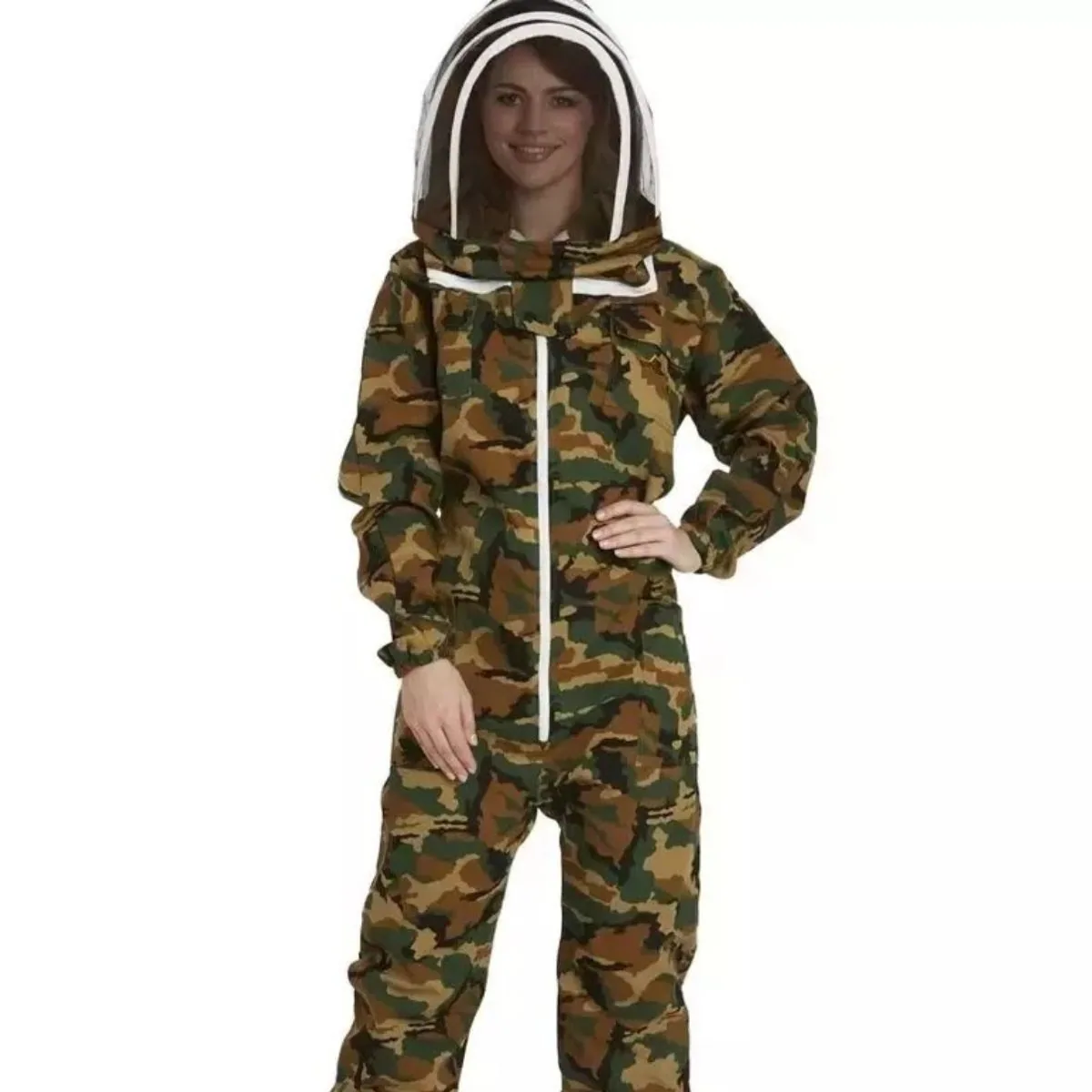
Why ventilated camouflage is the sensible version
If you are going darker, the construction matters more rather than less.
A ventilated suit holds a gap between bonded layers, and that gap is what stops a sting regardless of what colour the outer face is. A camouflage suit in bonded mesh is relying on structure; a camouflage suit in single-layer cotton is relying on slack cloth and a colour convention it has stepped away from.
A darker surface also absorbs more sunlight, so it runs warmer in direct sun — and ventilated construction is the only thing that meaningfully answers heat anyway. Colour in hot climates covers how small the colour effect is next to construction.
When a camouflage bee suit makes sense
- Roadside or footpath apiaries, where passers-by can see you working.
- Sites where equipment has been stolen — yours or a neighbour's.
- Borrowed or rented land you cannot fence or lock.
- Out-apiaries you visit rarely, where you are not there to notice interest.
- Anywhere a visible apiary would cause a conversation you would rather not have.
When it does not
A garden apiary behind a fence. A site you own and can see from the house. An association apiary where everyone already knows the hives are there. In all of those, the pale convention is free and worth keeping.
It also makes no sense as a heat or protection choice. If somebody is selling you camouflage on either of those grounds, they are selling you something else.
The middle ground
Worth knowing about, because it suits more people than full camouflage does.
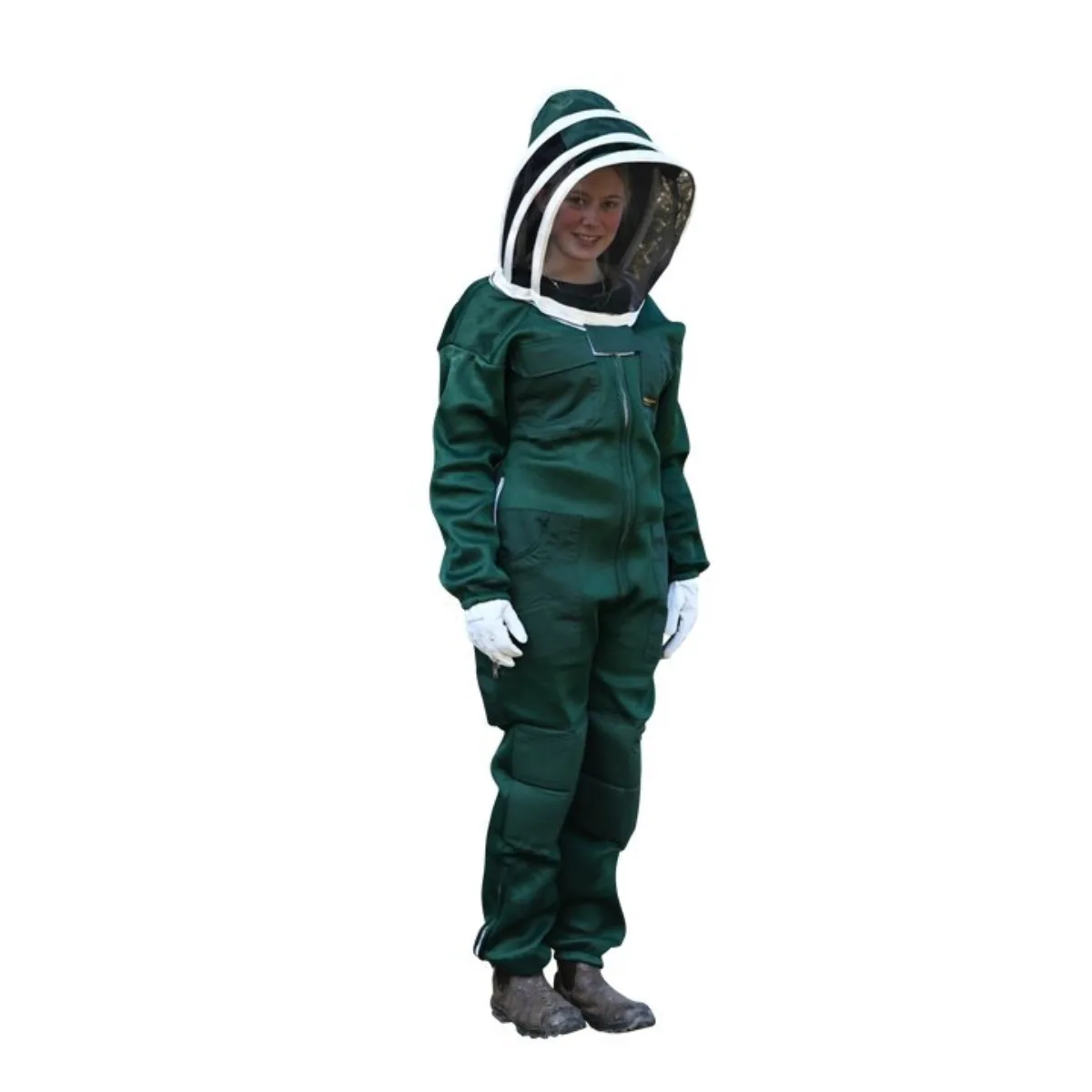
A solid khaki, olive or sand suit is far less conspicuous than white at a distance, and it sits comfortably within the pale convention. It also hides propolis, which white does not.
For most beekeepers worried about visibility rather than genuine concealment, that is the better answer — you get most of the benefit and none of the trade. Propolis staining is a second argument for it.
What else to do about a visible apiary
The suit is the smallest part of it, honestly.
- Paint the hives. Green, brown or grey boxes disappear far more than a beekeeper does, and they are the thing worth stealing.
- Screen the site with a hedge or a fence, which also lifts the bees' flight path over head height.
- Mark your equipment so it is identifiable if it is recovered.
- Visit at quiet times, which is better for the bees anyway.
On siting an apiary generally, Penn State Extension's beekeeping resources and the University of Georgia Bee Program are better guidance than a supplier can give.
What a camouflage bee suit does not hide
Worth being realistic, because a camouflage bee suit solves a narrower problem than it looks.
It hides you at a distance, while you are standing still, against a broken background. It does not hide the hives, which are rectangular and usually pale. It does not hide movement, and an inspection is twenty minutes of movement. And it does nothing at all once somebody is close enough to see the apiary.
If concealment genuinely matters, the hives are the thing to address first and the suit second. A camouflage suit beside four white boxes on a mown strip of grass is solving the smaller half of the problem.
Children and a camouflage bee suit
One case worth flagging. Camouflage is popular with children, and a child's suit is the one place the pale convention is least worth trading away.
Children move faster and less predictably than adults, which is the other half of what a colony responds to, and they are the people least able to judge a colony's mood before it changes. The margin is thinner, so keep theirs pale — the children's buying guide covers what is not negotiable on a child's kit.
Buying one
Judge it exactly as you would any other suit, and do not let the pattern distract you. Count the bonded layers, check the mesh springs back under a thumb, look at how the cuffs close, and ask whether a replacement veil can be bought on its own.
The veil's face panel should still be dark, for the optical reason rather than the concealment one.
Our camouflage suits are ventilated, and the three-layer range includes muted solids if the middle ground suits you better.