
Veil visibility when looking down at frames
Reading a frame is the hardest thing you ask of a veil, and it is the position every veil is worst in. Here is why, and what fixes it.

Veil visibility is worst in exactly the position you use most: head tipped forward, looking down at a frame held in front of you. Every veil shape gets closer to your face in that position, mesh near the eye falls inside your focal range, and the detail you are looking for — eggs, a queen, the state of a cell — is the smallest thing in beekeeping.
Why veil visibility is worst looking down
Three things happen at once, and they compound.
The mesh comes closer. Tip your head forward and the veil, which hangs from your shoulders, stays put while your face moves towards it. A fencing veil follows your head and loses the most — the shape's main drawback.
Your eyes focus near. A frame at arm's length is already close. Mesh a few centimetres from your eye sits inside the same range, so your eye has to choose, and the weave competes.
The light is behind you. Looking down at a frame means your back is to the sky. Mesh lit from behind scatters light towards your eye rather than away from it.
What decides veil visibility
| Factor | Effect |
|---|---|
| Distance from the eye | Largest. Further is better — the weave falls out of focus |
| Mesh colour at the face | Large. Black absorbs; pale reflects into your eye |
| Thread fineness and weave openness | Moderate. Finer and more open is more to see through |
| Glare from behind | Moderate, and a peaked cap removes most of it |
| How clean it is | Larger than expected. Propolis and dust scatter light |
| Hive height | Large, and nothing to do with the veil |
The last row is the one worth acting on first, and it is the one nobody thinks of as a veil problem.
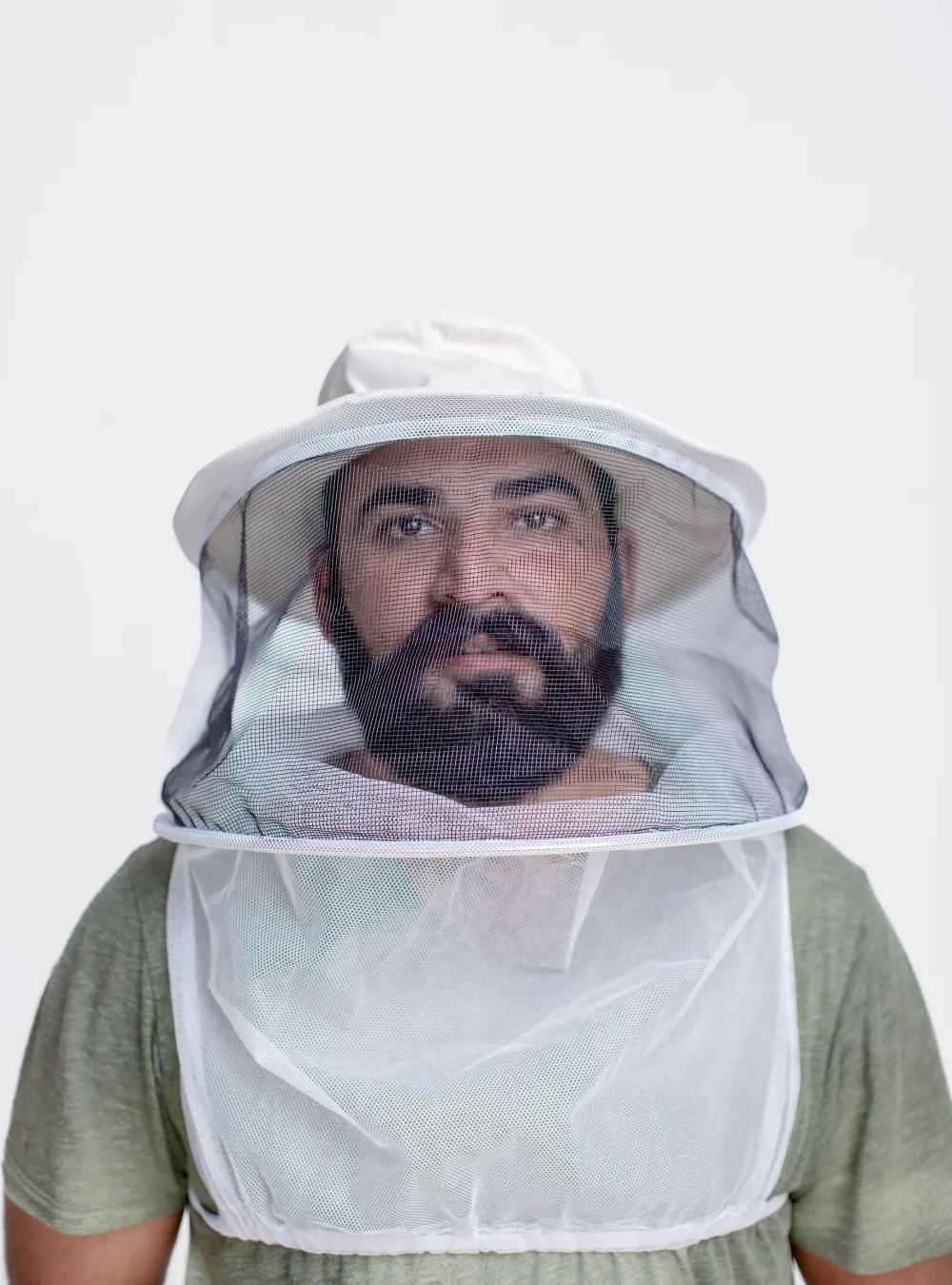
Raise the hive, and veil visibility follows
The best fix for veil visibility is not a veil at all — and it is the same fix looking up needs in reverse.
A hive on the ground means you are folded over it, chin on your chest, mesh against your face, looking at a frame in the worst possible light. A stand that brings the top box to somewhere between hip and waist height means you read a frame by lifting it to your eyes rather than lowering your eyes to it.
Your head stays up, the veil keeps its clearance, and the frame is lit from the side rather than silhouetted. It is also better for your back, and it costs a stand.
Wear a cap
A thin peaked cap under the veil does three things in the looking-down position specifically. It pushes the mesh forward a centimetre or two. It keeps mesh off a sweating forehead. And the peak shades the top of your vision, which is where the glare comes from.
It costs very little and it is the cheapest real improvement available. For anyone in a fencing veil it is close to essential, and for glasses wearers it matters twice over.
Mesh colour and grade decide veil visibility
Dark at the face, always. Black threads absorb light rather than sending it back at your eye, which is why your brain fills in the scene behind rather than seeing the weave. Why veil mesh is black covers the optics.
Beyond colour, a fine thread in an open weave gives you the most to see through. A coarse mesh is tougher and you will notice it the first time you are trying to decide whether a colony is queenright.
Judge it in daylight with something detailed behind it rather than under a shop light — and judge it looking down, which is the test that matters.
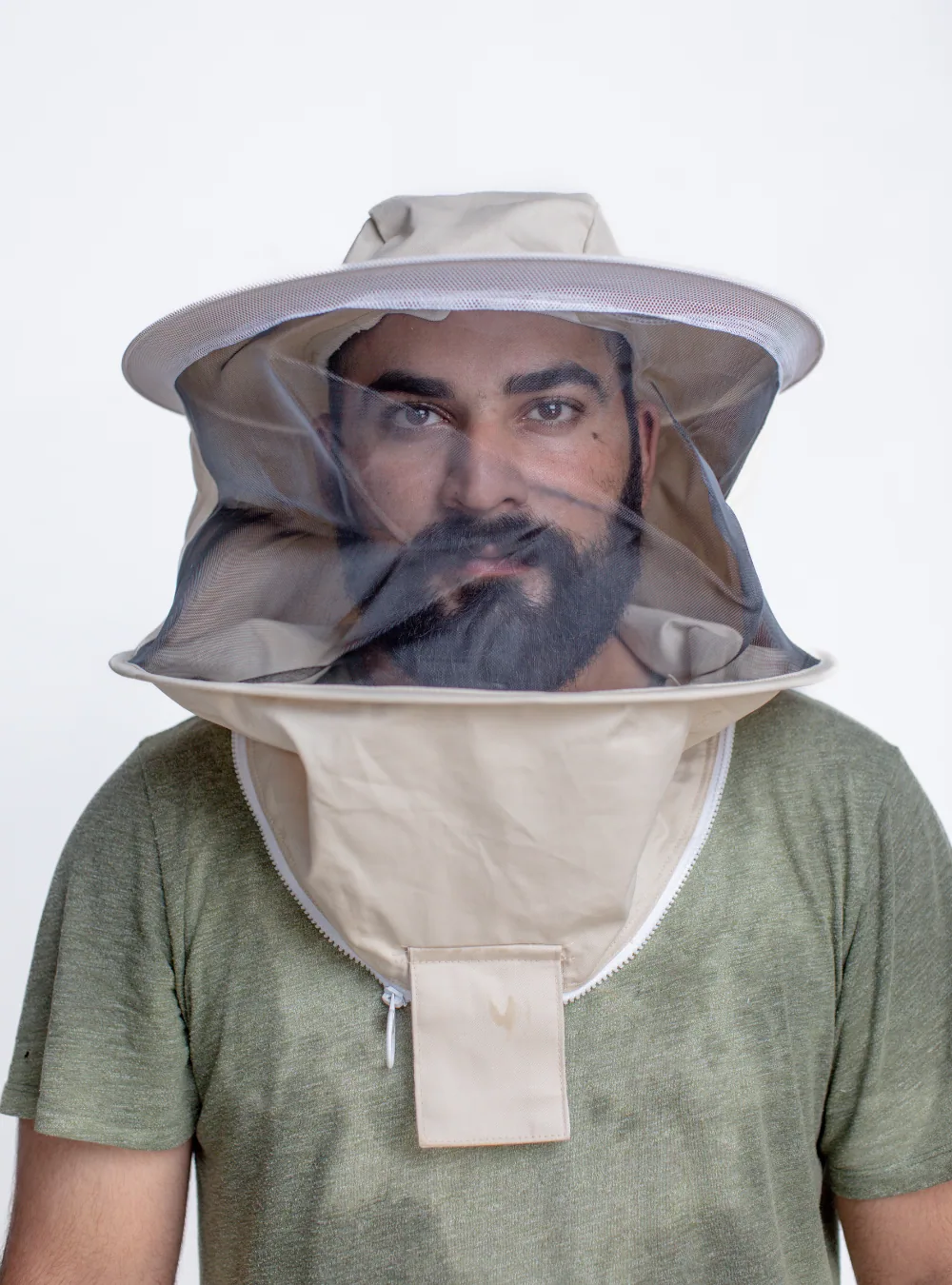
A dirty veil costs you veil visibility
Mesh dulled with propolis, dust and wax scatters light and undoes everything above. It happens gradually enough that most people never notice their veil has got worse.
Hold it up to the light every few visits. If the weave looks grey rather than crisp, wash it — by hand, cool, separately from the suit. Washing a bee suit covers the method, and propolis is the one mark that will not come out.
What you are actually trying to see
Worth naming, because it sets the bar.
Eggs are the smallest thing in beekeeping — a day-old egg standing upright in the bottom of a cell, in shadow, at arm's length. If your veil lets you see those, it will let you see everything else. If it does not, you are guessing about whether a colony is queenright, which is the question inspections exist to answer.
So test a veil on that rather than on a general impression. Hold something small and detailed at arm's length, tip your head down as you would over a frame, and see whether you can resolve it.
Age, and being honest about it
Close vision changes with age for almost everyone, and reading a frame is close work.
Beekeepers who managed fine for twenty years and now cannot see eggs often blame the veil, and the veil is usually not the whole story. Two things help more than a new one: raising the hive so the frame comes to you, and using reading glasses or varifocals under a veil with enough clearance for them — a veil for glasses wearers covers the clearance problem.
Good light helps too. Reading a frame with the sun behind you puts it in your own shadow; turning so the light falls across it changes more than any mesh.
If none of it is enough
Two remaining options.
Change shape. A round or hooped veil holds its distance whatever your head does. You give up speed and packability, and for anyone who reads a lot of frames it is a fair trade — fencing versus round.
Change the veil rather than the suit. On most suits the veil unzips, so this is a part rather than a garment — replacing a veil is a ten-minute job.
For guidance on reading frames rather than seeing through mesh, Penn State's beekeeping basics and the University of Georgia Bee Program are the right sort of source. Our veils come in all three shapes with a dark face panel.