
How to store a bee suit over winter
Clean, bone dry, hung in the dark. Storage does more damage to a bee suit than a season of inspections, and all of it is avoidable.

Store a bee suit clean, completely dry, hung on a wide hanger, in the dark, somewhere that does not get warm. Six months in a sunny porch or a damp shed does more harm than a season of inspections does, and every bit of it is avoidable.
What actually happens over winter
Three things, and none of them is wear.
Ultraviolet. Sunlight breaks down both mesh and elastic, and on a coloured suit the fading is the visible part of it. A suit hanging where daylight reaches it is being degraded every day it sits there, and a south-facing window is the worst place in the house.
Damp. Mould grows in seams and under folded layers. It stains permanently, it weakens thread, and it is the one storage fault that cannot be undone.
Compression. A suit folded into a box for six months keeps the creases, and on a ventilated suit a hard crease is a flattened gap — the standoff that stops a sting does not fully spring back.
Pests are a fourth risk in some houses. Moth larvae go for the residues left on an unwashed suit rather than the fabric itself, which is why the first instruction below is the important one.
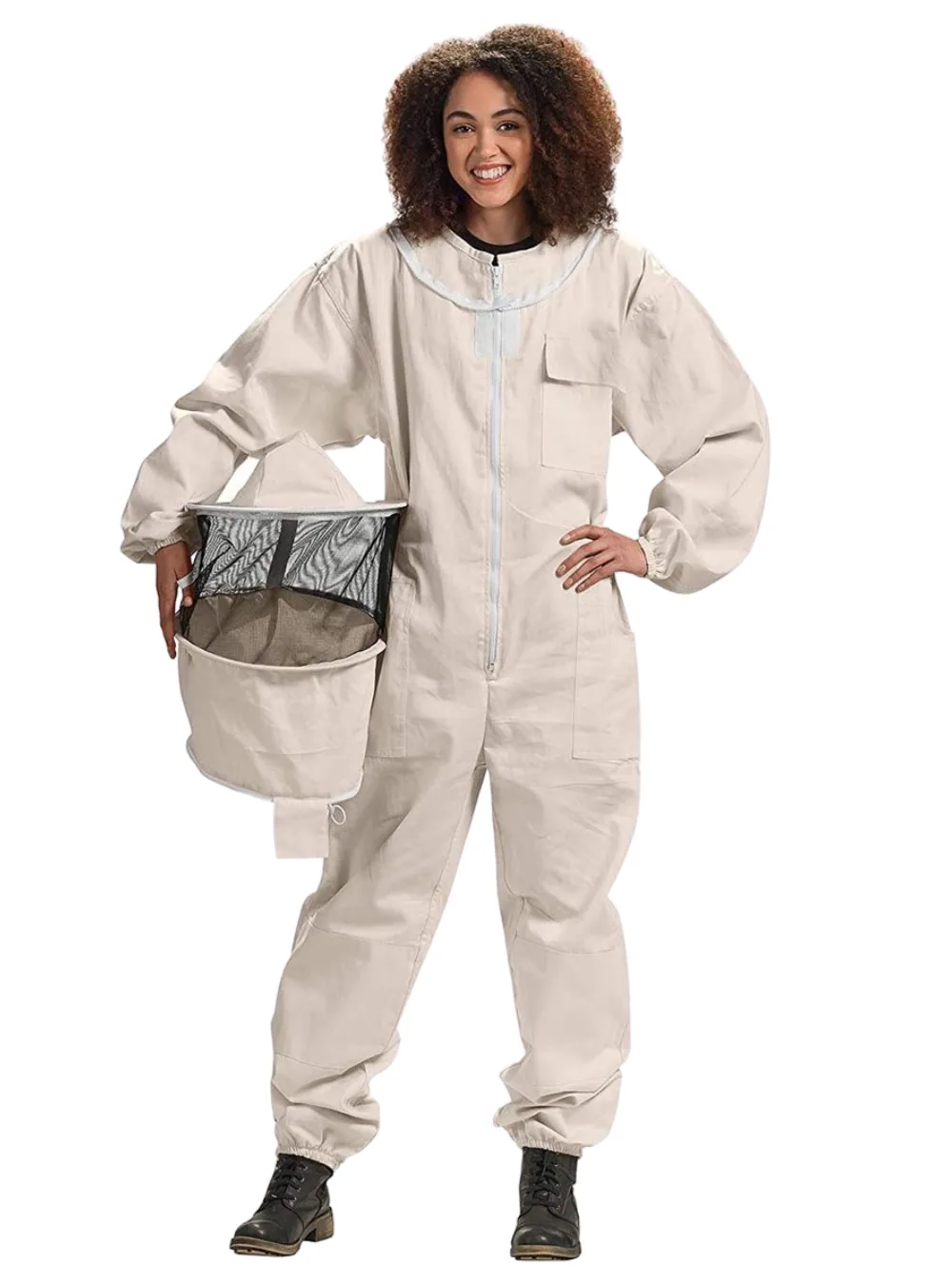
How to store a bee suit: five steps
- Wash it first. Honey, wax and sweat left in the fabric are what attracts pests and what sets into permanent marks over six months. How to wash a bee suit covers doing it without damage.
- Dry it completely. Not "dry to the touch" — properly dry, all the way through the seams and the cuffs. This is the step people hurry, and it is the one that causes mould.
- Take the veil off and store it separately, hung or laid flat with its shape held. A veil squashed under a folded suit for a winter does not recover its stand.
- Hang the suit on a wide hanger, zipped up, arms and legs free. A wire hanger puts two points of strain in the shoulders for six months.
- Put it somewhere dark, dry and cool. A wardrobe indoors beats a garage, a shed or a loft every time.
Where not to store a bee suit
| Place | Why not |
|---|---|
| Shed or garage | Damp, cold, and the temperature swings. Condensation forms in the fabric. |
| Loft | Hot in summer, and heat is what ends elastic. |
| A sealed plastic box | Traps whatever moisture was in it. Mould, reliably. |
| Hanging in a porch or conservatory | Daylight. Ultraviolet does the damage slowly and invisibly. |
| Folded in the bottom of a bag | Creases, compression, and whatever else is in the bag. |
If indoor space genuinely is not available, a breathable cotton garment bag in the coolest, darkest corner of a dry outbuilding is the compromise. Never a sealed plastic one — it has to breathe.
Pests, and why you wash before you store a bee suit
Moth larvae and carpet beetles are the two that get into stored clothing, and neither is especially interested in the fabric. What draws them is residue — sweat, honey, wax, anything organic left in the weave.
That is why washing before storage is the first step rather than a tidy-minded extra. A clean suit is a far less interesting place to lay eggs than a dirty one, and no amount of repellent compensates for putting an unwashed suit away.
Beyond that: store it where you can see it, not in a box at the back of a loft. Something checked at midwinter is something you can still rescue. Cedar or lavender in the wardrobe does no harm; mothballs are overkill for a garment you will be wearing near bees, and the smell lingers.
What to do with the rest of the kit
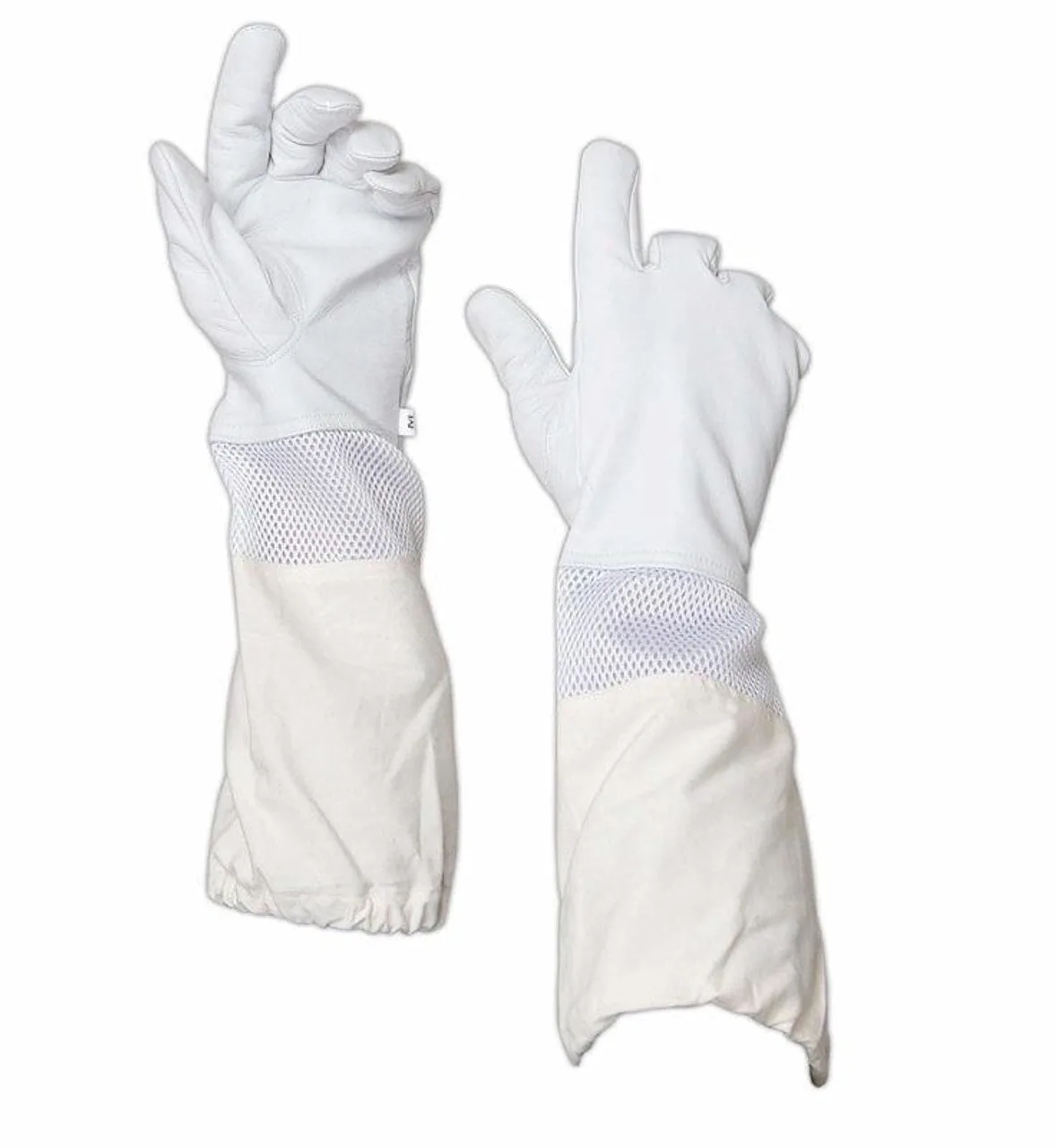
Gloves. Clean them properly first; leather and goatskin need to be dry and loosely stored, never compressed. They stiffen over a winter whatever you do; working them in the hand before the first inspection softens them again. Nitrile perishes over time regardless, so a winter is a reasonable point to replace them — see nitrile versus leather.
The veil. Stored flat or hung, away from anything with a hook. Check it against the light before you put it away rather than in March — a snag found now is a repair, and a snag found on the first warm day is a cancelled inspection.
The smoker. Empty and cold, and not in the same box as the suit. Ash and soot transfer.
Check it before you store a bee suit
Five minutes now saves the first inspection of the year. Hold the veil mesh up to the light and look for snags. Stretch each cuff and ankle and let go — tired elastic does not spring back, and this is the moment to find that out. Run every zip end to end. Look at the knees and the seat.
Anything you find is a winter job, with months to order a part — and most of it is repairable. The same fault found in April is a suit you cannot wear. If you are planning the rest of the season at the same time, Penn State Extension’s beekeeping resources and Cornell’s Pollinator Network publish the seasonal guidance worth reading alongside it.
If you inspect through the winter
Plenty of beekeepers do not pack the suit away at all — a mild winter means hefting, feeding and the occasional look. The storage advice still applies between visits; it is simply shorter.
You still store a bee suit between visits; there is simply less time for anything to go wrong. The one change is drying. A suit worn on a cold damp day and hung in an unheated outbuilding may never fully dry before the next use, and a suit that is permanently slightly damp is the one that develops mould and smells. Bring it indoors between winter visits even if you leave everything else in the shed.
Bringing it out again
However carefully you store a bee suit, air it for a day before the first visit, and run the checks above again. If it smells of anything at all, wash it — a suit that has absorbed a smell in storage is not something to introduce to a colony on a cold spring day.
Then check the fit. Bodies change over a winter more than suits do, and the signs of a wrong size are worth re-reading before you are standing over an open hive in it.
If the checks turn up worn elastic or a torn veil, it is worth knowing what a supplier will and will not cover — what to check in a warranty goes through it, and replacement veils are the part most worth being able to buy on its own.