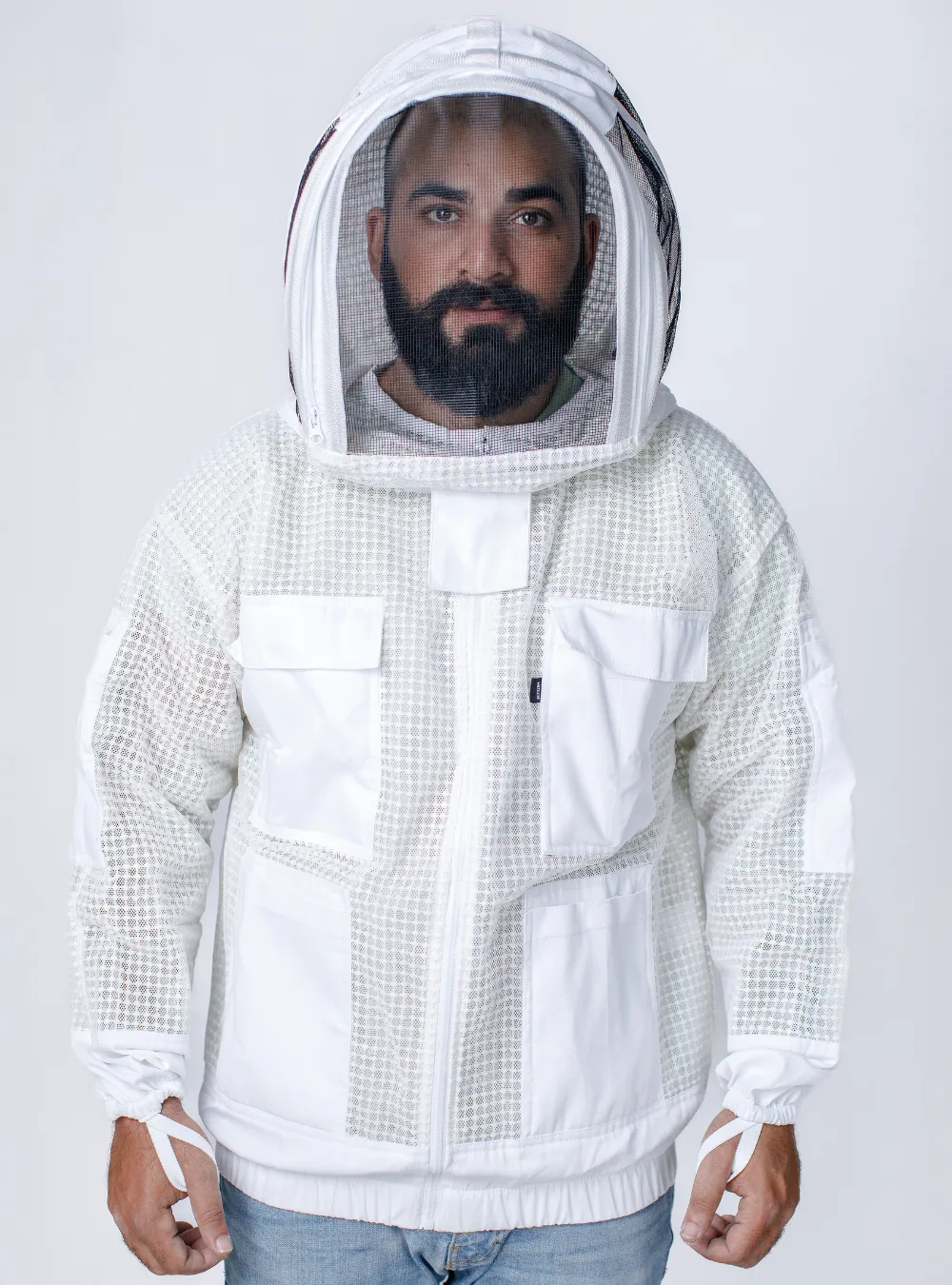
Sunburn through a ventilated bee suit
Three-layer mesh is mostly holes, and holes do not stop ultraviolet. You can burn through a bee suit on a bright day without ever feeling hot.

Yes, you can get sunburn through a bee suit, and a ventilated one is where it happens. Three-layer mesh works by being mostly holes. Holes let air through, which is the point, and they let ultraviolet through as well, which is not.
The reason it catches people out is that a mesh suit feels cool. Heat is what usually warns you that you are in strong sun, and a ventilated suit removes exactly that signal.
Why you get sunburn through a bee suit
Fabric blocks UV in two ways. It absorbs or reflects it, and it physically covers skin. A tight cotton weave does both well. An open mesh does the first across the threads and not at all across the gaps.
Layering helps, because three meshes do not line up hole for hole. But helping is not the same as stopping, and sunburn through a bee suit is simply what is left over.
Pale colour is not the protection people assume either. White reflects visible light, which is why bee suits are pale in the first place, but reflectance in the visible range says little about what passes through a gap.
Where it burns first
Predictable places, and all of them are where the fabric is closest to skin or thinnest.
| Where | Why there |
|---|---|
| Shoulders and upper back | Nearest to vertical sun, and where mesh is pulled tightest against skin |
| Forearms | Thin single layer on many jackets, and often the last thing covered underneath |
| Back of the neck | Between veil and collar, where some veils leave a gap |
| Knees | Fabric stretched flat against skin when you kneel |
| Face, through the veil | Dark mesh absorbs more than it transmits, so this is the least affected - but not none |
Notice the pattern. Fabric touching skin protects least, which is the same reason a sting reaches through a suit pressed flat. Sunburn through a bee suit and a sting through one share a cause.
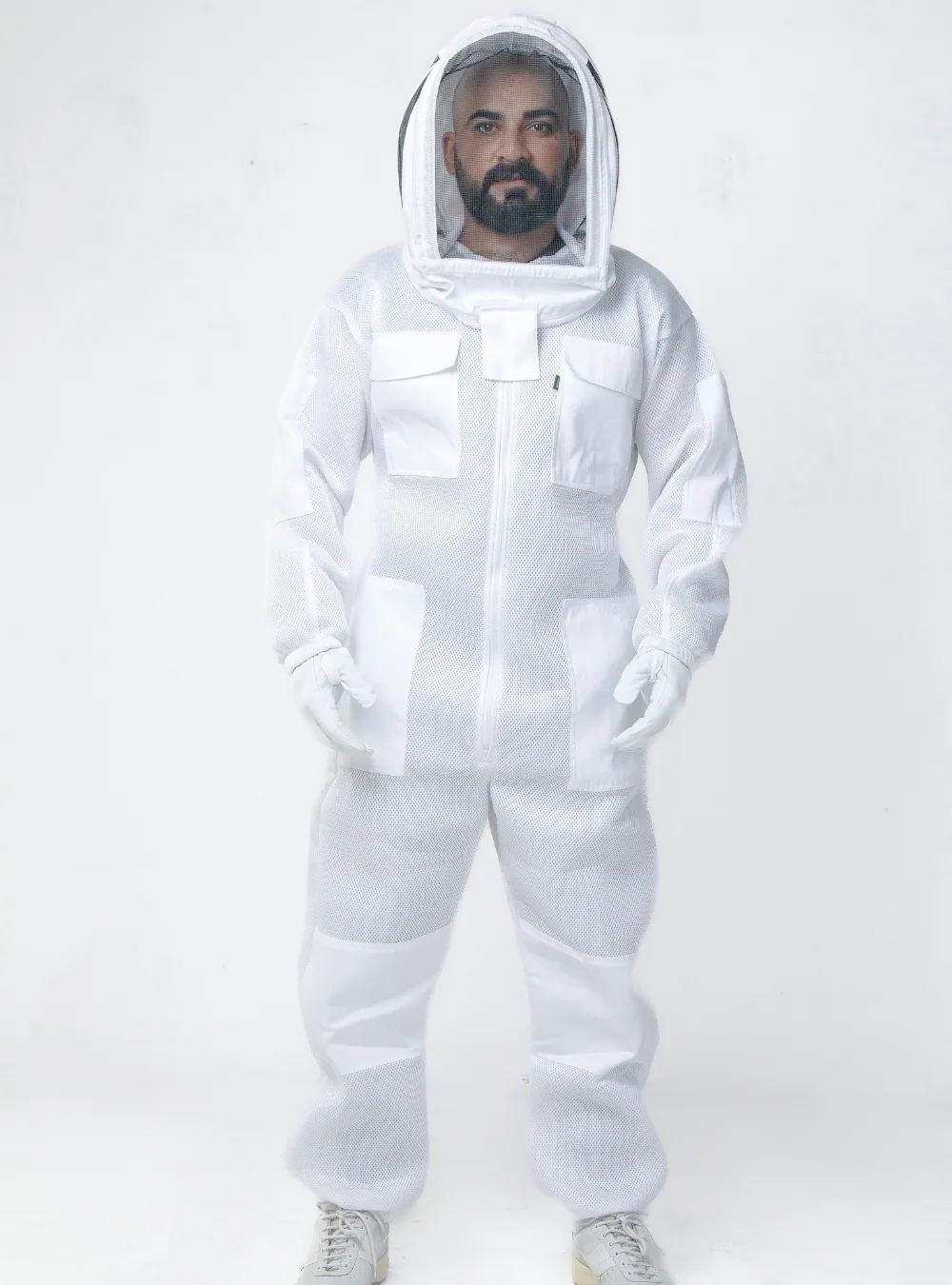
Stopping sunburn through a bee suit
- A thin long-sleeved layer underneath. The single most effective fix, and it costs nothing if you already own one. What to wear under a bee suit covers which fabrics work in heat.
- Sunscreen before you dress, not after. Shoulders, forearms, neck. Let it dry, or it transfers onto the mesh.
- A brimmed hat under a round veil. It shades the neck gap and holds the mesh off your face at the same time.
- Inspect early. Morning sun is lower and weaker, and it is better for the colony anyway.
- A cotton suit when the sun is the bigger problem. Counter-intuitive in heat, but a tight weave stops far more UV than mesh does.
The sunscreen problem nobody mentions
The usual answer to sunburn through a bee suit creates a second problem. Sunscreen transfers to the inside of the mesh, where it collects dust and propolis, and a greasy veil panel is a veil panel that fogs. Veil fogging gets noticeably worse on a suit worn over fresh sunscreen.
So apply it early, let it absorb properly, and keep it off your forehead if you wear a close veil. Then wash the suit more often than you otherwise would through summer.
Does this mean ventilated suits are a mistake?
No. Heat exhaustion is a more immediate risk than sunburn through a bee suit, and a mesh suit is far better against it. The right conclusion is that a ventilated suit solves heat and does not solve sun, so you add the sun protection separately.
If you are still choosing, ventilated against cotton sets out the rest of the trade, and the best colour for hot climates settles a question people overthink.
The short version
Sunburn through a bee suit is real, it happens on the shoulders and forearms first, and the suit gives you no warning because you are not hot. One thin layer underneath and sunscreen before dressing deals with nearly all of it.
For a suit that is genuinely cool without being bare mesh everywhere, the ventilated range and the semi-vented suit sit either side of that line. Penn State Extension's beekeeping resources and the University of Georgia bee programme cover working conditions more broadly.