
How to clean beekeeping gloves
Leather cannot be washed the way fabric can, and the usual advice ruins it. Here is what actually works, and when to stop trying.

To clean beekeeping gloves, match the method to the material: nitrile rinses or gets thrown away, fabric gauntlets wash cool, and leather gets wiped rather than washed. Leather is the one people ruin, because the instinct — soak it, scrub it, dry it somewhere warm — destroys it in that order.
Why you clean beekeeping gloves more often than the suit
You clean beekeeping gloves more than anything else because they are in the hive. Hands handle frames, scrape propolis and get sticky, so gloves collect far more than the rest of a kit does.
They also hold scent. A glove that was stung in carries alarm pheromone into the next visit, and leather holds it longer than fabric. That is the reason to clean beekeeping gloves that matters most, and it is not about how they look.
How to clean beekeeping gloves in leather and goatskin
The rules are the opposite of fabric, so they are worth stating plainly.
- Wipe rather than soak. A damp cloth, cool water, a little mild soap. Work over the surface rather than wetting the leather through.
- Scrape propolis cold. Let it harden, crack it off with a fingernail or a blunt edge. Do not try to dissolve it — propolis does not come out of anything, and solvents strip the oils out of leather.
- Dry slowly, away from heat. Room temperature, out of sun, never on a radiator and never in a dryer. Heat shrinks and hardens leather permanently.
- Work them in the hand as they dry. Open and close your fist a few times. This is what keeps them supple, and it is the step everybody skips.
What not to do: machine wash, soak, bleach, or use saddle soap and heavy conditioners. Conditioners soften leather by adding oil, which sounds right and makes the glove slippery on a frame.
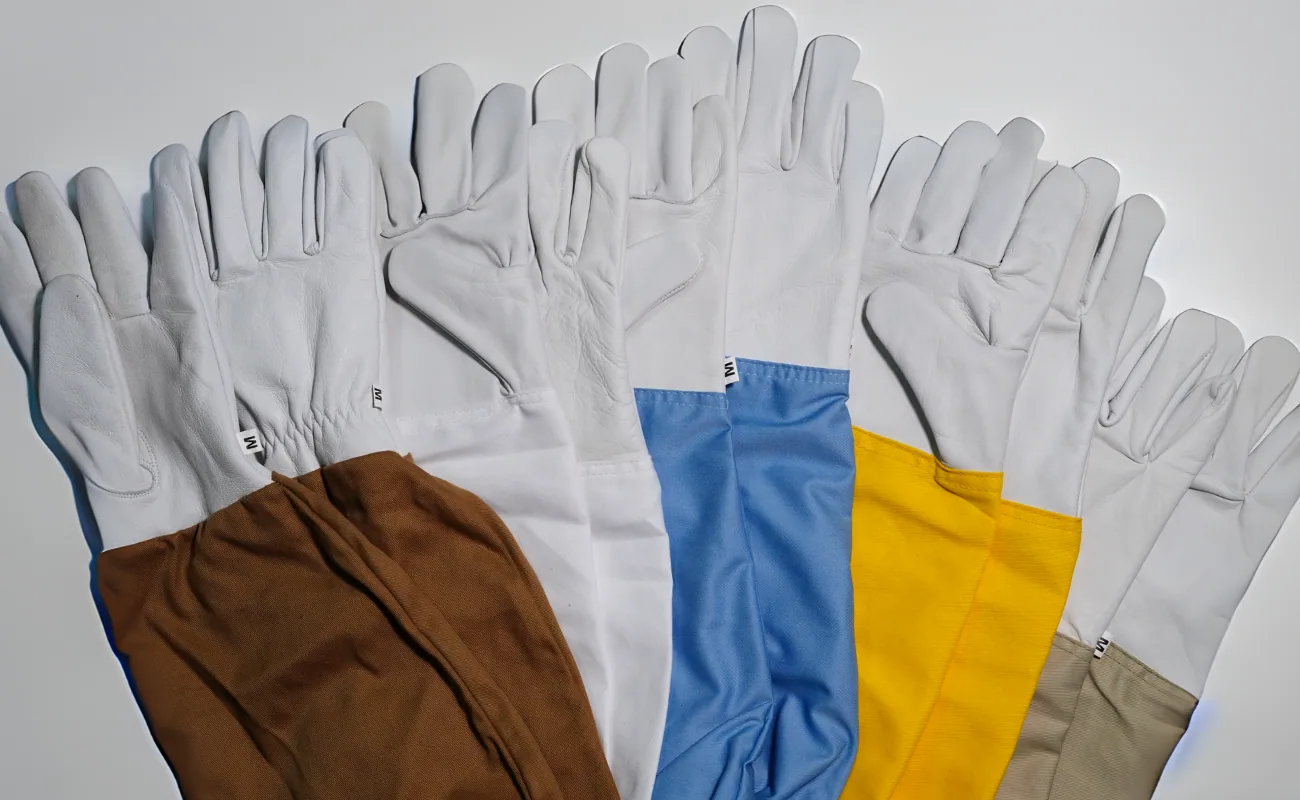
The fabric gauntlet
Most leather beekeeping gloves have a cotton or canvas sleeve above the wrist, and that part behaves like any other fabric.
Hand wash it cool with ordinary detergent, keeping the leather out of the water as much as you can. Hang to dry with the gauntlet down so water does not run into the palm.
This is where most of the smell lives, so cleaning the gauntlet alone fixes a lot. It is also the part that goes first — a gauntlet that has lost its elastic no longer tucks properly under a sleeve, and that join is where stings get in.
Nitrile
Barely a cleaning question. Rinse under a tap, dry, reuse a few times, then throw them away — which is why it suits a first season and a starter kit.
Nitrile perishes whether you use it or not, so a box left from last season may be brittle. Check by stretching one before a visit rather than discovering it over an open hive.
Its disposability is a genuine advantage in two cases: working several sites in a day, and humid climates where leather never dries properly.
What each material tolerates when you clean beekeeping gloves
| Machine wash | Soak | Heat dry | Realistic lifespan | |
|---|---|---|---|---|
| Nitrile | No — rinse | No need | No | Days to weeks |
| Goatskin | No | No | Never | Seasons, with care |
| Cowhide | No | No | Never | Seasons |
| Cotton gauntlet | Hand wash cool | Briefly | No | Outlives the palm |
The lifespan column is deliberately vague. It depends on how often you work, what you handle and how you store them, and anyone quoting a number of years for a glove has made it up — the same reason no honest answer exists for suits either.
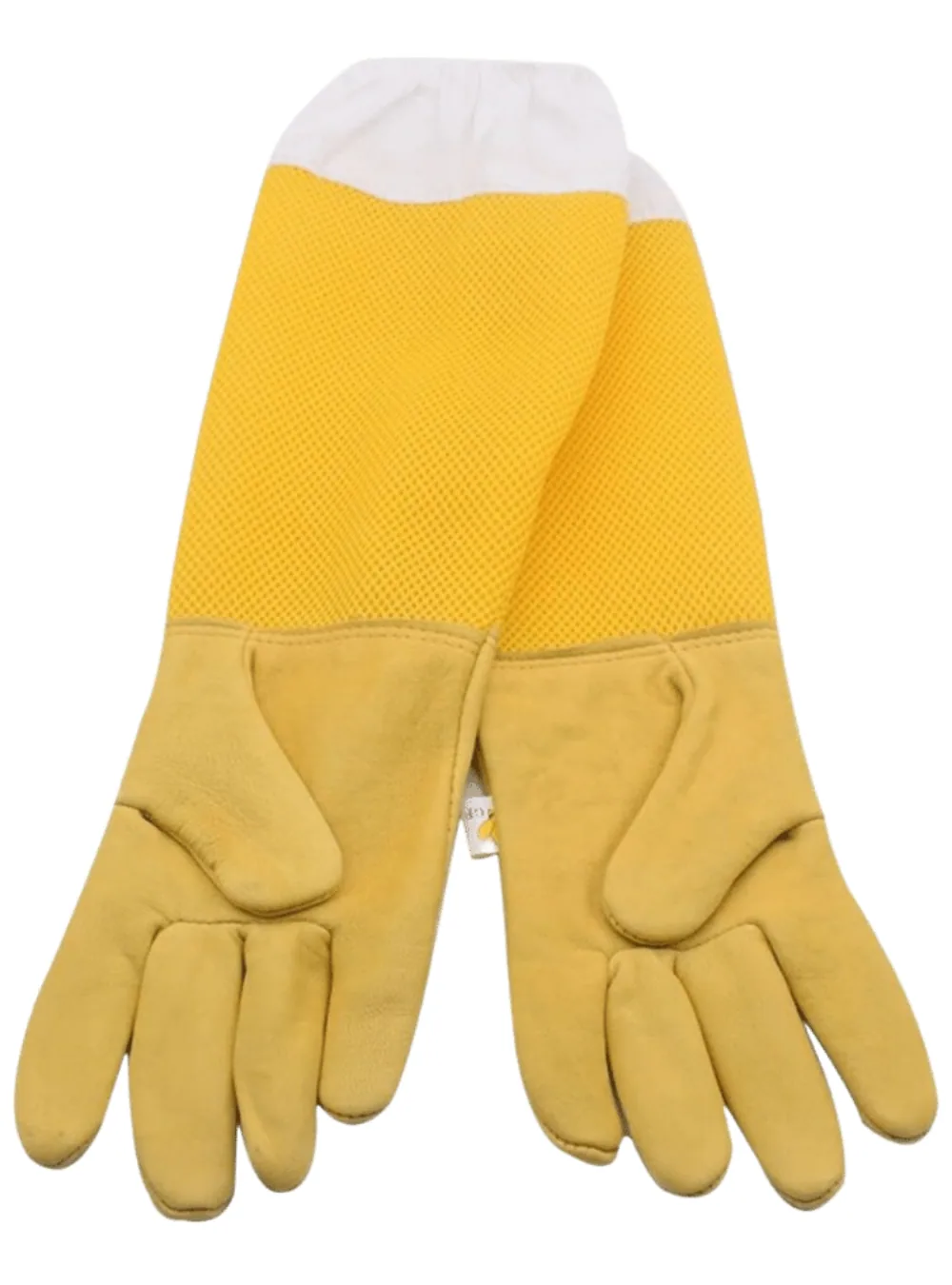
Reviving stiff leather
Gloves that have dried hard are usually recoverable, and the method is mechanical rather than chemical.
Work them. Open and close your fist, flex each finger, roll the palm between your hands. Leather stiffens because the fibres have set, and movement breaks them apart again — ten minutes of this does more than any product.
What to avoid: heat to soften them, which sets them harder as they cool, and heavy conditioners, which add oil and make a glove slippery on a frame. A very small amount of a light leather dressing on a glove that has gone genuinely dry is reasonable; saturating it is not.
Gloves that have been soaked and dried near a radiator are usually past this. That is the one mistake that is not recoverable.
Between sites and between colonies
If you keep bees at more than one location, gloves are the item most likely to travel between them, and leather is the material least able to be cleaned properly.
That is the strongest practical argument for nitrile: a fresh pair per site costs very little and removes the question. Where that is not practical, a thorough wipe and a full dry between sites is the realistic minimum.
What the right practice is for your area — and whether there is a notifiable disease consideration at all — is a question for your local bee inspector or association rather than for us. Penn State Extension's beekeeping resources and the University of Georgia Bee Program are where to start.
Storing them between visits
- Dry before they go away, properly dry, right through the palm.
- Loose, not compressed. A glove squashed under a suit for a winter keeps the crease.
- Out of the light. Ultraviolet hardens leather and perishes nitrile.
- Not in a sealed box. Whatever moisture is in them stays in them, and leather goes mouldy.
Storing a suit over winter covers the same principles for the rest of the kit, and gloves are the item it applies to most.
When to stop cleaning beekeeping gloves and replace them
Four signs, and only one is about dirt.
A split at a fingertip. Even a small one. It will open.
Leather gone hard and shiny. That is oil lost and heat damage, and no amount of conditioning brings back the feel.
A gauntlet that no longer grips. Replaceable on some gloves; on most it is the pair.
You cannot pick a coin off a table in them. The practical dexterity test from gloves sizing — if a glove fails it, it is causing the clumsiness that crushes bees.
Gloves are the consumable in a kit. Replacing them willingly is cheaper than the defensive colony a worn-out pair eventually causes.
For handling guidance rather than kit care, Penn State's beekeeping basics and the University of Georgia Bee Program are the right sort of source. Our beekeeping gloves are listed by hand size, in nitrile, goatskin and cotton-backed leather.