
How to measure a child for a bee suit
Four numbers, taken the way the suit will be worn. Age is not one of them, and it is the one most people order by.

To measure a child for a bee suit you need four numbers: chest, sleeve from shoulder to wrist, inseam, and height. Take the sleeve with the arm bent and the inseam in the boots they will wear, because that is how the suit has to work. Age is not a measurement, and it is what most people order by.
Why age fails
You measure a child for a bee suit because clothing is sold by age for convenience, not accuracy. Two eight-year-olds can be a size apart, and a child who is tall for their age usually needs length rather than girth.
On ordinary clothes that produces something slightly roomy. On a bee suit it produces slack at the cuffs and ankles, which is where bees get in — the openings only protect when they grip. The children's buying guide covers why that matters more than the body fit.
The four numbers to measure a child for a bee suit
- Chest. Around the fullest part, over the clothes they will wear underneath — not over bare skin. Keep the tape level and the child relaxed, arms down.
- Sleeve. From the point of the shoulder to the wrist bone, with the arm bent as if holding a frame. A straight-arm measurement is shorter than the suit needs.
- Inseam. From the crotch to the floor, wearing the boots they will use. Boots add real length and the ankle has to reach over them.
- Height. Against a wall, shoes off. Useful as a cross-check rather than as the main number.
The two in italics are the ones people skip, and they are the two that decide whether the suit still covers the child when they reach and crouch.
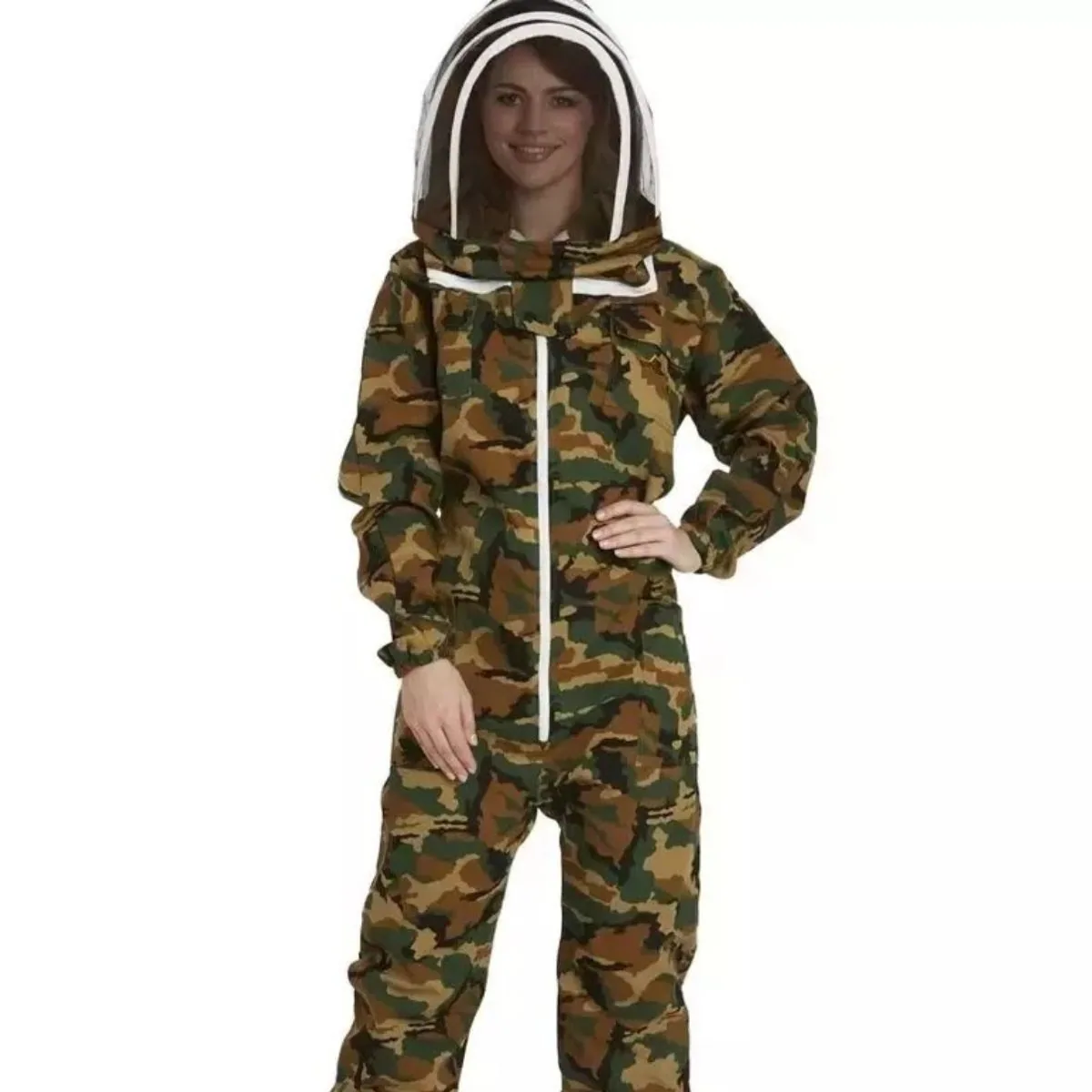
How to measure a child for a bee suit without a struggle
A few things that make it easier with a child who is not interested.
- Do it over clothes, which is what you want anyway.
- Two people is far faster than one — one to hold the tape, one to read it.
- Measure a jacket that already fits them instead, laid flat: shoulder seam to cuff for the sleeve, armpit to armpit doubled for the chest. This is often more reliable than measuring a wriggling child.
- Write them down with the date. You will want them again in a year, and the comparison tells you how fast they are growing.
Where to allow room when you measure a child for a bee suit
| Part | Room to grow? |
|---|---|
| Chest, back, thighs | Yes, a little. Slack here is the protection |
| Sleeve length | A little, if there are thumb loops to hold it down |
| Cuffs | No. A loose cuff is an open sleeve |
| Ankles | No. They ride up every time the child crouches |
| Collar and veil | No. A veil standing off the collar is a gap at the throat |
This is the whole of children's sizing in one table. Slack in the first two rows costs nothing; slack in the last three is what lets bees in.
Between sizes
Size up for the body, never for the openings.
If the chest says one size and the sleeve says the next, take the larger one and use thumb loops to hold the cuff down. If the cuffs are loose in the larger size and there are no loops, take the smaller one — you can live with a short sleeve far more safely than with an open one.
And if two of the four measurements land in different sizes, a made-to-measure children's suit stops being an indulgence. Whether a measured suit is worth it applies to children sooner than to adults, because children's proportions move faster than a chart does.
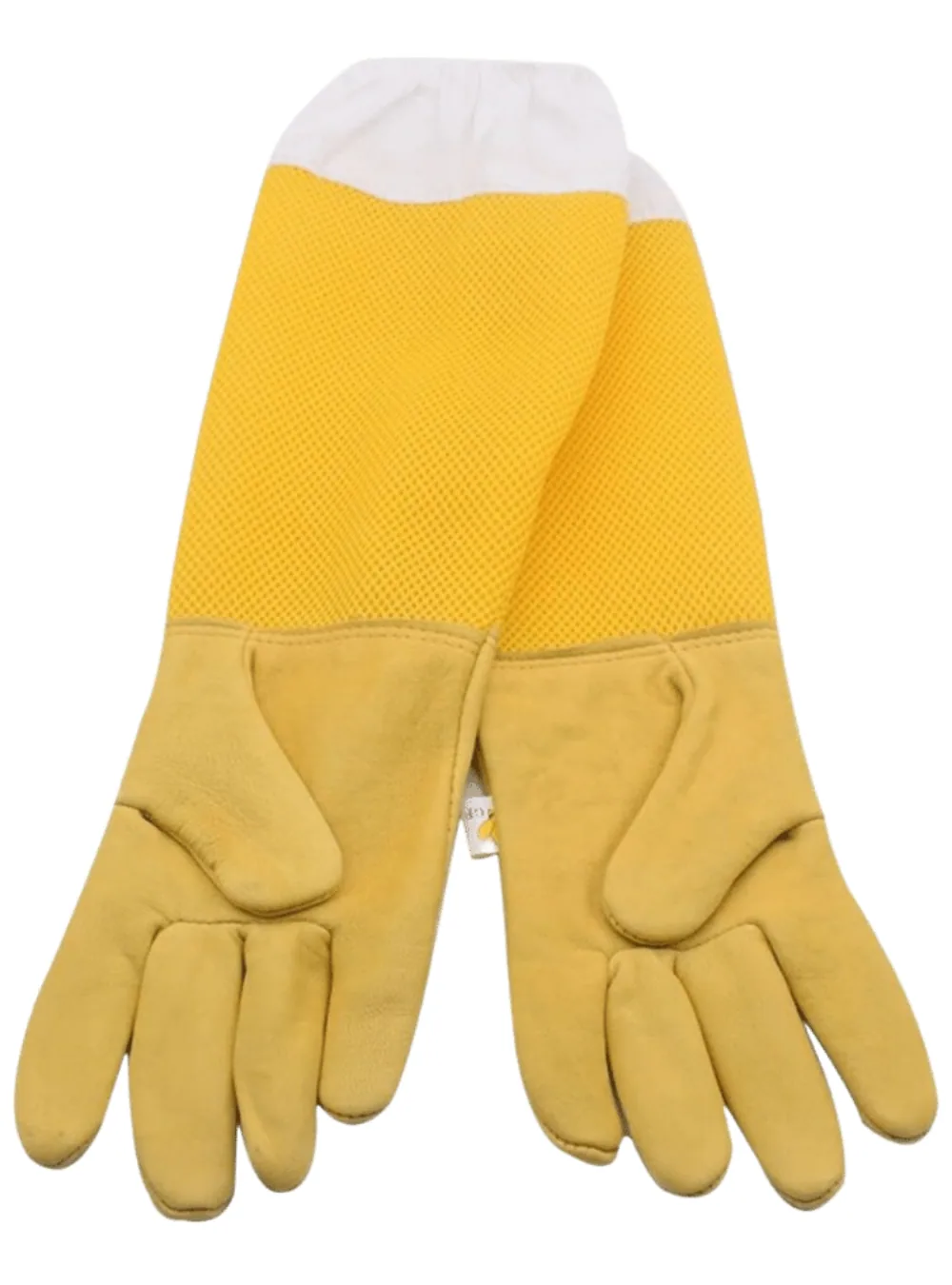
Measure the hands too
While you have the tape out. Around the palm at the knuckles with the thumb excluded, hand relaxed and flat, dominant hand.
Gloves are where children's kit most often goes wrong, because adult gloves get rolled back rather than replaced — and dexterity matters more at a small size, not less. Children's gloves covers it.
Checking it when it arrives
- Cuffs grip the wrist with the hand through them — not loose, not tight enough to mark.
- Have them squat all the way down. The ankles should stay over the boots.
- Have them reach forward. The cuffs should stay over the gloves.
- Veil zipped fully home, no gap at the throat.
- Looking down at their own boots, the mesh does not touch their nose.
- They can open and close the veil zip themselves, in gloves.
That last one is the check most often skipped and the one worth doing twice — a child who cannot open their own veil is not ready to wear it.
Measure a child for a bee suit bought second-hand
And price is mostly construction. Used children's suits are often barely worn, because children outgrow them long before they wear them out — which makes this the one category where buying used is the obvious answer rather than a compromise.
The measurements matter more, not less. You cannot try most used suits on before buying, so ask the seller for the garment measurements rather than the size label: chest armpit to armpit laid flat, and shoulder seam to cuff. Labels vary between makers; centimetres do not.
What to check on a used suit covers the condition side — and for a child, the cuffs and ankles matter most, because those are what a previous owner's growth spurt stretched.
What to do with the numbers
Keep them somewhere you will find them: a note on your phone, with the date and the size that ended up fitting.
Two uses. Next year the comparison tells you whether they have grown enough to need a replacement before the season rather than during it. And if you ever order a made-to-measure suit, you have a record rather than a memory — whether a measured suit is worth it comes up sooner for children than adults.
Measure a child for a bee suit again each year
Once a year, before the season rather than during it. Children grow out of the openings before the body, so a suit that still "fits" may already have stopped closing properly.
The cheapest approach for a growing child is a second-hand suit replaced often rather than one expensive one bought large — what to check on a used suit covers buying that way.
Our children's suits are cut as their own garment, the Buzzy Buddies suit can be made to measurements, and the size guide lists what we cut. For outreach where a child can try kit before you buy, Cornell's Pollinator Network and the University of Georgia Bee Program are the sort of programme to look for.