Homemade bee suit: can you make your own?
You can sew the body of a bee suit in an afternoon. The veil and the openings are the parts that keep bees out, and they are the parts a home build gets wrong.

You can make a homemade bee suit. The part you would enjoy making is the part that was never hard: a pale boiler suit with long sleeves is an afternoon's work. The veil, the collar zip and the cuffs are where protection actually lives. All three are difficult to get right outside a factory.
So the honest answer is: you can, and the result will protect you less than a cheap bought suit.
What a homemade bee suit gets right
Fit, and that is worth something. Suppose you are between sizes, very tall, or shaped in a way graded patterns handle badly. A garment cut to your measurements then fits better than anything off a shelf.
Fabric choice too. You can pick a tight pale weave at whatever weight you like. That is more control than most listings give you. What bee suits are made of and what GSM means cover what you would be choosing between.
The veil is the hard part
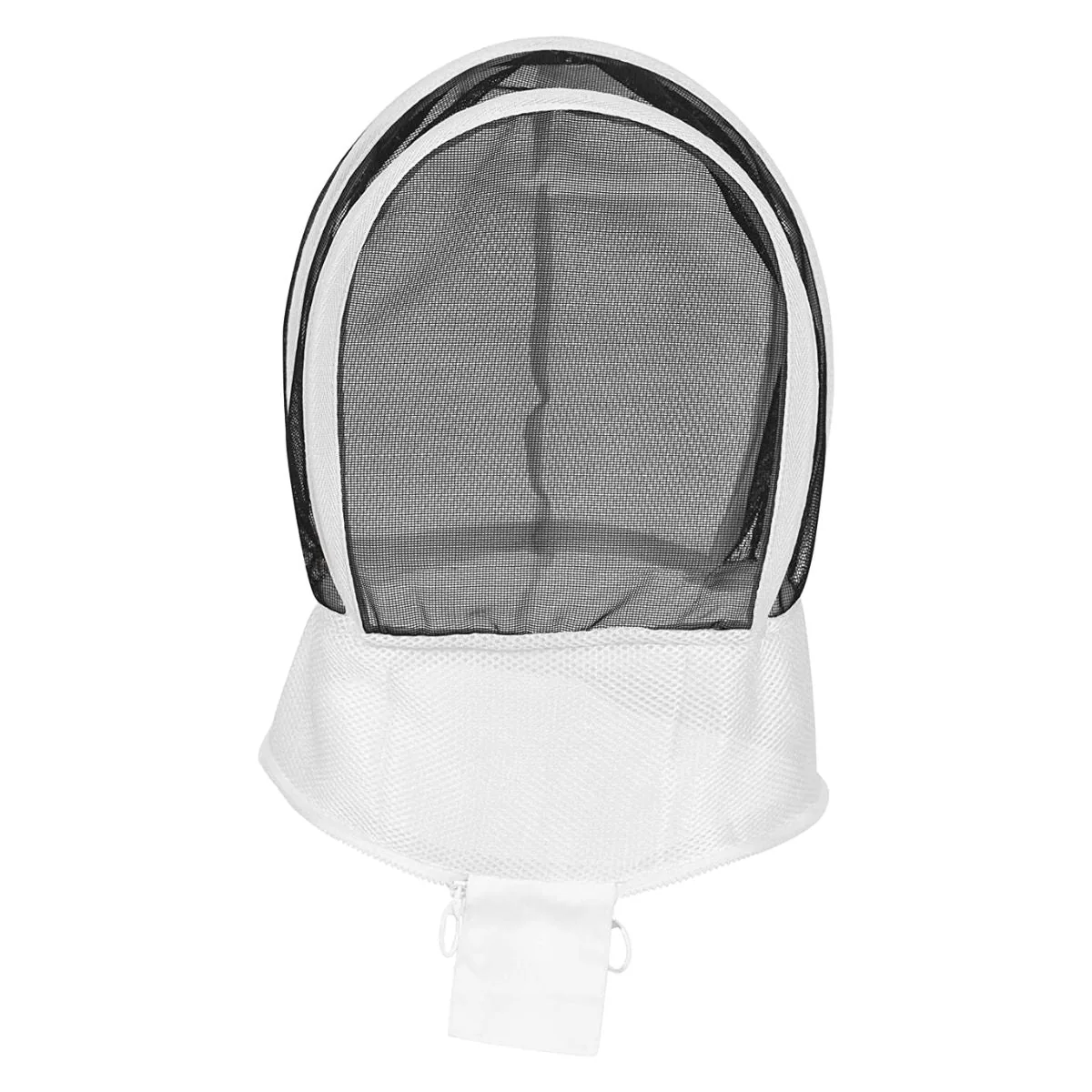
A veil has to do four things at once, and a home build usually manages two.
- Mesh at the right gauge. Fine enough that a bee cannot pass, open enough to see through. Garden netting fails the first test. Curtain netting fails the second.
- Held off the face. Five to ten centimetres, maintained while you move. That needs a stiffened collar or a frame, not a drawstring.
- Dark at the front, pale elsewhere. Black mesh at the front is a visibility requirement, not a style choice.
- Sealed to the body. A zip around the collar on both sides, with no gap at the ends of the zip run.
The fourth is the one that catches people, and it is where a homemade bee suit usually fails. Bees find a two-centimetre opening at the neck quickly. A bee inside a veil is the worst place for one to be. Getting a bee out of your veil is a skill you would rather not need often.
The openings are the second hard part
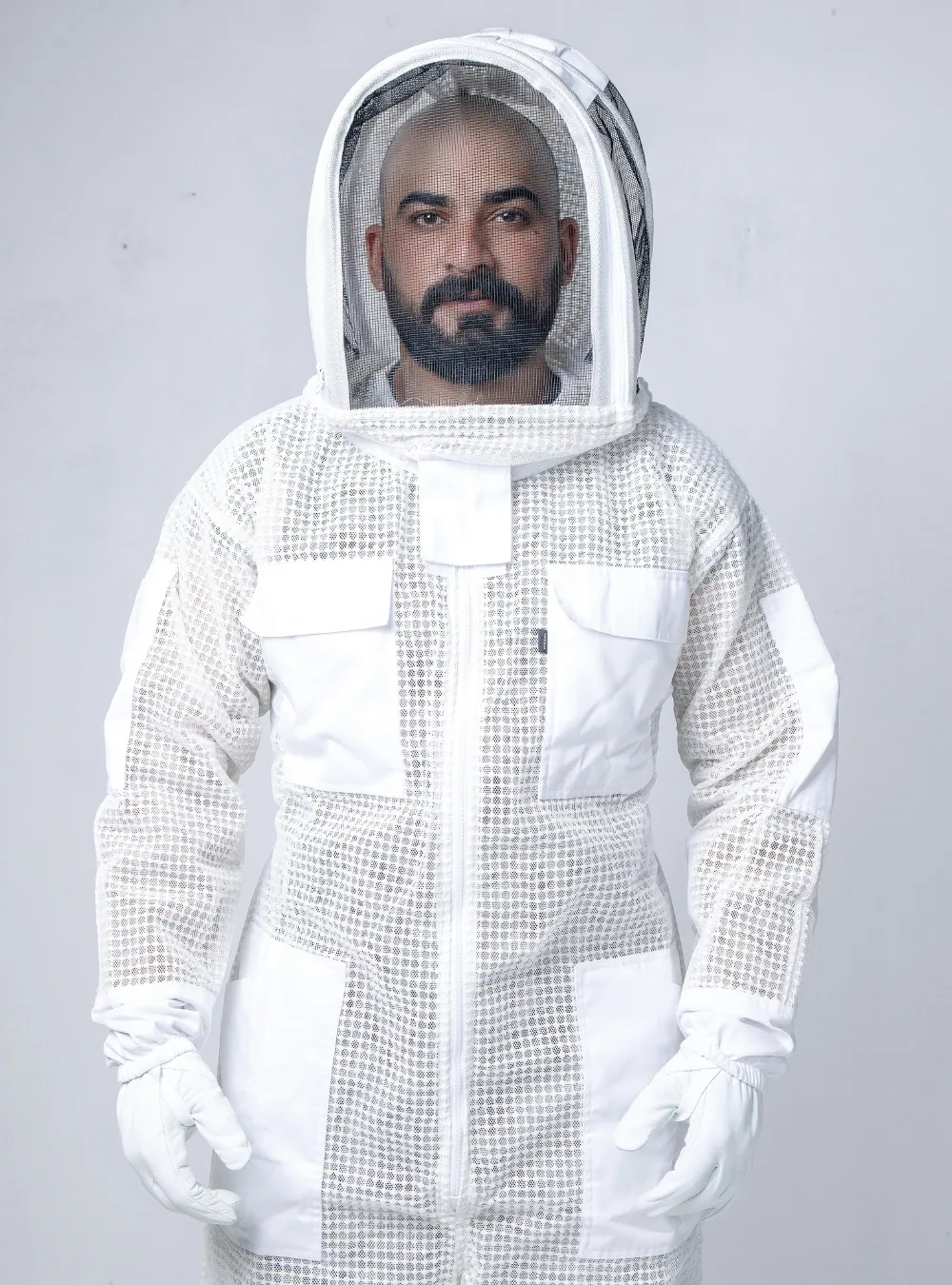
Everywhere the suit stops, something has to close it. This is sewing work rather than design work, it is fiddly, and it is the second place a homemade bee suit comes apart.
| Opening | What a bought suit does | What a home build usually does |
|---|---|---|
| Wrists | Elastic, often with a thumb loop to stop ride-up | Elastic that is too loose, or a cuff with no elastic |
| Ankles | Elastic, with length to overlap a boot | A plain hem, which rides up when you crouch |
| Front zip | Full length, double-ended, with a flap behind it | A single zip with no flap, so the teeth are the only barrier |
| Collar | Two zip runs that meet with no gap | One zip, or Velcro, which opens under load |
| Pockets | Flapped or inside, so nothing collects bees | Open patch pockets |
Sealing wrists and ankles goes through what each one has to achieve. Elastic cuffs against thumb loops covers the choice at the wrist.
Fabric is not the barrier people expect
A sting is long. A single layer of ordinary cotton drill is not reliably thick enough on its own, which is why bought cotton suits are heavy and why mesh suits use three layers to hold a gap instead.
So if you sew a homemade bee suit from shirting or light cotton, you have made a garment that looks like a bee suit and stings through. Whether bees can sting through a suit explains the distance principle you would need to reproduce.
What a homemade bee suit does make sense for
Three things, genuinely:
- Trousers. The easiest piece, with no veil and only two openings. Pale, smooth, high-waisted, elastic at the ankle. Whether you need beekeeping trousers covers what they must do.
- Alterations. Shortening sleeves, taking in a waist, adding a thumb loop to a bought suit. All useful, all low risk.
- Repairs. Far more valuable than building from scratch, and repairing a torn bee suit is a skill worth having.
If cost is why you asked
Then a homemade bee suit is the wrong answer to the right question. Fabric, mesh, two zips and elastic add up to most of the price of a basic suit. That is before you have spent a Saturday on it.
Two better routes. First, buy a jacket rather than a suit and wear your own trousers; the jacket range is the cheapest thing that genuinely works. Second, buy used carefully, which what to check on a second-hand suit covers. A plain cotton suit is also cheaper than most people assume, and what drives the price of a bee suit explains where the money goes.
If you are going to do it anyway
Buy the veil. A replacement veil costs a fraction of a suit and is made to the right gauge. It solves the hard half of the problem in one purchase. The hat and veil range has standalone ones, and replacing a bee suit veil shows how one attaches.
Then sew the body of the homemade bee suit to fit, attach the bought veil properly, and test it by kneeling, bending and reaching in front of a mirror before you go near a colony. For general beginner guidance, Penn State Extension and the University of Georgia bee programme are both sound.