
Where do beekeepers get stung most?
Hands and wrists, then ankles, then the face. The pattern is not about where bees aim — it is about where a suit stops covering you when you move.

Beekeepers get stung on the hands and wrists more than anywhere else, then the ankles, then the face. That order has almost nothing to do with where bees choose to sting and almost everything to do with where a suit stops covering you the moment you reach, crouch or lean.
Why beekeepers get stung where they move, not where bees aim
You fit a suit standing still. You test it while working. Every place below is somewhere the garment moves against you and a gap opens — or somewhere the fabric presses to your skin, so a sting reaches through.
Nobody has published a reliable count of where beekeepers get stung, so treat the ordering as what suppliers and beekeepers consistently report rather than as a measured statistic. The mechanism, though, is not in question: the openings move, and the openings are where it happens.
1. Hands and wrists
The clear first place, for three reasons stacked on top of each other.
Your hands are in the hive. They do the work, they sit nearest the frames, and they pin a bee against wood without meaning to.
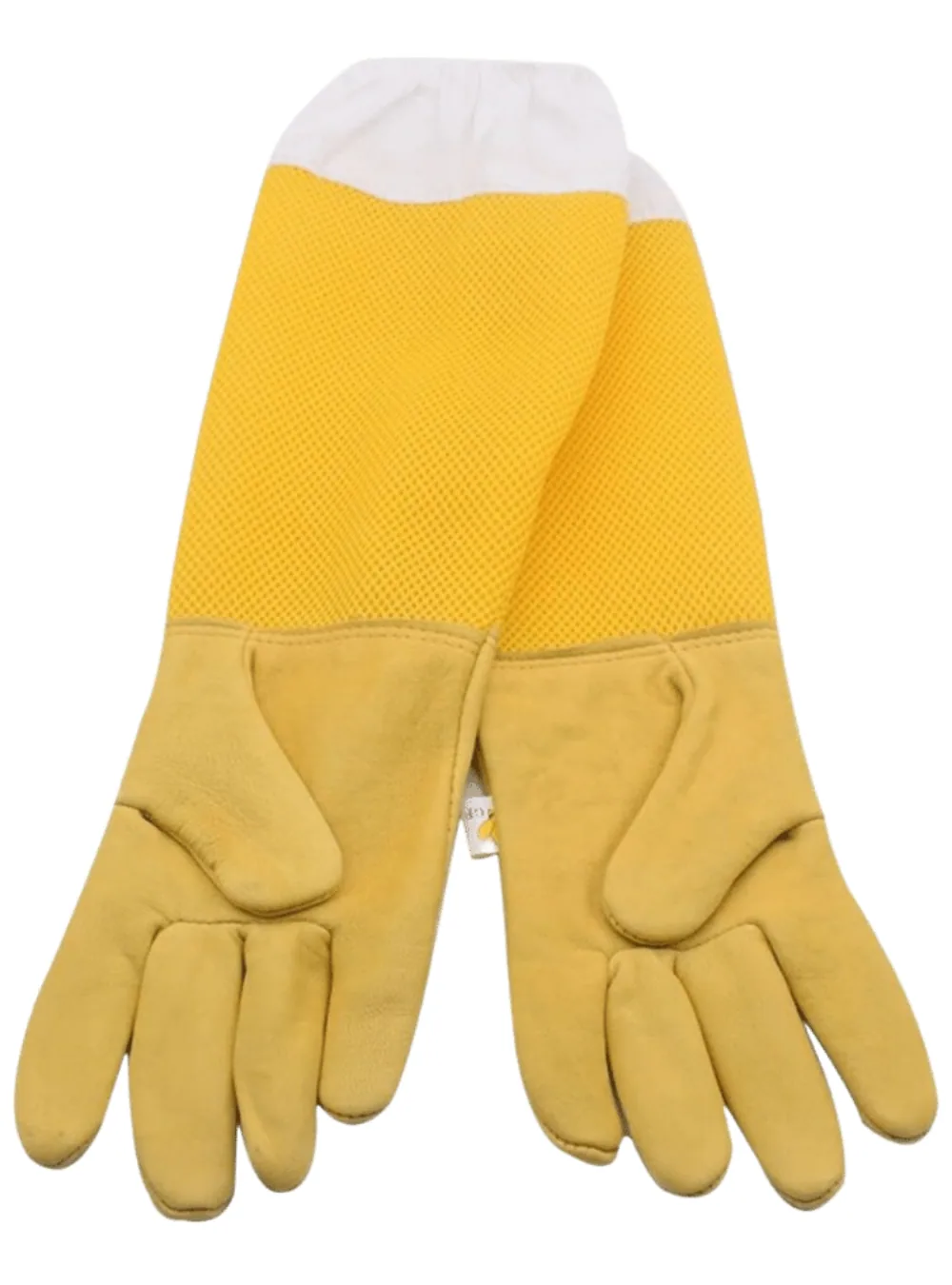
The wrist is where two garments meet, and a join is always the weak point. Reach forward and the sleeve rides up, exposing the glove gauntlet — or worse, the skin between them.
And gloves that do not fit make it worse rather than better. Oversized gloves make hands clumsy, clumsy hands crush bees, and a crushed bee releases the alarm scent that brings the rest. Gloves sizing covers fitting them properly; it is the single most useful thing on this page.
2. Ankles
Second, and the most avoidable. You crouch at a hive, the trouser leg rides up, and a sock is all that protects everything below mid-calf.
A better suit will not fix it. A taller boot will. A high shaft gives the ankle elastic several inches of overlap to lose before anything shows. Trainers give it a sock — which is why trainers cause more ankle stings than anything else.
3. The face and neck
Third in frequency and first in how much it matters. Two distinct failures.
Mesh resting on skin, which also costs you what you can see. Let a veil touch your forehead or nose and a sting can cross it. You invite that every time you look down at a frame, which is most of the time — and most of all in a fencing veil, which follows the shape of your head — the fencing veil's main drawback.
A gap at the throat. Usually a hood zip somebody stopped short of running home, or a collar held away by long hair tied high behind it.
Both have the same cheap fix: a thin peaked cap under the veil, and hair tied low at the nape.
4. Shoulders, thighs and the seat
Not gaps — compression. The fabric stays intact and touches you, so the suit loses its gap exactly where a bee happens to land.
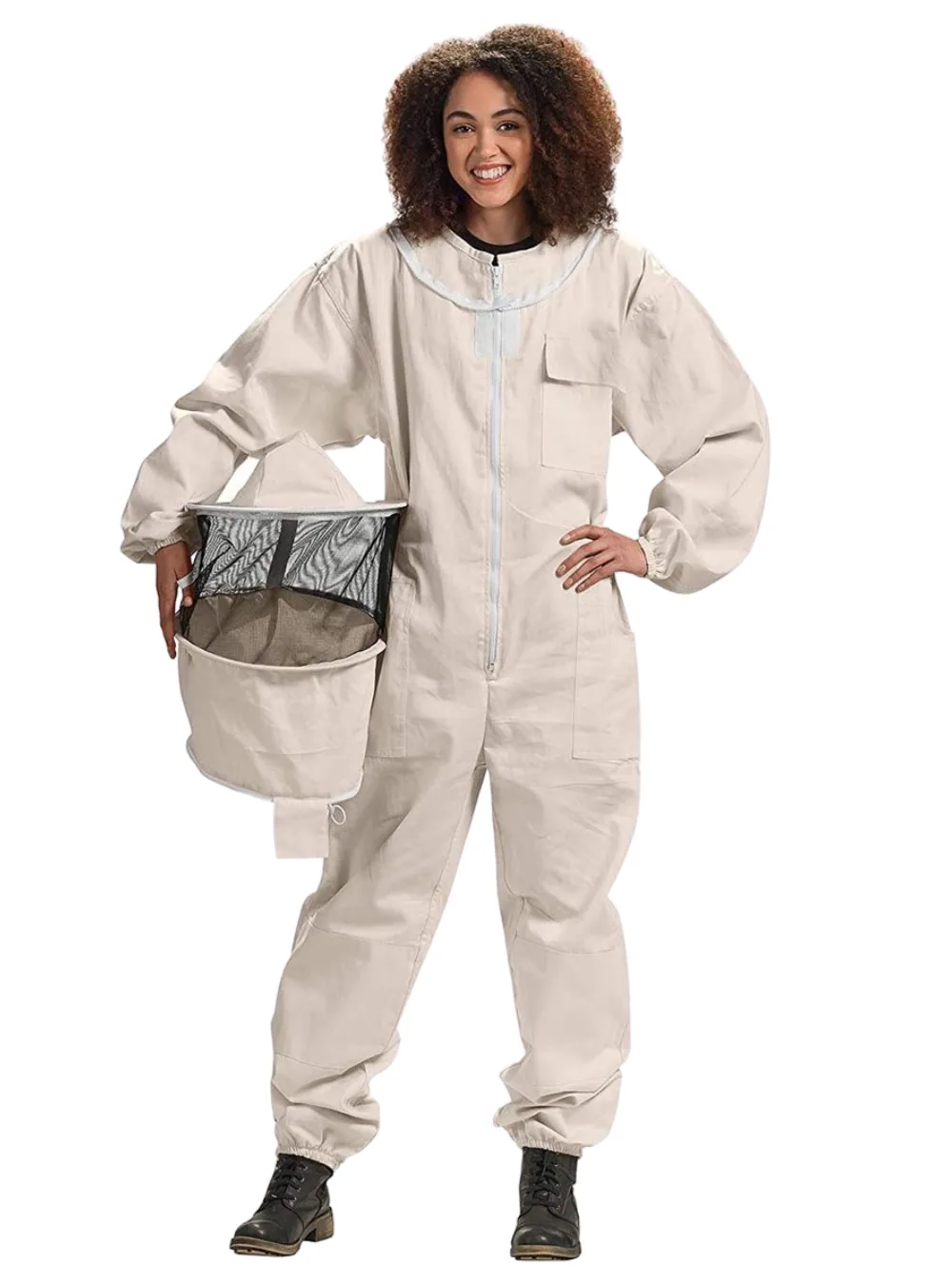
Shoulders when you reach into a box, thighs when you kneel, the seat when you sit on a hive stand. Can bees sting through a bee suit covers the mechanism; the practical answer is a slightly looser suit and one thin layer underneath.
Does it change with experience?
Yes, in both directions, which is why asking an experienced beekeeper how often they are stung gives a misleading answer.
Experienced beekeepers get stung less per inspection. They move slowly, crush fewer bees, and read a colony's mood before opening it. But many wear less — bare hands are common — so whatever they do take lands on skin.
A beginner in full kit who moves quickly and crushes bees gets stung through gaps. Somebody with twenty years and bare hands gets stung on the fingers, deliberately accepting it. Neither number tells you anything about the other's equipment.
What the pattern tells you to buy
| Where | What actually fixes it |
|---|---|
| Hands and wrists | Gloves that fit, thumb loops, and sleeves long enough for a bent arm |
| Ankles | A boot with a high shaft, and a leg that goes over it — see trousers |
| Face | A thin cap under the veil; a round veil if yours keeps touching |
| Throat | Zip fully home; hair tied low |
| Shoulders and thighs | A looser suit and a layer underneath |
Three of those five cost very little and none of them is a new suit, which is worth knowing before replacing one.
Checking the five places beekeepers get stung
- Put the suit on with the boots and gloves you actually use.
- Reach forward as if lifting a frame. Watch the wrists — this is where it happens.
- Crouch fully. Watch the ankles.
- Look down at your own boots. Watch the veil.
- Kneel. Notice where the fabric pulls tight.
Whatever fails in that minute is where the next sting lands — which is why the same checks belong before every inspection. It is the same test as how a bee suit should fit, read backwards.
When beekeepers get stung: the seasonal pattern
Late summer is when most of it happens, and it is wasp season too — bee suits for wasps have less margin than with honey bees.
Colonies are at their largest, there is honey to defend, forage is thinning, and wasps are robbing. The same colony that let you work in shirt sleeves in May will not in August. Beekeepers who were stung rarely all spring are often surprised.
What that means practically: do the kit checks on this page before the late-summer visits rather than at the start of the season, because that is when the suit is actually tested.
The part that is not clothing
How you work changes the count more than anything you wear. Slow hands, nothing crushed, the hive at a height you are not folded over, and smoke used lightly rather than heavily.
Crushing bees deserves repeating, because it causes more stings than anything else and you control all of it. Look before you put a frame down.
On temperament and on handling specifically, Penn State's beekeeping basics and the University of Georgia Bee Program are the right sort of source — and anything about your own reaction to stings is a question for a doctor rather than for a shop.
Our beekeeping gloves are listed by hand size, and veils come in all three shapes if yours keeps touching your face.