
What age can a child wear a bee suit?
There is no age. There is a test: can they follow an instruction they do not like, immediately, without arguing? That is the whole qualification.

There is no age at which a child can wear a bee suit safely, because the question is not about size or years. It is about whether they can follow an instruction they do not like, immediately, without arguing. A calm seven-year-old is readier than an excitable twelve-year-old, and suits are made small enough for either.
Before any age, a child can wear a bee suit when they can do four things
- Stand still when told, straight away, without asking why. This is the whole of apiary safety for a child.
- Work their own veil zip, in gloves, without help. A child who cannot open their veil will panic when they want it open, and panic near a hive is the real hazard.
- Walk away calmly rather than running or flapping, if something goes wrong — the walk-away drill.
- Say they want to leave, and trust that it will happen without discussion.
If all four are true, the age does not matter. If any is not, no suit makes up for it.
Why asking what age a child can wear a bee suit is the wrong question
Because the age a child can wear a bee suit is standing in for two different things that do not arrive together.
Size is easy. Makers cut suits for children, and measuring a child uses the same method as for an adult. A small child is not a problem.
Self-control under surprise is the real variable, and it is personal rather than developmental. Some children are calm at five. Some are not at fourteen. Parents already know which theirs is, and usually trust that answer less than they should.
What to let a child do once they can wear a bee suit
| Stage | What they do | Kit |
|---|---|---|
| Watching | Several metres back, learning what calm looks like | Veil or jacket. No gloves needed |
| Fetching | Carrying the brush, passing a tool | Gloves from here |
| Holding | A frame, with an adult's hands on it too | Gloves that actually fit |
| Lifting | A frame alone, once they are slow and calm | Full kit |
| The smoker | Last, and much later. It is a lit fire | — |
Most children stay at the first stage for a whole season, and that is fine. Watching is not a waiting room; it is where they learn that beekeeping is slow.
The one thing not to do at any age a child can wear a bee suit
Take a child who has not asked.
A child who wants to come wears the suit properly, keeps the hood down and does as they are told. A child brought along pushes the hood back when they get hot, wanders, and remembers the day as something that happened to them.
Wait to be asked. It is the single best predictor of how it will go, and it costs nothing but a season.
Before the first visit, whatever age a child can wear a bee suit
Three things, all done indoors.
Practise the zips at the kitchen table until they can do it in gloves without looking. Ten minutes.
Agree what "stop" means out loud — that they can say it and it happens immediately, no discussion. Then keep that promise the first time, even if it is inconvenient.
Walk through the drill: stop, walk that way, then we sort it out. Point at the direction. Practise it once with nothing wrong.
Siblings, and the age the younger child can wear a bee suit
The common real-world case, and it deserves naming.
An older child is ready and a younger one wants to come too. The temptation is to take both, because supervising one at the hive and one at the house is impractical.
It is worth resisting. The younger child is the one who will be bored, and a bored child near an open hive moves, wanders and reaches. If they come, give them a job well back from the hive and a clear mark to stand on, and accept that you are supervising rather than inspecting that day.
Visitors, and what age a child can wear a bee suit of yours
Different again, because you do not know them and their parents do not know bees.
Two things to settle first. Ask the parent whether the child has ever reacted badly to a sting, and if the answer is uncertain, that is a conversation for their doctor rather than a reason to proceed. And agree with the parent, in front of the child, that the visit ends the moment the child says so.
Then keep it short and keep them back. A first visit for somebody else's child should be watching, in a veil, from several metres.
What the suit has to do differently
Two things, and both argue against the usual instinct to buy large.
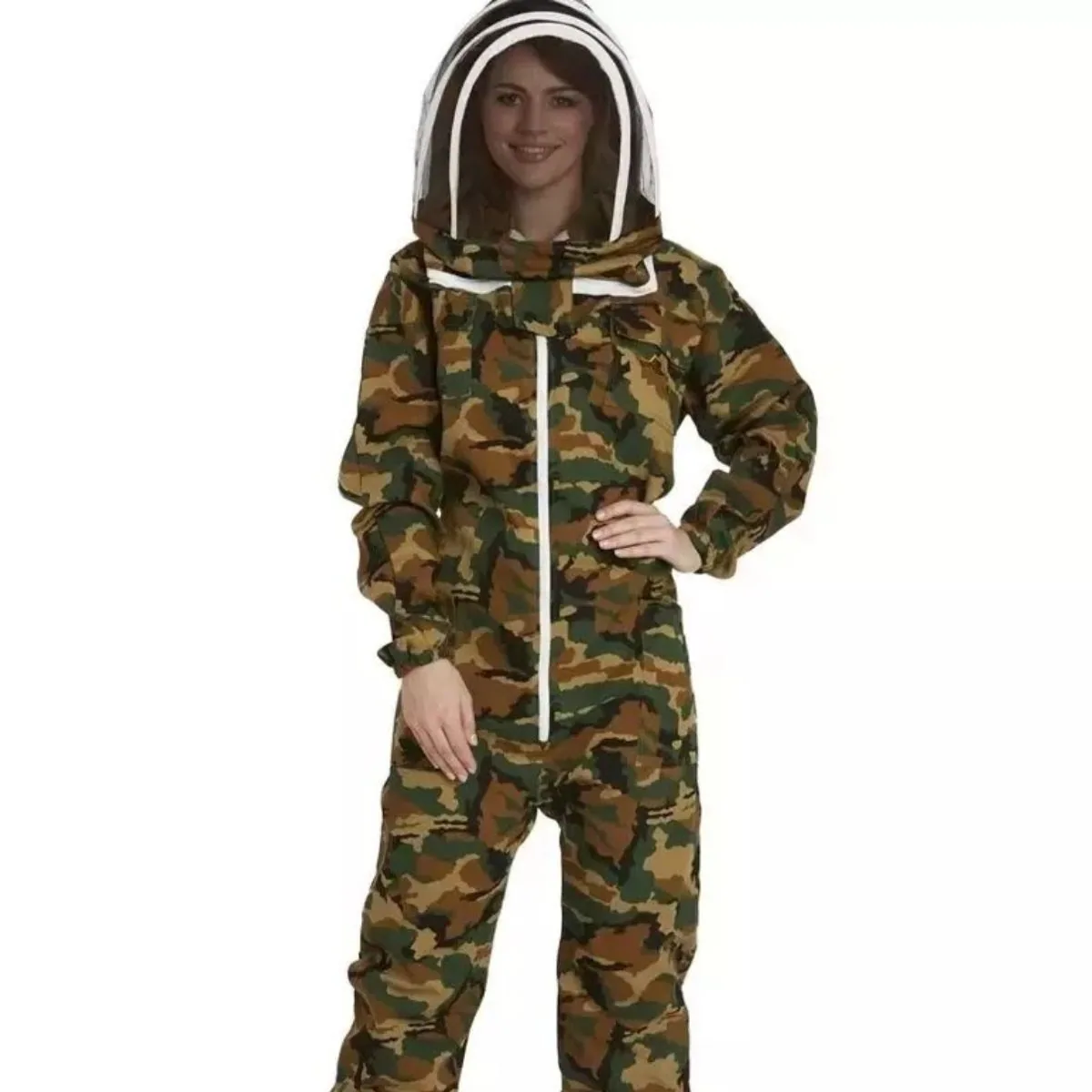
The veil needs the same clearance over a smaller face, so makers draft a child's suit as its own garment rather than shrinking an adult pattern. The cuffs, ankles and collar must grip the child today — slack there means an open suit.
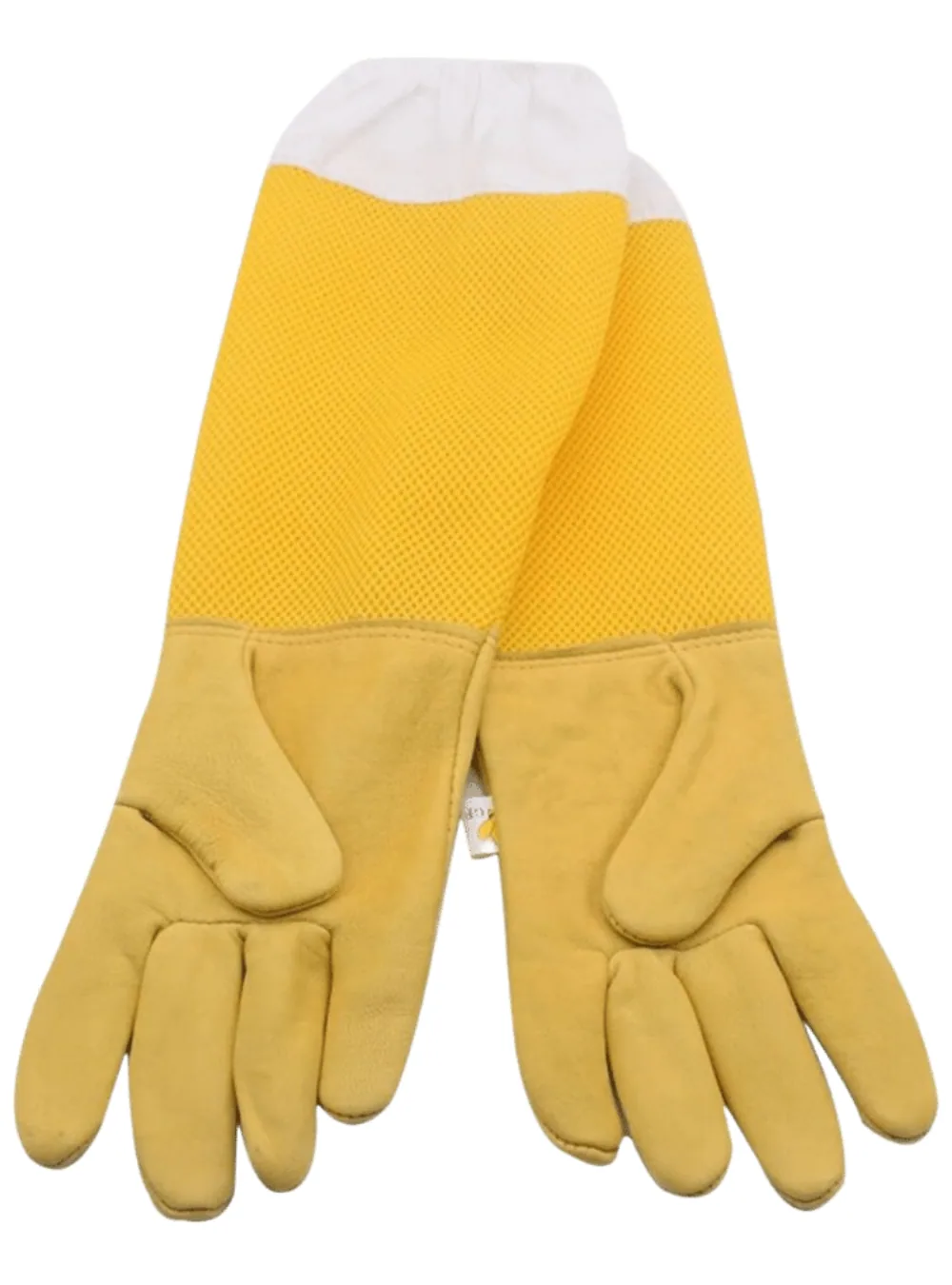
The children's buying guide covers both in full, and children's gloves covers the hands, where dexterity matters more at a small size rather than less.
If it goes badly
Stop, that day, without making it a lesson. A sting, a fright or simply getting too hot is reason enough to leave and try another time.
Children who are allowed to leave come back. Children who are made to stay do not — and a child who has decided bees are frightening has learned something very hard to unlearn.
Anything about how a child reacts to a sting is a question for your doctor rather than for a shop, and it belongs before the first visit rather than after one.
Beekeeping with children safely covers the practice at the hive itself. For somewhere to start that is not your own apiary, Cornell's Pollinator Network and the University of Georgia Bee Program run the sort of outreach worth finding locally. Our children's suits are cut as their own garment.