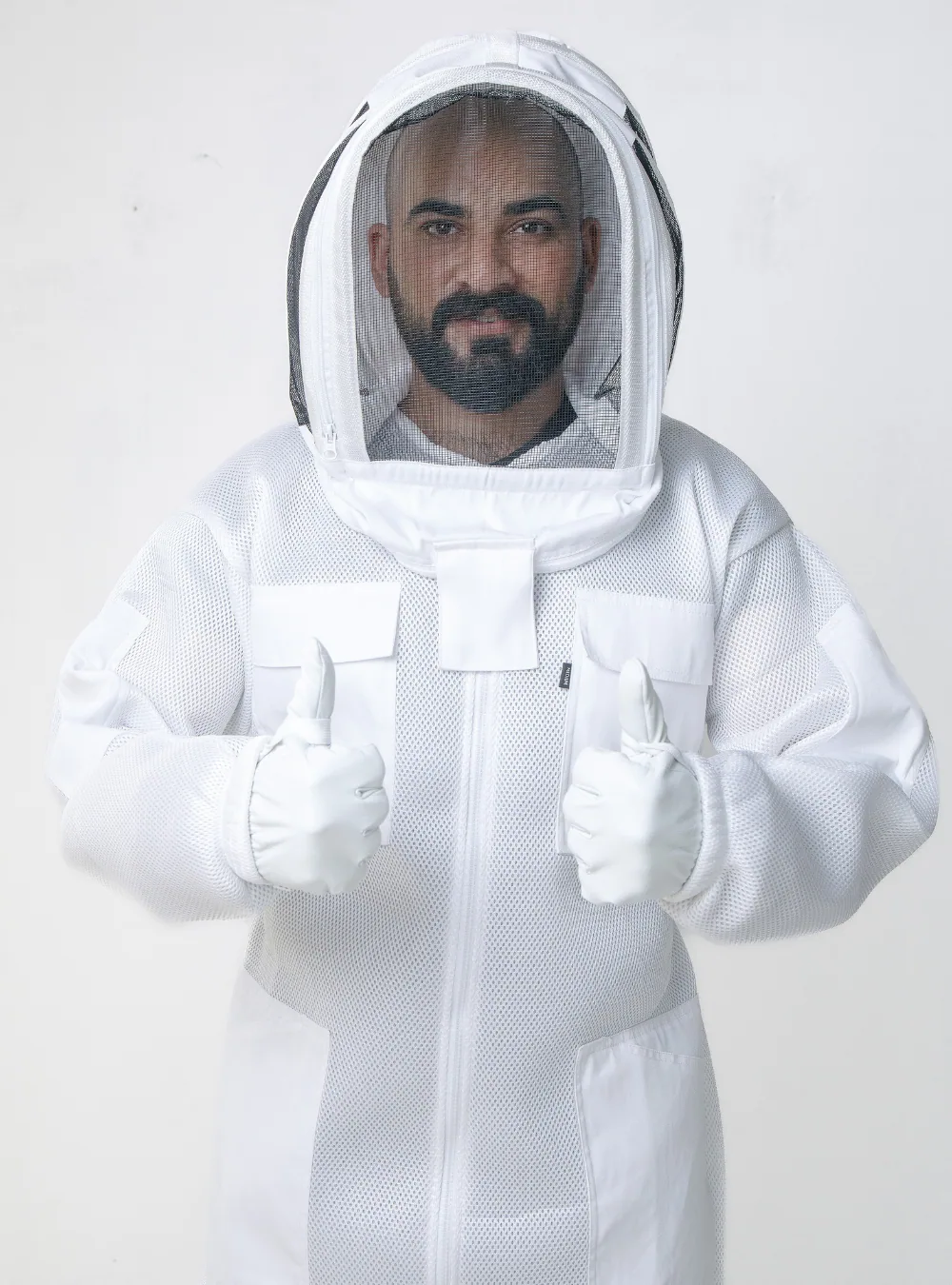
Smoker burns and bee suit fabric
A lit smoker is hot metal held at waist height. Cotton chars and keeps its shape; synthetic mesh melts, shrinks and sticks. The difference matters more than the hole does.

Smoker burns are the most common damage a bee suit takes, and they are not all the same injury. A lit smoker is a metal canister at several hundred degrees. It is carried at waist height, by someone whose attention is on a frame. What happens when it touches the suit depends entirely on what the suit is made of.
Cotton chars, synthetic melts
This is the whole of it, and it decides how worried to be.
Cotton scorches. It browns, then chars, then burns through, and the hole keeps crisp edges. It is ugly and it is a hole. However, the fabric around it behaves normally.
Polyester mesh does something different. It softens, then melts, then shrinks away from the heat. As it goes it pulls the surrounding fabric tight and fuses it into a hard rim. So a small contact becomes a larger opening than the smoker ever touched. Worse, molten synthetic sticks to what it touches. For that reason smoker burns on mesh can reach skin, where a char on cotton does not.
| Fabric | What a touch does | Repairable? |
|---|---|---|
| Heavy cotton | Chars; a hole with firm edges | Yes, patch it |
| Polycotton | Chars and partly melts; edges go hard | Usually |
| Three-layer mesh | Melts and shrinks; the hole grows past the contact | Rarely well |
| Veil mesh | Melts instantly; gauge is destroyed locally | No - replace the veil |
The last row is the one that matters most. A veil with a melted patch is not a veil, and replacing a bee suit veil is the only honest answer.
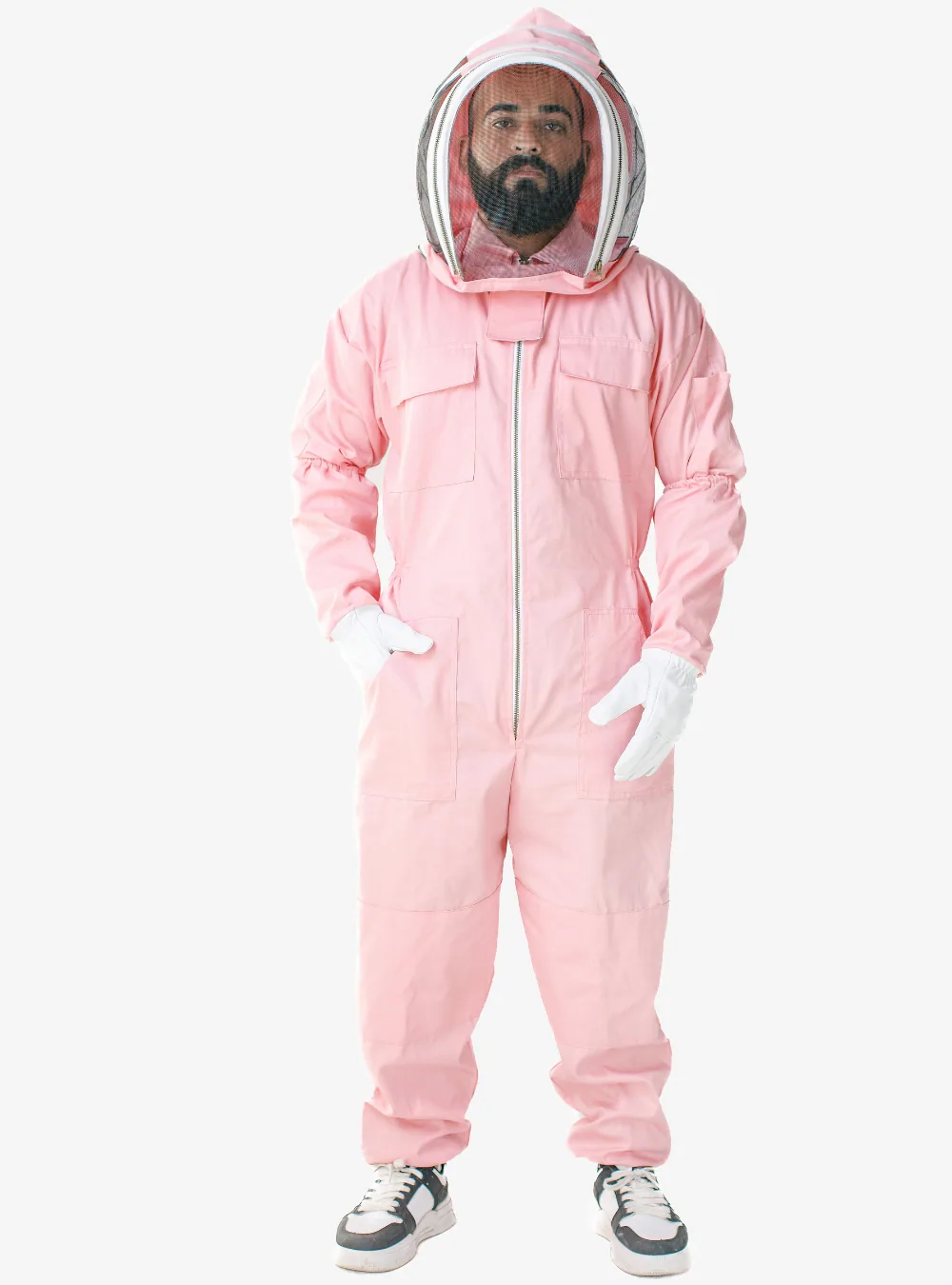
Where smoker burns actually happen
Three places, over and over.
- The right hip, or whichever side you set the smoker down on. You crouch, the smoker is where your hip now is.
- The forearm, reaching across a lit smoker for the hive tool.
- The knee, kneeling next to one standing in the grass.
All three come from the smoker standing beside you rather than in front of you. Because of this, moving it two feet further out removes most smoker burns on its own.
How to stop getting them
- Put the smoker down in front, not beside. You can see what is in front of you.
- Use a smoker with a guard if yours has one, and keep it on.
- Never carry it against your body. Carry it by the bellows, arm extended.
- Stand it on something hard - a hive roof, a stand, a paving slab - not in grass where it tips.
- Light it before you suit up, so the fiddly minute with a hot canister happens while you are not wearing the suit.
Is a burned suit still safe?
Depends where. A char on a sleeve or a leg is a hole you can patch, and repairing a torn bee suit covers the method. A melted area on mesh is a bigger judgement call. The shrunken rim keeps opening under load.
Two places where the answer is no. Any damage to the veil mesh, and any within a hand's width of the collar zip. That area takes all the strain of the veil, so it tears from the burn. Zip failures often start at exactly such a weak point.
If the suit is also old, how long a bee suit lasts is the better question than whether this particular hole is survivable.
Smoker burns and what you wear underneath
Worth a line, because it is the one case where the layer under the suit does real work. A thin synthetic base layer under a melting mesh suit is the wrong combination, since it melts too. Cotton underneath is therefore better against heat, even where synthetic is better against sweat.
That is a genuine trade rather than a clear answer, and what to wear under a bee suit goes through both sides of it.
The short version
Smoker burns damage mesh far worse than cotton, and veil mesh worst of all. Put the smoker in front of you on something solid, carry it by the bellows, and light it before you dress. Patch a char; replace a melted veil.
If your current suit is already scarred, the cotton suits take this kind of punishment better than mesh does, and the veil range has standalone replacements. For general apiary practice, Penn State Extension and the University of Georgia bee programme are both reliable.