
Ripstop vs plain weave bee suit fabric
Ripstop stops a tear spreading; plain weave has more cloth doing the protecting. The choice is about what you do, not which is better.

Ripstop vs plain weave comes down to one difference: ripstop has a grid of heavier threads woven in at intervals, so a tear stops at the next line instead of running. Plain weave has no grid and, usually, more cloth. Ripstop is how lightweight suits are made possible; plain weave is what you want if the suit is going to be worked hard.
Ripstop vs plain weave: how ripstop works
Look closely at ripstop and you will see a faint square grid. Those are thicker threads woven in every few millimetres through an otherwise light cloth.
When the fabric is punctured, the tear propagates along the weave until it reaches one of those threads and stops. The damage stays a small hole rather than becoming a long split — which is the failure mode that ends a garment in the field.
That lets a maker use a lighter base cloth than they otherwise could, because the catastrophic failure is engineered out. The weight saving is the point.
What plain weave gives you
A uniform cloth with no reinforcement, which sounds worse and is not, for two reasons.
It is usually heavier, and on a woven suit the cloth protects by being loose and substantial — a sting is stopped by distance, and more cloth drapes further from you.
It also abrades better. A grid resists tearing; it does not resist being rubbed through. Plain weave in a heavier cotton or poly-cotton survives kneeling and scraping against hive furniture in a way light ripstop does not.
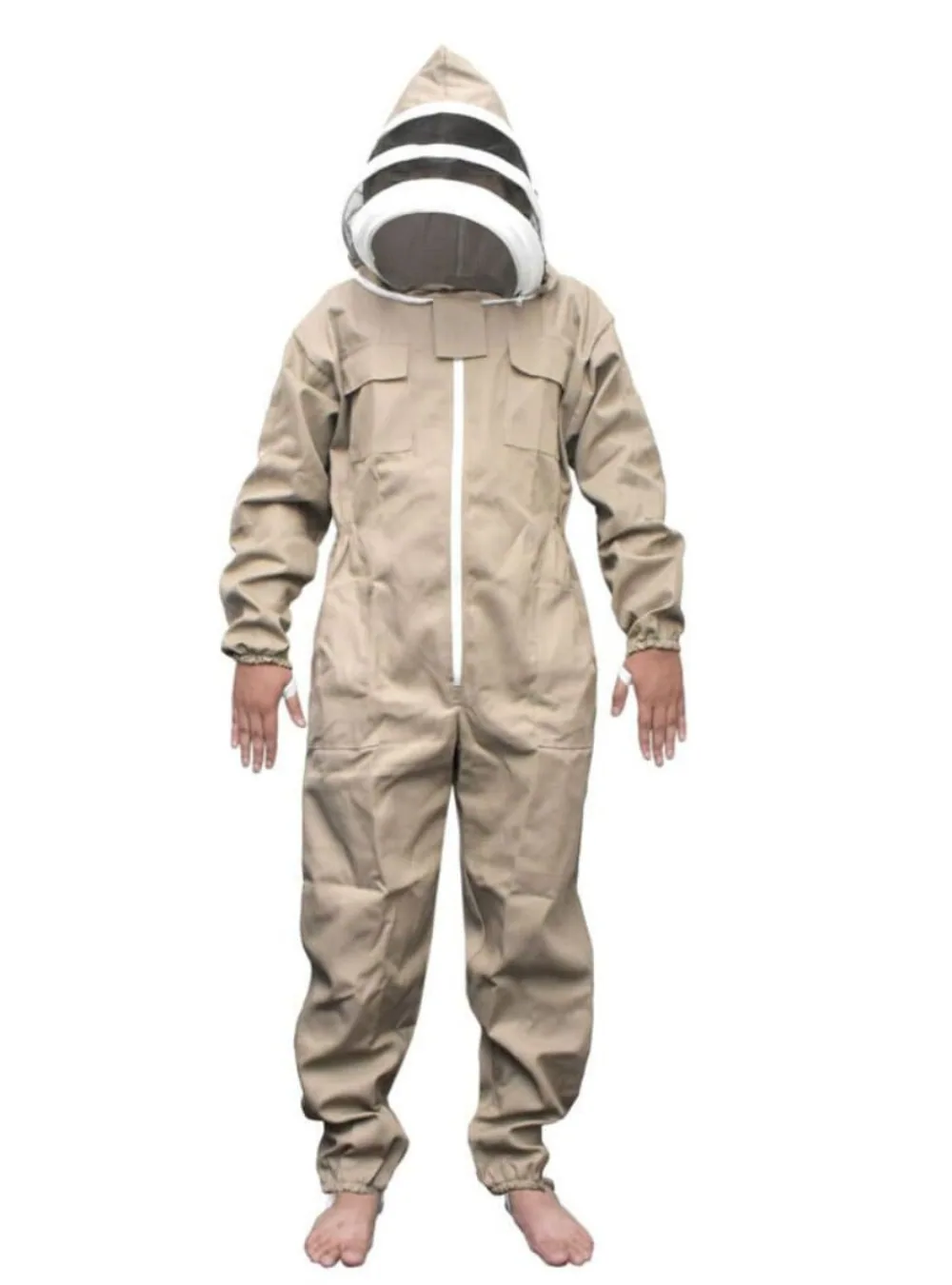
Ripstop vs plain weave, side by side
| Ripstop | Plain weave | |
|---|---|---|
| Weight | Lighter | Heavier |
| Tear that spreads | Stops at the grid | Can run |
| Abrasion | Wears through sooner | Better |
| Packs down | Small | Bulkier |
| Dries | Fast | Slower |
| Repairs | Patch over; the grid helps hold it | Patch from behind |
| Feels | Crisper, slightly noisier | Softer, quieter at the hive |
The noise row is worth a note. A quieter cloth against hive furniture is a small real advantage, and it is one reason cotton has survived in a market full of synthetics — bee suit fabric covers the three materials in full.
Ripstop vs plain weave: which to choose
Ripstop if you want something light to carry, you inspect quickly, you keep bees at out-apiaries you walk to, or you want a packable second suit. It is also a reasonable travel suit.
Plain weave if you kneel, work over rough ground, handle a lot of hives, or want one suit to last. The abrasion difference is the one that shows.
And for anything genuinely hard on a garment — removal work, lofts, cavities — neither woven cloth is the answer. That is bonded ventilated construction, which protects by structure rather than by drape.
What neither weave changes
Three things, and they decide more than the cloth does.
How it is cut. A fitted suit in excellent cloth is worse than a loose one in ordinary cloth, because slack is the protection on any woven garment.
The openings. Cuffs, ankles and the collar are where bees get in, and they are the same components either way — sealing wrists and ankles.
How long it lasts. Elastic, zips and the veil end suits; body cloth almost never does — how long a bee suit lasts.
Repairing ripstop vs plain weave
Check which you have when the suit arrives. Ripstop is the easier of the two. A small hole stays small, so you have time, and a patch over the outside holds well because the grid gives the stitching something to bite on.
Plain weave wants a patch from behind with a generous overlap, stitched round twice, before the tear has a chance to run. Catch it early — repairing a torn bee suit covers both.
How to tell which you have
Hold the cloth up to the light and look closely. Ripstop shows a faint square grid — slightly thicker threads every few millimetres. Plain weave is uniform.
If you cannot see a grid, it is plain weave. Some suits use a very fine ripstop where the grid is hard to spot, in which case feel for it: run a thumbnail across and a grid gives a faint regular catch.
It is worth knowing which you own, because it changes how you repair a tear — patch ripstop from the outside and plain weave from behind.
Weight is not the whole story
A light ripstop and a light plain weave are not equivalent, and this is where published figures mislead.
Two cloths of the same weight behave differently if one has a reinforcing grid: the ripstop survives a snag and the plain weave may not. So comparing ripstop vs plain weave on weight alone — which is what a GSM figure invites you to do — misses the property the grid was added for.
GSM measures mass rather than behaviour, and this is a clear example of the gap between the two.
What about ripstop in a ventilated suit?
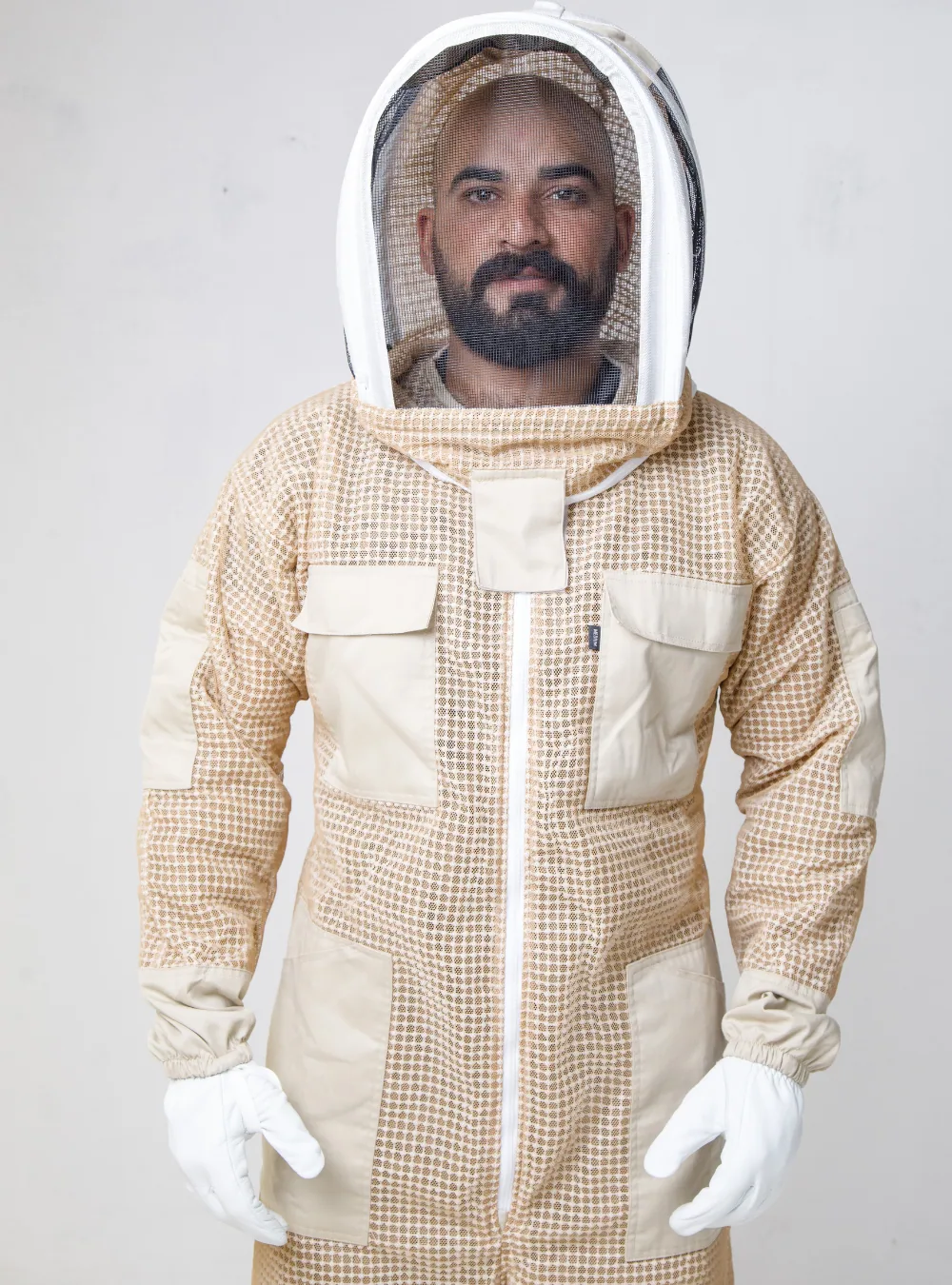
You will see it on the solid panels — shoulders, knees, pocket patches — of suits that are otherwise bonded mesh. That is sensible: the panels take the abrasion, the mesh does the protecting, and ripstop keeps the patches light.
It does not change what the suit is. Judge a ventilated suit on its bonded layers and whether the mesh springs back, not on the weave of its reinforcement.
Our cotton and poly-cotton suits are plain weave, the ultralight range uses ripstop, and the ventilated suits are a different construction again. For protective-kit guidance from somewhere with nothing to sell, see Penn State's beekeeping basics and the University of Georgia Bee Program.