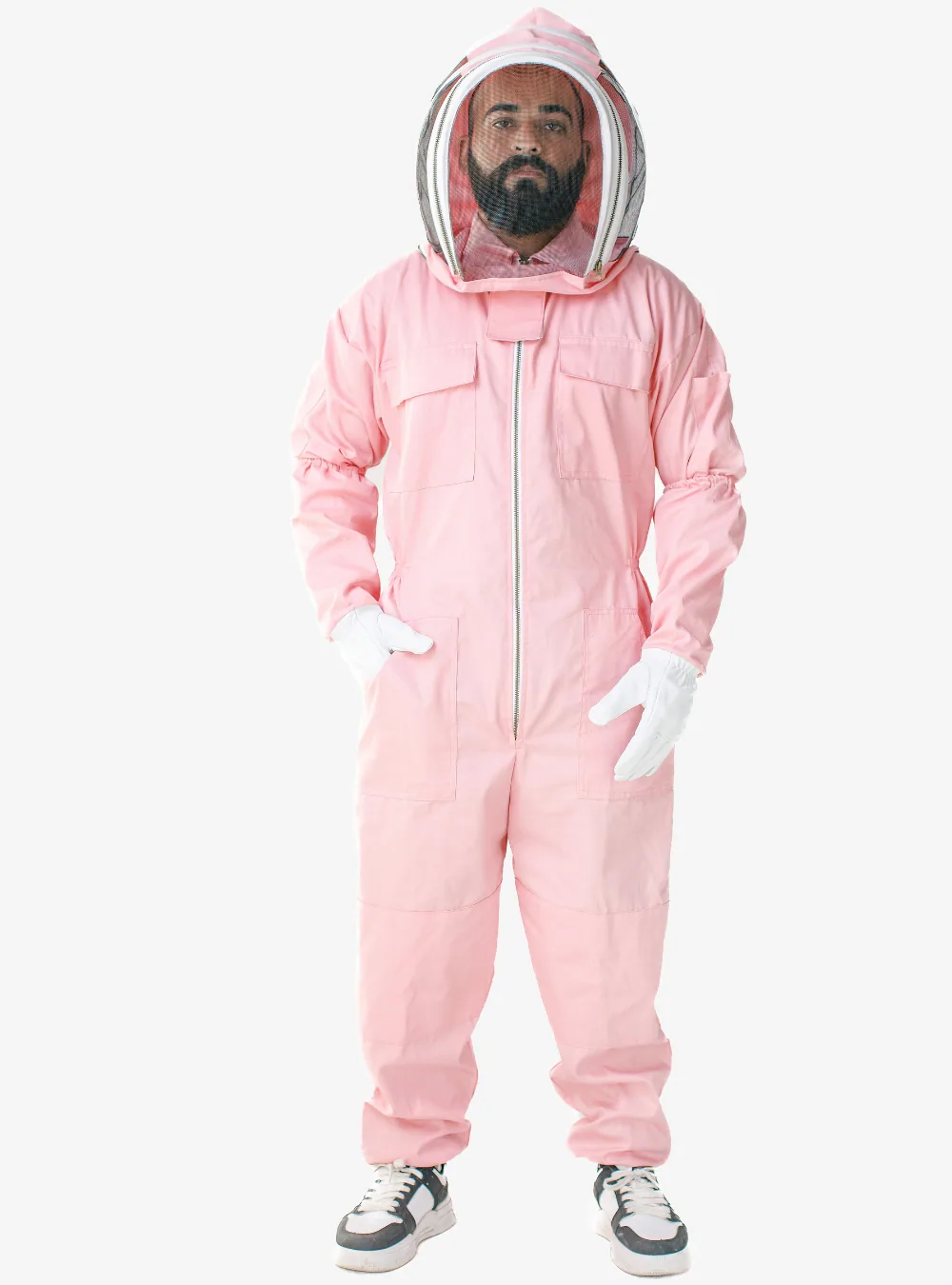
How to stay cool in a bee suit
Fabric choice does most of it, timing does the rest, and almost nothing you wear underneath matters as much as people think. Nine things that work, and three that do not.

If you want to stay cool in a bee suit, two decisions do almost all of it. Buy ventilated rather than cotton, and inspect in the morning rather than at midday. Everything else on this page is worth a few degrees between them. Nothing on it will make a cotton coverall comfortable at 35 C.
Why a bee suit gets hot
A suit has to hold a gap between a sting and your skin, and it has to have no openings. Those two requirements fight ventilation directly.
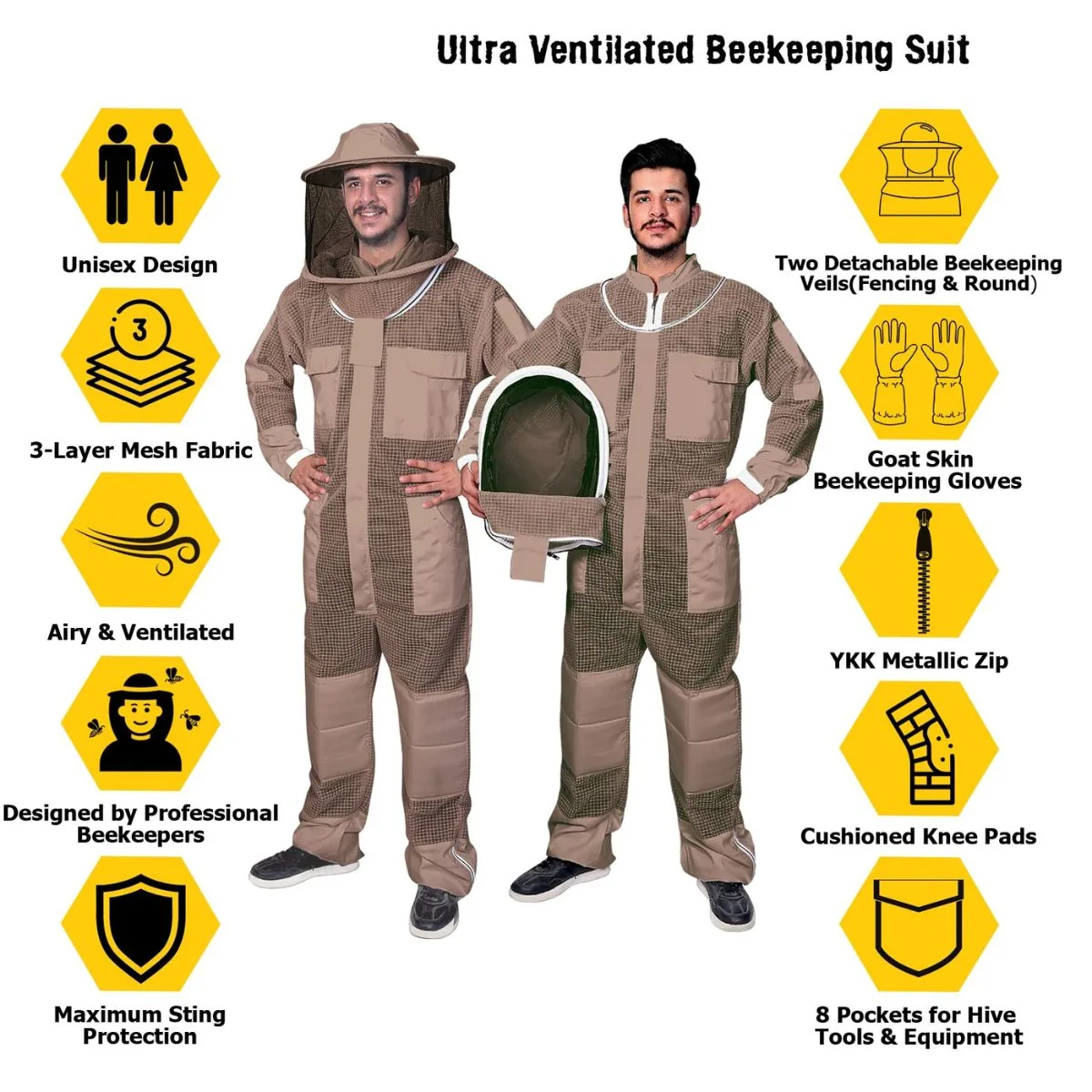
Which is why you cannot simply stay cool in a bee suit by wearing less of one. A cotton suit solves the sting problem with thickness. Thickness traps air, and trapped air next to a working body is a greenhouse. A ventilated suit solves the same problem with distance instead - three layers of mesh holding a gap that air moves through. Same protection, a fraction of the insulation.
The fabric decision comes first
This is the one that matters, so it goes first rather than last.
| Fabric | How it handles heat | Worth it when |
|---|---|---|
| Heavy cotton | Worst. Thick, holds moisture, no airflow | Cold climates, or you want maximum durability |
| Polycotton | Slightly better. Dries faster, still no airflow | Temperate summers, tight budget |
| Semi-vented | Mesh panels at the back and under the arms | A compromise if most of your year is mild |
| Three-layer mesh | Best. Air moves through the whole garment | Any hot or humid climate. The default if heat is your problem |
There is no trick that closes the gap between the top and bottom rows, so this is the one purchase that decides whether you stay cool in a bee suit at all. Ventilated against cotton compares them properly, and three-layer against two-layer covers the difference inside the mesh category.
Timing beats everything you can buy
An inspection at eight in the morning is a different activity from the same inspection at two in the afternoon. It is cooler for you and calmer for the colony, because more foragers are out.
If mornings are impossible, early evening is the next best. Avoid the middle of the day in high summer entirely, because nothing else you do will help you stay cool in a bee suit at two in the afternoon. This costs nothing and it beats every gadget on this page.
What to wear under a bee suit in heat
Less than people think, and the material matters more than the amount.
One thin synthetic layer that wicks, or one thin cotton layer if you prefer. Not two. Not a cotton t-shirt that holds a litre of sweat against you, and nothing dark in case the suit rides up. What to wear under a bee suit goes through the options.
For example, long sleeves underneath are worth it in one case only: if your suit is a single layer of cotton, a thin sleeve adds a little distance where the fabric touches you.
Nine things that help you stay cool in a bee suit
- Open every vent and zip you can while you walk to the apiary, and close them before you open the hive.
- Wet the back of your neck before you suit up. It is the fastest place to lose heat.
- Drink before you start, not when you notice you are thirsty.
- Work one hive at a time, then step into shade. Heat builds across an inspection, not during it.
- Take the veil off between hives once you are a few metres clear.
- Wear a pale, smooth hat under the veil. It keeps the sun off your scalp and the mesh off your face.
- Use a jacket, not a suit, for anything that is not a full inspection.
- Keep the smoker away from your body. Obvious, and still the most common avoidable heat source.
- Keep the suit clean. A suit stiff with propolis and sweat salt breathes measurably worse. Washing it is part of the cooling, not separate from it.
Three fixes that do not work
- Cooling vests under a suit. They add a layer and insulate more than they cool, and they make the suit fit worse.
- Buying a bigger suit for airflow. A loose suit flaps, catches on frames, and the extra volume is still trapped air. Buy the right size - how a bee suit should fit is the standard.
- Going without gloves to feel cooler. Your hands are not what is overheating, so this does nothing to help you stay cool in a bee suit. Working without gloves has real arguments, and this is not one of them.
Heat, humidity and the difference
Dry heat and humid heat are different problems. In dry heat, sweat evaporates and a ventilated suit works extremely well. In humidity, evaporation slows down and no fabric saves you - shorter inspections do.
Clothing for humid climates covers the second case, and the best suit colour for hot climates settles a question people spend too long on. The short answer there is that pale is what matters, and which pale does not.
What to buy if heat is the problem
A three-layer ventilated suit, in any pale colour, in your correct size. The ventilated suit range is the place to start, and a mesh suit is the plainest version of it. If most of your work is quick checks, a ventilated jacket is cooler still and costs less.
Penn State Extension and the University of Georgia bee programme both publish guidance on inspection timing, which remains the cheapest way to stay cool in a bee suit.