
How to seal wrists and ankles on a bee suit
The two openings that fail most, and the fixes that work — thumb loops, overlap and a taller boot — ranked by how much they actually help.

To seal wrists and ankles on a bee suit you need overlap, not tightness. The glove gauntlet goes under the sleeve with several centimetres to spare, the boot shaft goes under the trouser leg the same way, and something holds each opening down so it cannot travel when you move. Elastic alone is the part that fails.
Why these two openings and not the others
You seal wrists and ankles rather than the other openings for a reason. Every opening on a suit is a join, and a join is weaker than either side of it. But the wrists and ankles are the two that move, and move a long way.
Reach forward to lift a frame and your sleeve travels several centimetres up your forearm. Crouch at a hive and the trouser leg does the same over your calf. A hood does not do that, and a front zip does not do that, which is why these two account for most of what gets through.
They also fail quietly. Elastic loses its grip long before fabric wears out, and a slack cuff looks exactly like a new one. Cuff elastic is the first thing to go on any suit, and almost nobody checks it.
Sealing wrists and ankles: the wrist end
In order of how much each helps.
Thumb loops. The best fix there is. A loop over the thumb holds the cuff down through a full reach, so the sleeve cannot travel at all. If your suit has them, use them; if you are buying, look for them.
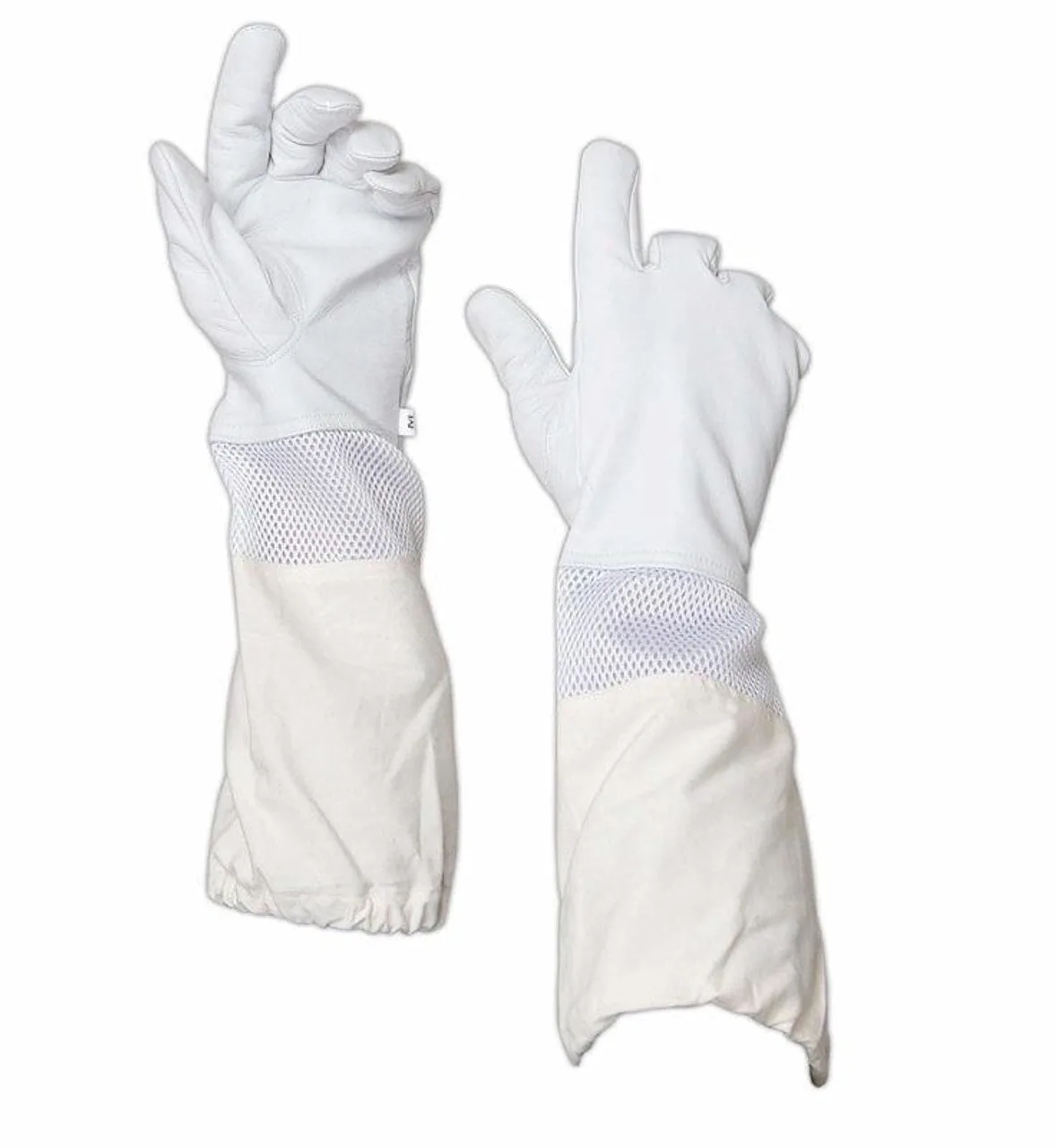
Overlap, correctly ordered. The glove gauntlet goes under the suit cuff, not over it. Gauntlet outside the sleeve funnels bees towards the gap when you lower your arm; gauntlet inside closes it. This is free and often got wrong.
Gloves that fit. A glove that slides takes its gauntlet with it. Gloves sizing covers buying for the hand rather than the gauntlet length — a short gauntlet that stays put beats a long one that does not.
Elasticated over-sleeves. A cheap sleeve of fabric pulled over the join. Worth it if your sleeves are an inch short, which is common on a long frame — see suits for tall beekeepers.
Sealing wrists and ankles: the ankle end
A taller boot. The whole answer for most people. A wellington or a work boot with a high shaft gives the ankle elastic several inches of overlap to lose before anything is exposed. A trainer gives it a sock. This is the cheapest fix on the page and the one most often skipped.
Trousers over the boot, never tucked in. Tucking a trouser leg into a boot puts the opening at the top of the boot, pointing upwards. Over the outside, the opening points down and a bee walking up the boot meets fabric.
Gaiters or ankle straps. A band around the trouser leg over the boot. Cheap, effective, and worth having if you work in long grass.
Long socks. Not a seal, but a backstop. If everything else fails, a long sock is the difference between a sting and a sting on bare skin.
What not to do
| Common fix | Why it is worse |
|---|---|
| Tightening elastic until it marks you | Cuts circulation, and a tight cuff still rides up — it is the travel, not the grip |
| Tucking trousers into boots | Points the opening upwards, which is where bees walk from |
| Gauntlet over the sleeve | Funnels bees to the gap instead of closing it |
| Rubber bands at the wrist | Works, and cuts off blood supply under a glove. Use a thumb loop |
| Relying on a new suit | New elastic is just elastic that has not gone slack yet |
What to look for when buying
If you are choosing a suit and this page is the reason, four things to check in the listing or in your hands.
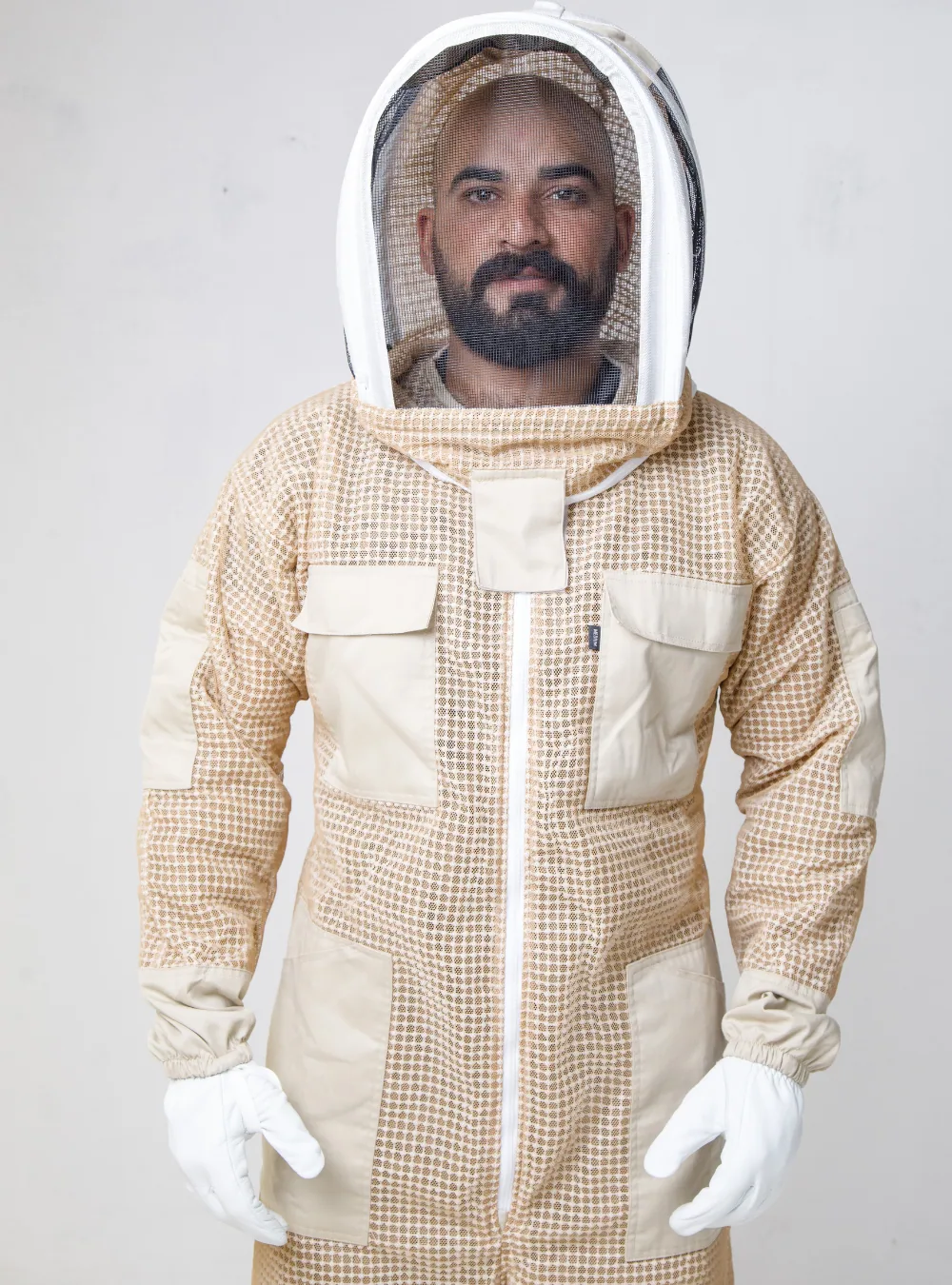
- Elasticated cuffs and ankles rather than adjustable ones. Nothing to set, nothing to leave undone - which matters most on a shared or a child's suit.
- Thumb loops. The one feature that stops a sleeve travelling, and the cheapest thing on the list to provide.
- Sleeve length measured with a bent arm. A suit fitted with your arms at your sides is a suit that rides up when you reach.
- Whether cuffs can be replaced. Elastic is the first thing to fail, and a supplier that sells the part has decided its suits should be repaired.
Elastic cuffs versus thumb loops covers the first two in detail - they do different jobs and the best suits have both.
Tape, and when it is reasonable
Tape is how you seal wrists and ankles for one bad job. Gaffer tape round each is the standard answer for one bad job — a cut-out, a known defensive colony, a swarm in an awkward place. It works, it is quick, and it is a reasonable thing to do.
It is not a reasonable thing to do every week. Tape leaves adhesive on fabric, the residue attracts dirt, and relying on it means the underlying problem — worn elastic, a short sleeve, the wrong boots — never gets fixed. Removal professionals tape; apiary beekeepers should not need to.
The thirty-second check that you still seal wrists and ankles
- Stretch each cuff and ankle, then let go. It should snap back and grip — slack elastic is a repair, not a write-off.
- Put the suit on with your gloves and boots.
- Reach forward fully. The cuff should still cover the gauntlet.
- Crouch all the way down. The ankle should still be over the boot shaft.
Anything that fails is a sting you have not had yet, and three of the four possible fixes cost almost nothing. Do this at the start of each season — before you put the suit away is even better, because then you have months to order a part.
A routine to seal wrists and ankles all season
Three checks at three points in the year, and none takes more than a minute.
Before the first inspection of the season. Stretch every cuff and ankle. This is when winter storage damage shows up.
Before the late-summer visits. Colonies are largest and most defensive then, and it is when the openings are actually tested.
Before you put the suit away. The most useful of the three, because a fault found in October means months to order a part rather than a cancelled inspection in April - see storing a suit over winter.
When sealing wrists and ankles cannot fix it
If the cuffs are fine and the sleeve still rides up past the glove, the sleeve is too short rather than the cuff too loose. No amount of sealing fixes a dimension — that is what measuring a suit is for.
Extension services treat full coverage of the wrists and ankles as the non-negotiable part of a kit: Penn State's beekeeping basics and the University of Georgia Bee Program both say so, and it is a useful check on anything a supplier tells you about features.
Our gloves are sized by hand, and the ventilated suits have elasticated cuffs and ankles rather than adjustable ones — there is nothing to set wrong.