
Beekeeping gloves sizing guide
Buy for the hand, not the gauntlet. A glove half a size too big costs you more than one half a size too small, and for a reason worth knowing.

Beekeeping gloves sizing comes down to one rule: buy for the hand, not the gauntlet. Measure around your palm at the knuckles, excluding the thumb, and buy the size that fits snugly there. A glove half a size too large is worse than one half a size too small, and the reason is not comfort.
Why loose is the dangerous direction
Hands and wrists are where beekeepers get stung most, and a glove exists so you can handle frames without that happening. The moment it stops you handling frames properly, it has started causing the thing it prevents.
Loose gloves slide. The fingertips move independently of your fingers, so you lose the feedback that tells you how hard you are gripping. You crush bees without noticing. Crushed bees release alarm pheromone, the colony gets defensive, and a calm inspection becomes a bad one — which is far more likely to get you stung than a glove being slightly tight.
Loose gloves also bunch at the wrist, and a bunched cuff is a gap where the sleeve should be gripping.
Too tight has real costs too — fatigue, and a seam that splits — but they are inconveniences rather than the mechanism by which inspections go wrong.
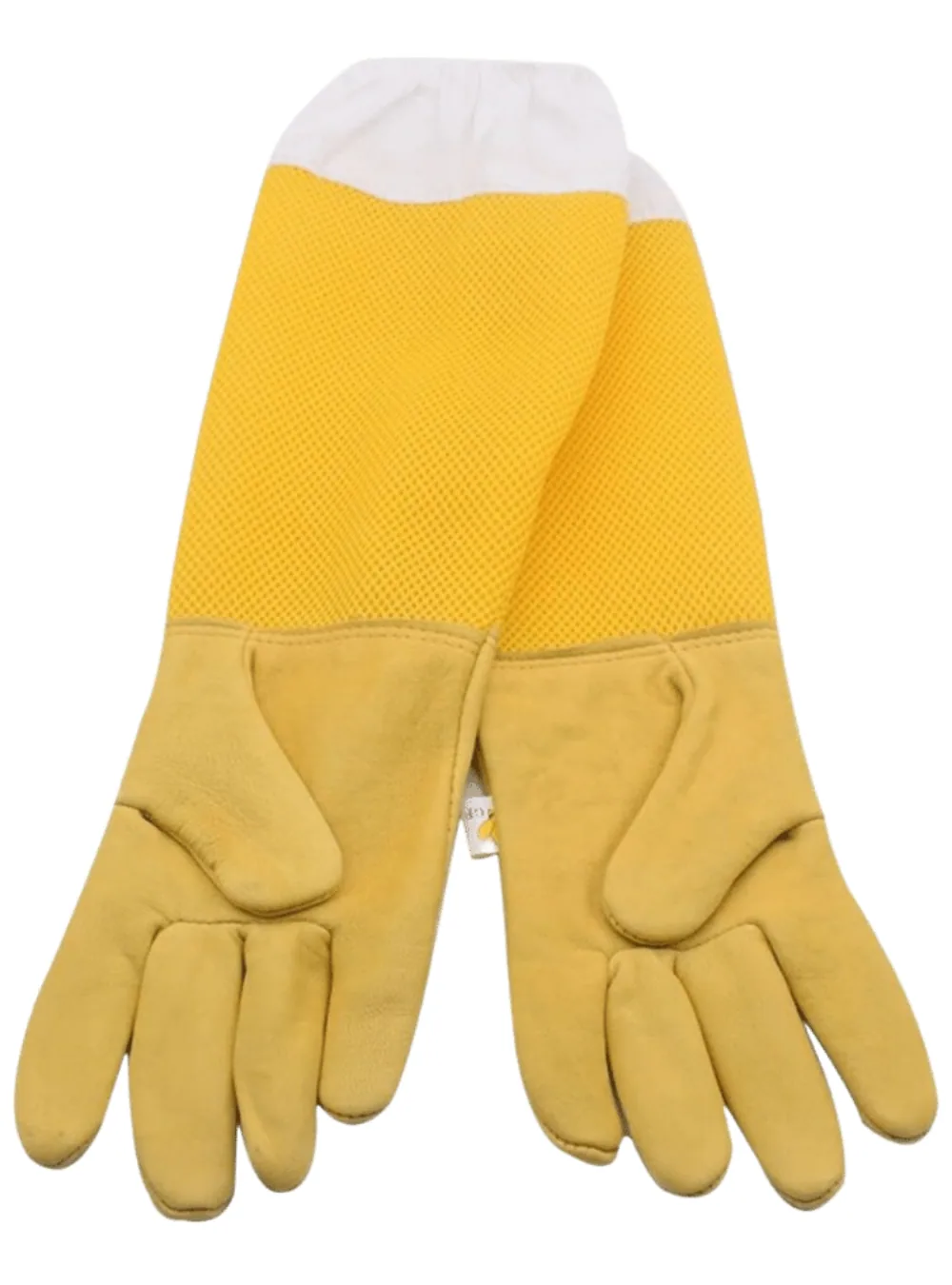
How to measure for beekeeping gloves sizing
- Take a tape measure around your dominant hand at the widest part of the palm, across the knuckles, with the thumb left out.
- Keep the hand relaxed and flat, not spread.
- Measure the dominant hand — it is usually slightly larger, and that is the one to fit.
- If you are between sizes, go down for nitrile and up for leather. Nitrile stretches to the hand; leather softens and relaxes with use.
Hand length — wrist crease to the tip of the middle finger — is a useful second check if a chart offers it, because two hands with the same circumference can want different finger lengths.
What good beekeeping gloves sizing feels like
| Where | Right | Wrong |
|---|---|---|
| Palm | Snug, no loose fabric to pinch | Slides when you twist your hand |
| Fingertips | Touching the end, or nearly | More than a few millimetres of empty glove |
| Between the fingers | Comfortable with the hand closed | Pulling tight when you make a fist |
| Wrist | Close enough that nothing gets in | Gaping when you reach forward |
| Thumb | Moves freely across the palm | Restricted — this is what makes a hive tool awkward |
The practical test: pick up a coin from a flat surface wearing them. If you cannot, you will not be able to pick up a queen cage or feel a frame's weight either. Penn State’s beekeeping basics and the University of Georgia Bee Program cover handling technique, which is the other half of not crushing bees.
What gauntlet length actually does
The gauntlet is the sleeve above the wrist, and its job is overlap. Your suit's cuff should sit over it with several centimetres to spare, so that when you reach forward and the sleeve rides up, the gauntlet is still covered.
That overlap is the whole point. A long gauntlet is not better protection in itself — it is insurance against the sleeve moving.
Two things follow. A short gauntlet with a good hand fit beats a long one that slides, because the hand fit is what you cannot compensate for. And if your sleeves ride up badly, the fix is the suit rather than longer gloves — suits for tall beekeepers covers that fault, which is usually sleeve length rather than glove length.
Your two hands are not the same
Beekeeping gloves sizing assumes two matching hands. Most people have one measurably larger than the other, usually the dominant one. Gloves are sold in pairs of the same size, so you fit the larger hand and accept a little slack in the other.
That is the right way round. A glove that is snug on your dominant hand and slightly loose on the other leaves you with full feeling in the hand doing the delicate work. Fitting the smaller hand gives you a tight glove on the hand holding the hive tool, which is where fatigue and split seams come from.
If the difference is more than half a size, it is worth buying two pairs in adjacent sizes and keeping the spares. Gloves are consumable enough that the odd ones get used.
Material changes beekeeping gloves sizing
Nitrile stretches. Buy your measured size or one down; it will mould to the hand within a session. It gives the most dexterity and the least protection from a determined sting.
Goatskin is thin for leather and softens considerably. Buy your measured size — it will relax, not shrink.
Whichever you pick, cleaning them properly decides how long they stay usable. Cowhide is thicker and stiffer, costs you the most dexterity, and takes longest to break in. Buy your measured size and expect a few sessions before it feels right.
If you are still choosing, nitrile versus leather and leather versus goatskin are the comparisons; this page is about getting whichever you pick to fit.
Breaking leather in
New leather gloves feel wrong. Stiff across the knuckles, tight in the web of the thumb, and awkward on a hive tool. That is normal and it passes.
Leather also stiffens over a winter in storage — how to put kit away covers that. What helps: wear them around the house, open and close your hand repeatedly, and work the leather at the knuckles and thumb between your fingers. What does not help: soaking them, or leaving them near heat to soften — both stiffen leather permanently once it dries.
Give a new pair two or three sessions before judging beekeeping gloves sizing. Goatskin relaxes noticeably; cowhide takes longer. Nitrile does not break in at all, which is why it should fit from the first minute.
When beekeeping gloves sizing does not fit anybody
Some beekeepers answer all of this by not wearing gloves at all. For everyone else, hands are less standard than the chart suggests, and two cases come up often.
Long fingers, narrow palm. Sizing by circumference leaves the fingertips empty. Look for a maker that publishes hand length as well, or accept a slightly larger glove and keep the gauntlet short so there is less to slide.
Wide palm, short fingers. The opposite problem, and more comfortable to live with — a glove that fits the palm with a little spare at the tips is workable.
Small sizes are genuinely harder to find than large ones, which is the recurring complaint in women's sizing and the reason it is worth measuring rather than assuming.
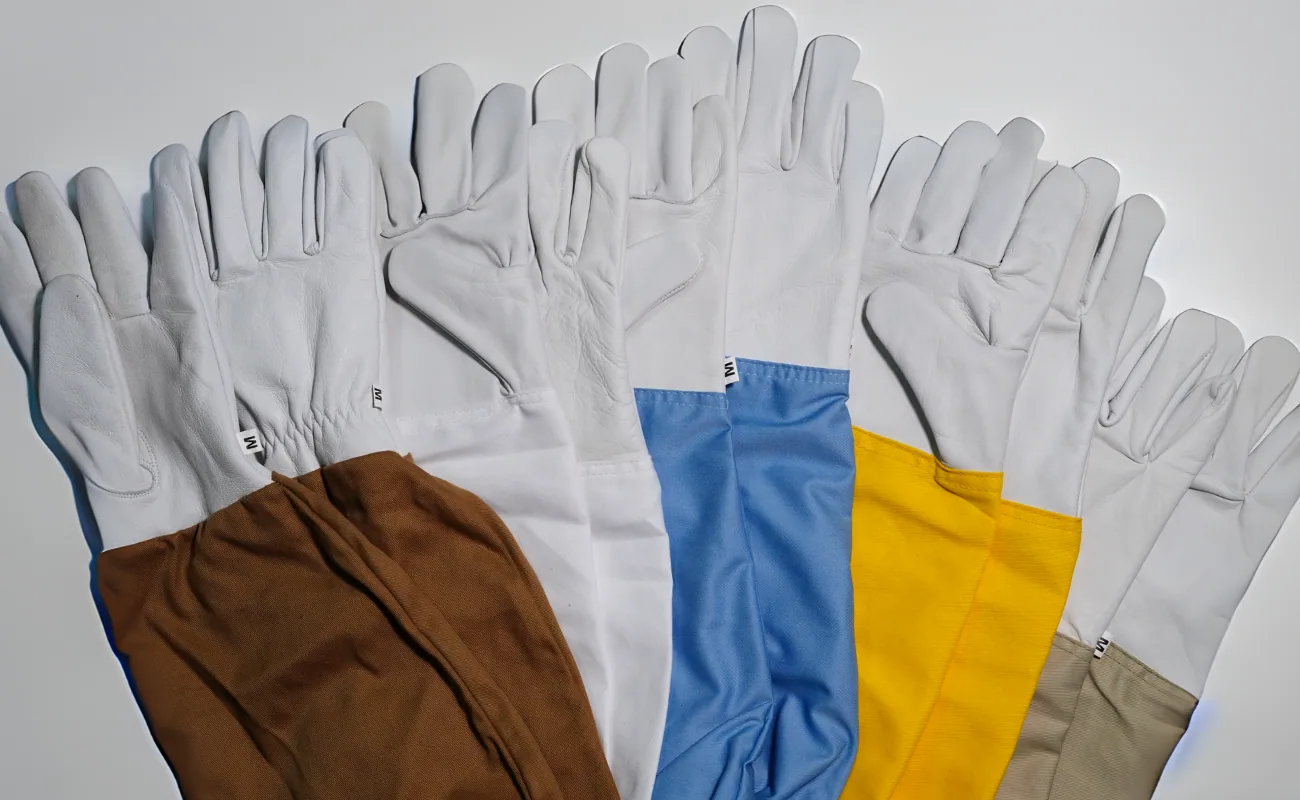
Beekeeping gloves sizing for several people
A club or a family needs a spread rather than a size. Order across the range, over-weight the middle, and expect to replace gloves far more often than suits — they are the consumable in a kit.
Buying for a club covers the spread, and children's gloves are a separate question because dexterity matters more at a smaller size.
Our beekeeping gloves are listed by hand size, and the size guide has the measuring method alongside the rest of the kit.