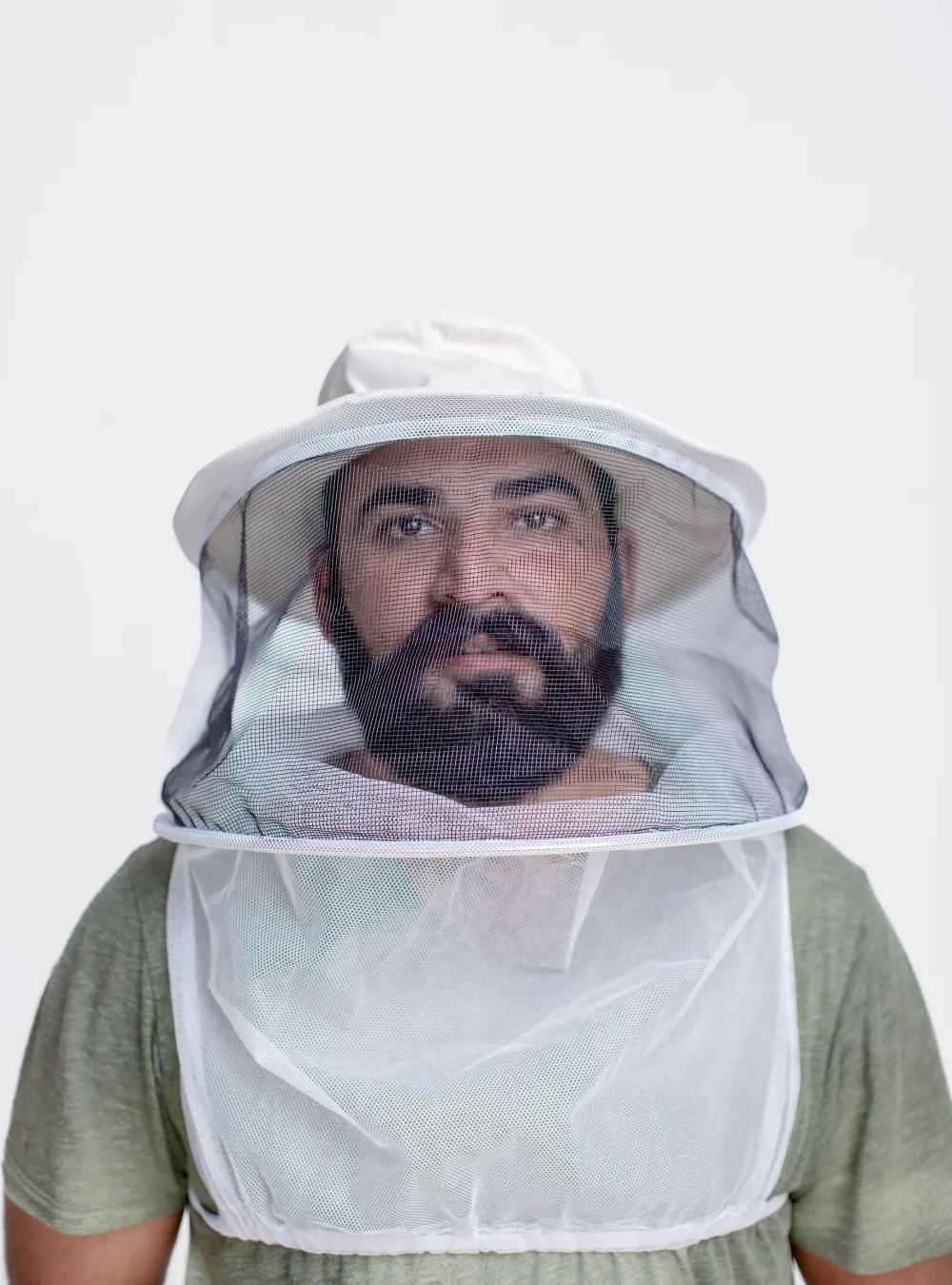
Beekeeping veil fogging: why it happens
A veil fogs when your breath meets mesh cooler than it is. The fix is airflow and distance, not wiping - and the veils that fog least are the ones held furthest off your face.

Beekeeping veil fogging happens when warm, wet breath meets mesh cooler than the air you breathed out. Water leaves the air and settles on the surface. Nothing is faulty, and nothing you can buy makes it impossible. But the distance between your face and the panel decides how often it happens to you.
What beekeeping veil fogging actually is
Your breath leaves you near body temperature and nearly saturated. Touch anything cooler and some of that water condenses out.
On a mesh veil the droplets bridge the gaps in the weave. A bridged gap stops being something you can see through. That is the whole mechanism, and it tells you what makes it worse.
- A cold morning. Early spring inspections are the worst, because the gap between your breath and the air is largest.
- A panel close to your mouth. A round veil pulled in by a drawstring puts mesh where the breath is still warm and still wet.
- No air moving across it. Still air lets the humid layer next to the mesh stay humid.
Why wiping it is the wrong move
Wiping from the inside spreads the water into a film rather than removing it. A film scatters light worse than droplets do.
Wiping from the outside means putting a glove near your face in front of bees. Either way your hand is up at the hive, which is how frames get dropped.
The useful response to beekeeping veil fogging is simpler. Step back from the colony. Lift the panel a few centimetres off your face with the back of a wrist. Breathe out downwards twice. It clears on its own in seconds, because you have let moving air at it.
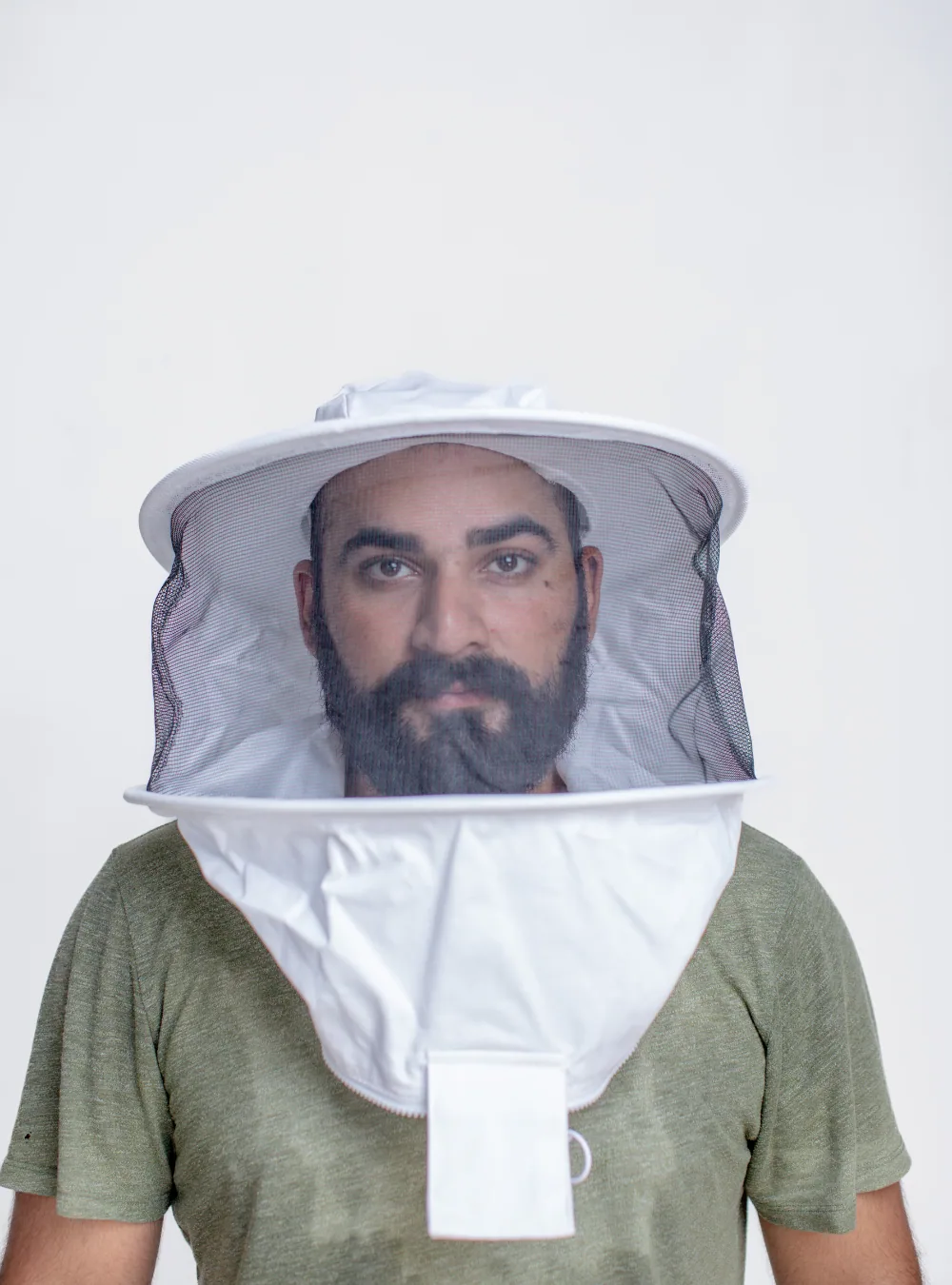
Beekeeping veil fogging by veil style
This is one place where veil style has a clear winner, and it is not close.
| Veil | How far the panel sits off your face | Fogging |
|---|---|---|
| Fencing veil | Held out by a stiffened collar and the hood's own structure | Rare |
| Square or English veil | Held out by a frame or a hat brim on all four sides | Rare |
| Round veil over a hat | Held out by the brim at the front, closer at the sides | Occasional |
| Round veil with no hat | Nothing holds it out, so it rests where your face is | Frequent |
| Hood with a clear visor panel | Close, and solid rather than mesh, so water has nowhere to go | Frequent |
The pattern is the distance column, not the price. It is also why whether you need a hat with a bee veil matters more than it sounds. With a round veil, the hat is the thing holding mesh away from you.
If you are still choosing, the pros and cons of a fencing veil and round veil against square veil cover the rest of the trade-off.
Five changes that work
- Move the panel away from your mouth. A fencing collar, a hat brim, or simply not cinching a drawstring tight. This fixes more cases than everything else put together.
- Inspect later in the day. Warmer air is drier relative to your breath. It suits the colony better anyway.
- Breathe down rather than forward. Easy to say, and easy to do once you notice you were not.
- Open the suit's vents. Air entering at the chest leaves past your head, which is where you want it going.
- Keep the mesh clean. Propolis, dust and old sunscreen all give water something to cling to, and all three make beekeeping veil fogging worse than it needs to be. Washing the suit and rinsing the veil by hand is enough.
Glasses make it two problems
If you wear glasses, the lens fogs before the veil does. The lens is also the one you cannot step back from.
The order that helps is an anti-fog treatment on the lens, then a veil held well clear, then vents open. In that order, because the lens is the closest surface to your breath. There is more on the geometry in choosing a veil as a glasses wearer, including which shapes leave room for arms.
Beekeeping veil fogging in cold weather
In winter and early spring the gap between breath and air is at its widest, so a veil that behaves all summer will fog in March.
Two things help, and neither is a product. Inspect in the warmest part of the day, and keep the inspection short. Cold inspections should be short for the colony's sake in any case - what to wear for cold weather inspections covers the rest.
When the veil itself is the problem
A veil that fogs in warm, still air with the panel well clear of your face is usually one whose mesh has closed up. Propolis worked into the weave, or a cheap coated mesh gone tacky.
That is replaceable rather than fixable. Replacing a bee suit veil is a half-hour job on most suits, and the hat and veil range covers the standalone ones. A stiffened fencing veil is the style to move to if yours is a round veil that rests on your face.
Beekeeping veil fogging aside, for the wider question of seeing clearly while looking down at frames, veil visibility looking down covers the shapes that do and do not let you. Penn State Extension's beekeeping basics is a sound reference on inspection timing, which is the free half of this fix. Cornell's pollinator network publishes more on colony handling.