
Buying guides10 min read
How Should a Bee Suit Fit? A Head-to-Ankle Fit Check
A bee suit should fit loose but not baggy: room to touch your toes and kneel, veil clear of your face, sleeves inside your gloves, legs over your boots. Here is what right looks like, area by area.
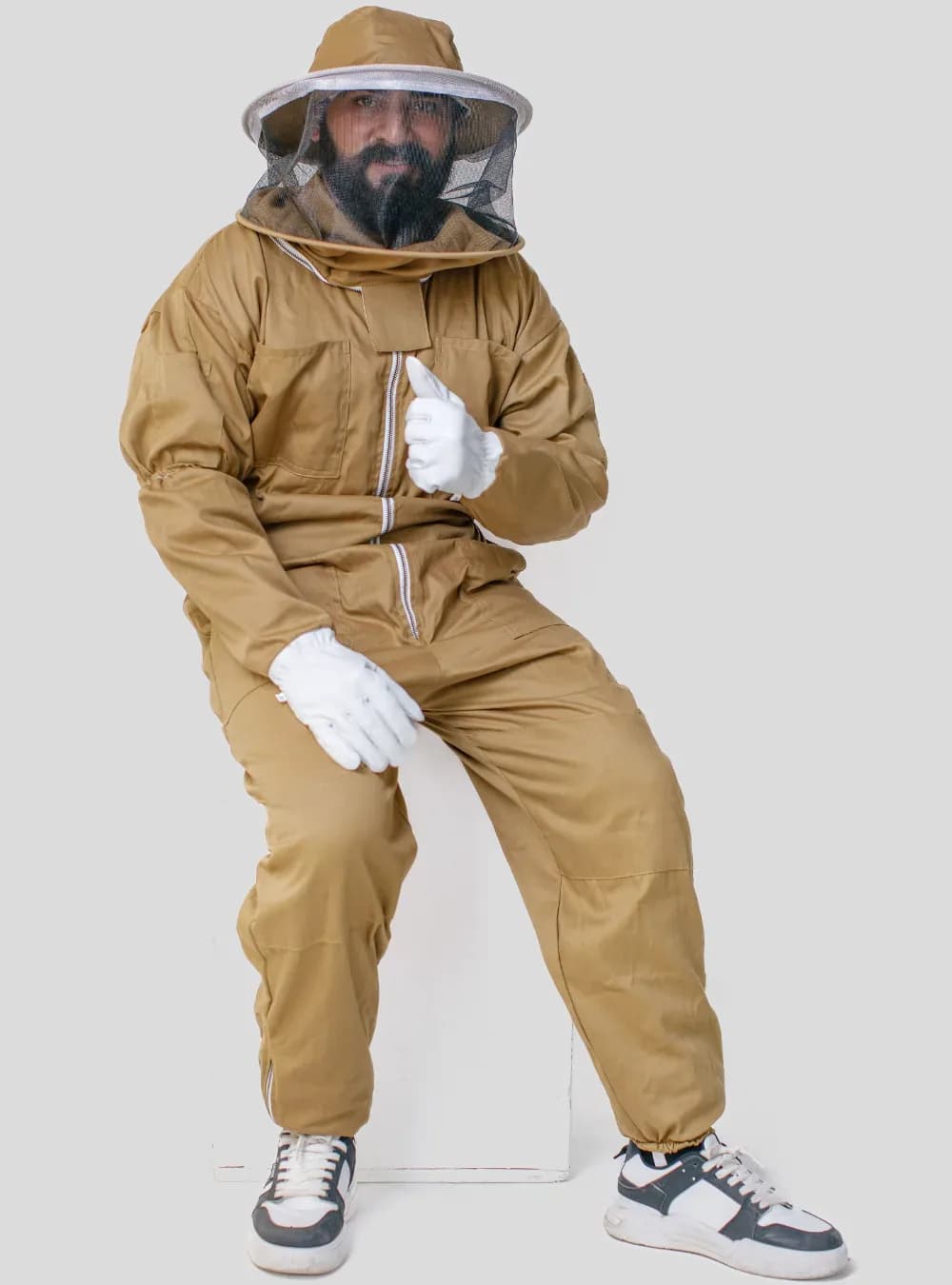
How should a bee suit fit? Loose, but not baggy. You should be able to touch your toes, kneel and reach forward without the cloth pulling tight anywhere, while the veil stays clear of your face, your sleeves stay inside your gloves and the legs stay over your boots. Tight fabric lets stings through; spare, flapping fabric snags and gapes.
Key takeaways
- Loose protects, tight does not. A bee can sting through cloth that is pressed against your skin. A loose suit holds the cloth away.
- Baggy is a fault too. Excess cloth catches on frames and brambles, and slack cuffs open gaps.
- Judge fit while moving, not standing. A suit that looks right in the mirror can pull tight the moment you crouch.
- Try it with your boots and the clothes you wear underneath. That is how you will wear it at the hive.
- The five movement tests below take two minutes and tell you more than any size chart.
Why fit matters as much as fabric
People choose a bee suit by fabric: cotton or ventilated mesh, two layers or three. Fabric matters. Fit matters at least as much, because the way a suit protects you is by holding the cloth away from your body.
The University of Arkansas Cooperative Extension is blunt about it: "bee suits and gloves are sting-resistant, but they are by no means sting-proof. A determined honey bee can sting through most suits." (Beekeeping Basics, University of Arkansas) Where they can do it is where the cloth is pulled flat against you, and a tight suit is pulled flat against you in exactly the places you lean, bend and kneel.
Texas A&M AgriLife Extension gives the rule in one sentence: "Bee suits and jackets should not fit tightly. While suited, the person should be able to touch their toes without the suit or jacket pulling tight along their back or pulling the veil against their face." (Texas A&M AgriLife Extension, ENTO-097)
That rule is the whole of this article. The rest is how to check it, part by part.
What a good fit looks like, head to ankle
| Area | Good fit | Too tight | Too loose |
|---|---|---|---|
| Veil and hood | Mesh clear of the face on every side | Veil pulls onto your nose or forehead when you bend | Hood slides forward over your eyes |
| Neck and collar | Veil zip closes flat; collar sits at the base of the neck | Zip strains; collar presses the throat | Collar gapes; veil skirt lifts |
| Shoulders and back | Room to cross your arms and lift | Back seam pulls tight when you reach forward | Shoulder seams hang down the upper arm |
| Chest | Main zip closes over your clothes without strain | Zip bows or teeth gape | Front balloons and catches on frames |
| Sleeves and wrists | Cuffs reach the wrist with the arm bent | Wrist pulls out of the glove when you reach | Cuffs bunch over the hand |
| Body length and crotch | You can crouch without the crotch pulling up | Crotch drags; veil pulls down when you bend | Crotch hangs near the knees |
| Seat and thighs | Room to squat and kneel | Seat stretches flat when you squat | Excess cloth folds and catches |
| Knees | Cloth does not press on the knee when you kneel | Fabric stretched flat over the kneecap | — |
| Legs and ankles | Legs cover the boot top while you crouch | Leg lifts off the boot when you kneel | Leg drags under the heel |
The "too tight" column is where stings get through. The "too loose" column is where bees get in, or where you trip.
The veil and hood
The veil is the most important part of the fit, because the face and head are where defensive bees tend to go.
On a suit with a zip-on veil, the veil's distance from your face comes from the hoops or brim, not from the suit. But the suit can still drag it. If the body of the suit is too short, bending forward pulls the whole veil down and back, and the mesh presses against your forehead or nose. That is the first thing Texas A&M's toe-touch test catches.
Two small things help. Texas A&M notes that "wearing a cap under hooded jackets or suits will keep the front of the suit from touching the face," and that some beekeepers "wear a headband to protect their eyes from sweat and prevent their ears from touching the sides of the veil."
Neck, shoulders and back
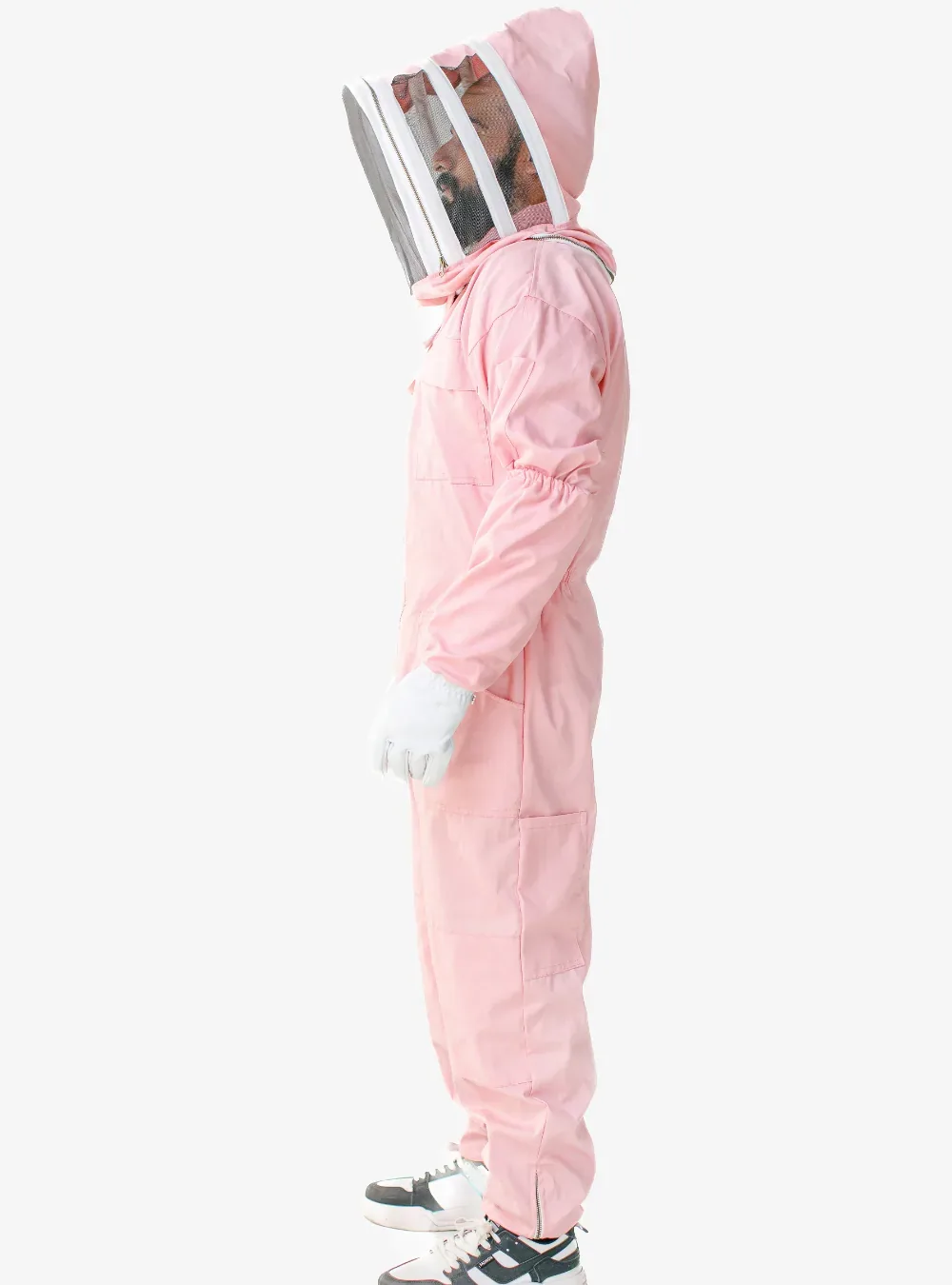
When the veil zips to the suit, the collar is the seal between them. It should sit at the base of your neck and the zip should run flat all the way round. If the zip is under strain, the suit is too small across the shoulders or neck. If the collar stands away from your neck, it is too big there, and bees can find the gap.
Across the back is where a small suit fails first. Reach both arms forward as if lifting a box. If you feel the cloth go tight across your shoulder blades, that is the line a bee will sting along.
Sleeves, wrists and gloves
Gloves go over the sleeve. Texas A&M again: "Gloves should be worn over the bee suit and pulled as far up the arm as possible." So the sleeve has to be long enough to stay inside the glove's gauntlet when you reach forward with your arm straight.
Test it with gloves on: reach both arms out in front of you as far as you can. If skin shows between the cuff and the glove, the sleeves are too short or the suit is too small across the back, which shortens the sleeve when you reach. Thumb loops, where a suit has them, hold the cuff in place but do not make a short sleeve long enough.
For more on gloves and how they meet the sleeve, see leather vs goatskin beekeeping gloves.
Body length, seat and knees
These are the parts people forget to check because they only show up when you move.
Body length is the distance from shoulder to crotch. Too short, and crouching drags the crotch upward and the veil downward at the same time. You will feel it as a pull from shoulders to seat.
The seat stretches flat when you squat. On a suit that is too small, that is the tightest cloth on your body, and you squat a lot at a hive.
The knees take your weight when you kneel to look at a bottom box or an entrance. The fabric over the kneecap should not be pulled flat. Some suits add reinforcement there; it helps with wear, but it does not replace room.
Legs and ankles
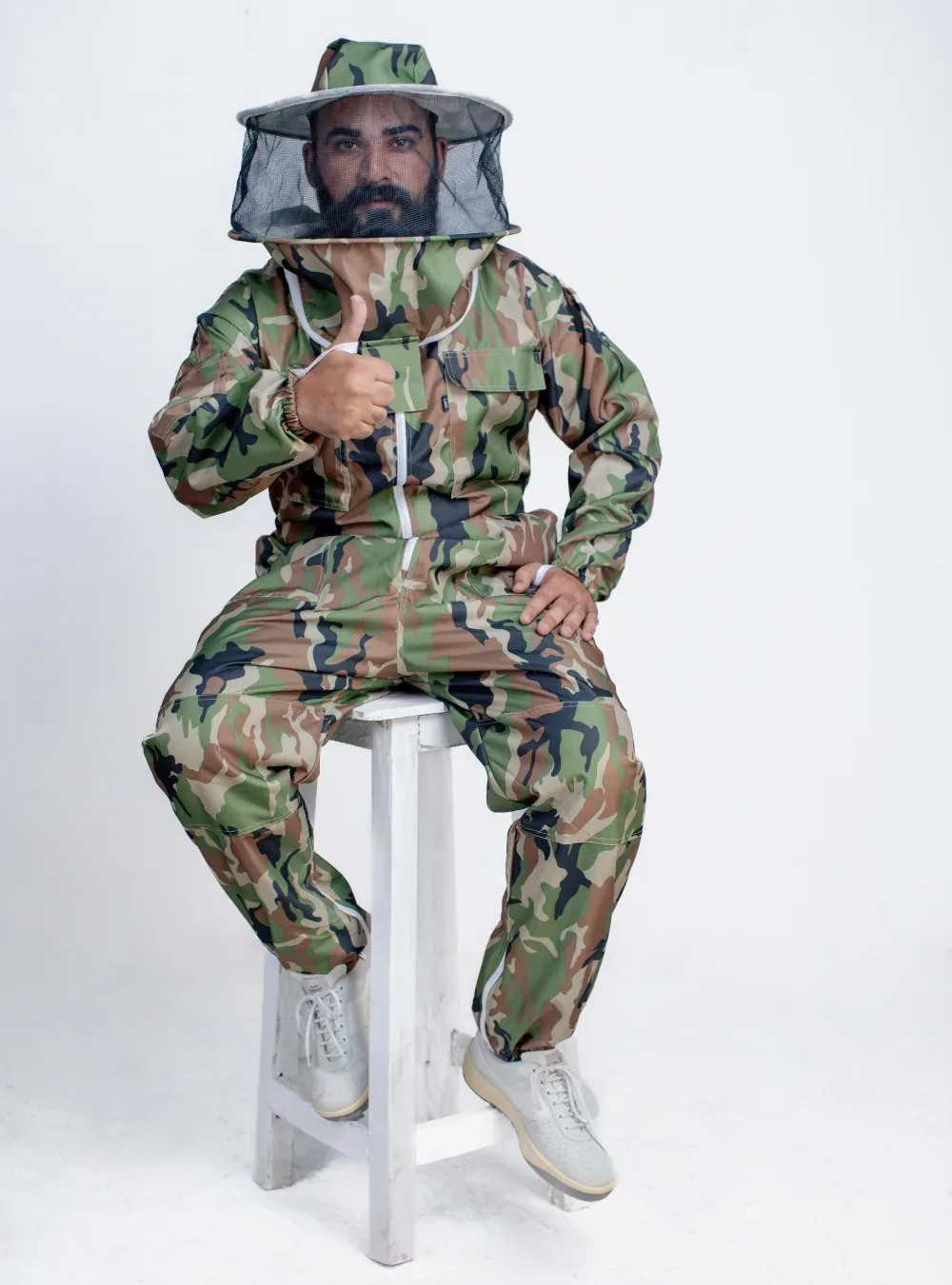
The legs go over your boots, not into them. Texas A&M: "The suit legs should be worn over shoes or boots — not tucked in." The ankle elastic or zip then closes around the boot.
Check length while you crouch, not while you stand. Standing, almost any leg looks long enough. Crouching, the leg rises up your shin. If it lifts clear of the boot top, there is an open path for a bee walking on the ground. If your suit has lost its ankle elastic, Texas A&M points out that leg covers can close the gap.
Too long is less dangerous but still a problem: cloth dragging under your heel wears through, and it can catch on a step or a hive stand.
Five movement tests: how should a bee suit fit when you move?
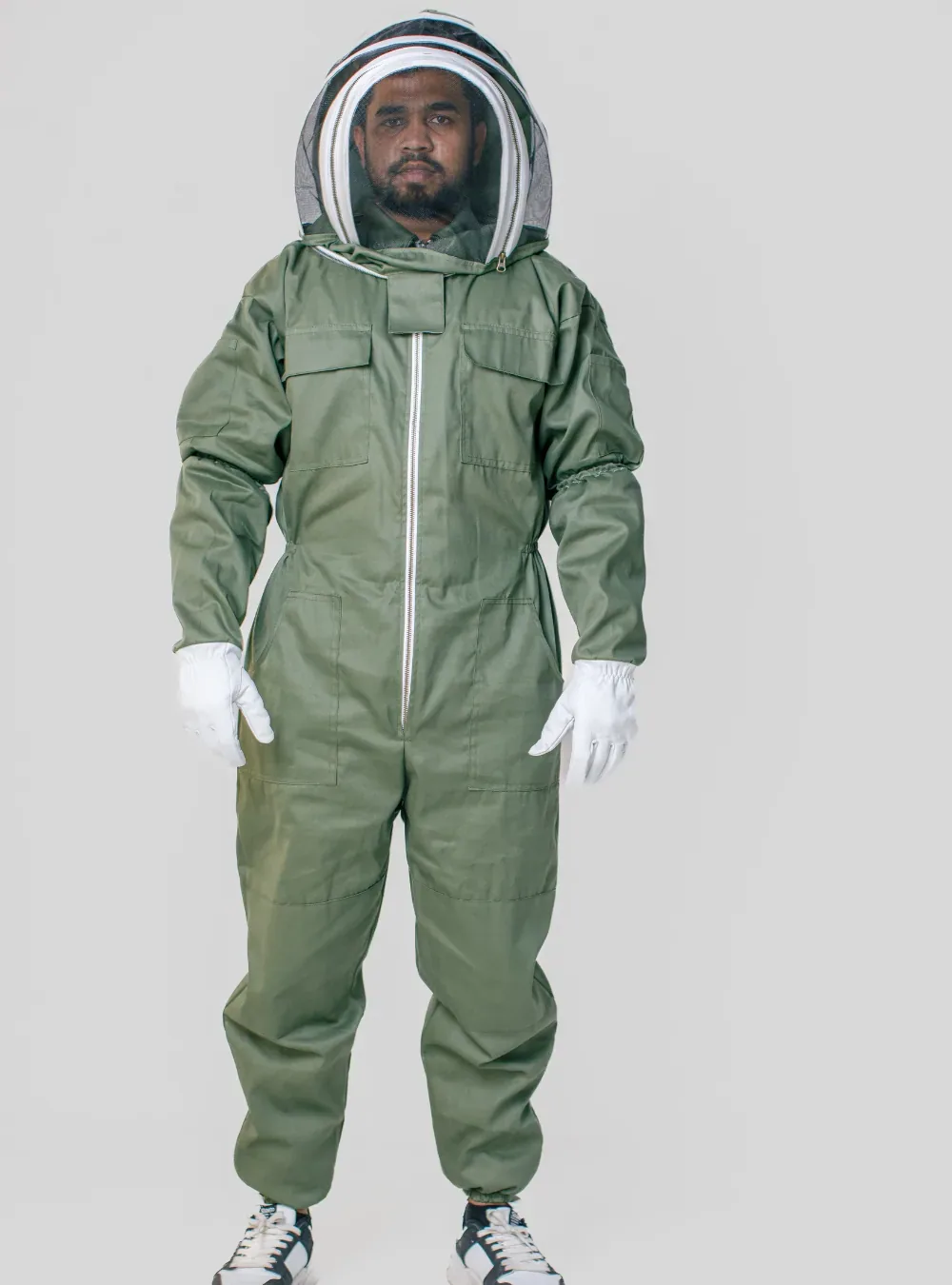
Put the suit on over the clothes you wear underneath and the boots you wear at the hive. Zip the veil. Put on your gloves. Then:
Touch your toes. Nothing should pull tight along your back, and the veil should not touch your face. This is the Texas A&M test, and it catches most short or small suits.
Crouch as if reading a bottom box. The legs should stay over your boots, and the crotch should not drag upward.
Kneel on one knee. The knee and thigh fabric should not stretch flat, and the seat should not pull tight.
Reach both arms forward, straight. No skin between cuff and glove, and no tightness across the shoulder blades.
Lift something heavy from the floor. A full box of books will do. This loads the back and shoulders the way a honey super does.
If the suit passes all five, it fits. If it fails one, our guide to the signs a bee suit is too big or too small helps you work out whether to go up or down.
Loose but not baggy
Loose is right, and the extension guides say so. But there is a point past which loose stops helping.
Spare cloth catches. It snags on frame lugs, the corners of hive boxes, brambles and fence wire. Cuffs and ankle elastic that are too wide for your wrists and boots stop sealing. And legs that are much too long are a trip hazard on uneven ground, which is a real risk when you are carrying a full box.
So the target is a suit that is big enough to pass the five tests above, and no bigger. If you are between two sizes, take the larger one: our size guide puts it plainly, "a suit that is slightly too big still protects you; one that is slightly too small pulls tight across the shoulders — which is exactly where stings get through." Our guide to choosing a bee suit between sizes goes into the edge cases.
Cotton and ventilated suits fit differently
Buy both by the same measurements, but expect them to feel different.
A cotton or poly-cotton suit drapes. It hangs from the shoulders and falls, so it feels roomier but can lie flat against you where you lean on it.
A three-layer ventilated mesh suit is thicker and springier. It holds its own shape a little, so it can feel bulkier and less roomy in the same size, but the mesh itself keeps the outer face slightly off your skin. That is one reason ventilated suits are popular for hot weather and long jobs. We compared the two fabrics in ventilated vs cotton bee suits.
When the fit is right but you are still getting stung
If the suit passes every test and you still get stung, look at the openings rather than the cloth:
- Zips. Check every zip is fully closed and the storm flap over the main zip is down. For defensive colonies, Texas A&M notes that many beekeepers tape over zips.
- Veil seal. A zip-on veil should be zipped all the way round; a separate hat veil should be tied down across the chest.
- Glove cuffs. Gloves over the sleeve, pulled up high.
- Ankles. Elastic or zip closed around the boot, not around a sock.
- Holes. Texas A&M recommends inspecting the suit "regularly for holes, tears, worn spots, or damaged zippers."
Check the fit again every season
A suit that fitted in May can stop fitting by the next spring, and the suit is not always the thing that changed.
- Layers change. In early spring you may wear a fleece under the suit that you would never wear in July. Run the toe-touch test with your coldest-weather layers on.
- Elastic wears out. Ankle and wrist elastic slowly loses its grip. Texas A&M suggests leg covers "for suits that have lost elasticity around the leg."
- Washing and storage matter. If you wash the suit, Texas A&M advises removing the hood or veil, using "a mild, unscented detergent, and hang dry," and hanging the suit up between uses because "a folded suit may mold."
- You change. Weight, fitness and posture shift over a few seasons. If the suit has started pulling across the back, believe it.
Two minutes of movement tests at the start of each season is cheaper than finding out at an open hive.
Getting the fit right first time
The surest way to a good fit is to measure properly before you buy. Our guide to how to measure for a bee suit walks through the nine measurements step by step.
If your measurements fall far from any standard size, very tall, very broad, or long in the leg and short in the body, a ready-made suit will always compromise somewhere. That is what our custom-fit bee suit is for: it is cut to your own nine measurements, in cotton or ventilated fabric, with the veil of your choice.
Find a suit that passes the toe-touch test
Ready-to-ship suits from X-Small to 5X-Large, in cotton and ventilated mesh, or a suit cut to your measurements.
Common questions
Should a bee suit be loose or tight?
Loose, but not baggy. Texas A&M AgriLife Extension says suits and jackets should not fit tightly, and you should be able to touch your toes without the suit pulling tight along your back or pulling the veil against your face. Baggy is the other failure: loose cuffs gape and spare cloth snags.
How do I know if my bee suit fits properly?
Put it on over your usual clothes and boots, zip the veil, and move. Touch your toes, crouch, kneel, reach forward with both arms and lift something heavy from the floor. If nothing pulls tight, the veil stays off your face and no skin shows at the wrists or ankles, it fits.
Can bees sting through a tight bee suit?
Yes. Where fabric is stretched against your skin, a bee on the outside can sting through it. That is why fit matters as much as fabric: a loose suit holds the cloth away from you, and a tight one does not, whatever it is made of.
Should bee suit legs go over or into my boots?
Over. Texas A&M says the suit legs should be worn over shoes or boots, not tucked in. The elastic or zip at the ankle then closes around the boot, and bees cannot walk up inside the leg.
Where should the veil sit when a bee suit fits right?
Clear of your face on every side, with the zip at the collar closed flat. If bending forward pulls the veil against your nose or forehead, the suit is too short in the body or too tight across the back.
Does a ventilated bee suit fit differently from a cotton one?
It feels different. A three-layer mesh suit is thicker and springier, so it holds itself off your body a little, while cotton drapes. Buy both by the same measurements, but expect cotton to feel roomier and mesh to feel bulkier.
Written by Alex, Bee suit maker, BEESUITWEAR · United States.
Writes about protective clothing from the workshop where the suits are made.