
Buying guides7 min read
Nitrile vs Leather Beekeeping Gloves: Which Should You Wear?
Nitrile gives you feel and washability. Leather gives you a hide a stinger cannot get through. Most experienced keepers own both and choose by the job.

The nitrile vs leather beekeeping gloves choice is a straight trade between feel and puncture resistance. Nitrile is thin, washable and cheap, and you can feel everything through it — including a sting, because a determined bee gets through thin nitrile. Leather stops the sting and costs you some sensitivity. For learning a colony, wear leather. For honey harvest and quick work you know is calm, nitrile earns its place.
Key Takeaways
- Nitrile does not reliably stop a sting. Thin nitrile is a barrier against propolis and honey, not against a stinger.
- Leather does, and costs you feel. How much depends on the hide — goatskin far less than cowhide.
- Nitrile's real advantage is hygiene, not protection. It washes, it peels off, and it carries nothing over to the next hive.
- Leather absorbs alarm pheromone. A glove that smells of last month's stings starts your next inspection badly.
- Most experienced keepers own both and choose by the job, not by loyalty to one.
What each one actually is
Nitrile is a synthetic rubber. In beekeeping it shows up two ways: thin disposable examination gloves, and thicker nitrile-coated fabric gloves with a knit back. Both give excellent feel. Neither was designed with a stinger in mind.
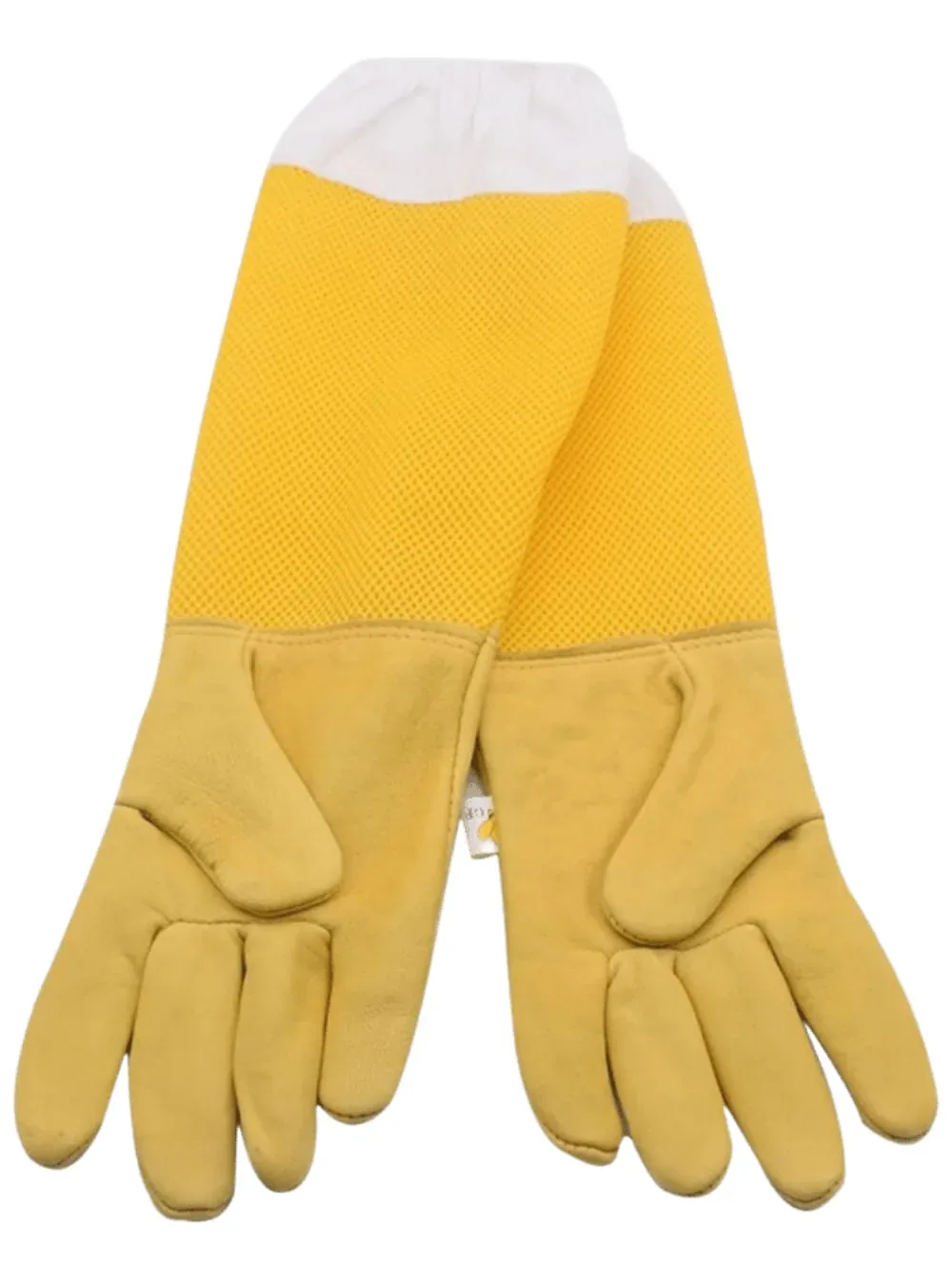
Leather here means a hide — usually goatskin, sometimes cowhide or split. It resists puncture because the fiber structure resists puncture, which is a different kind of protection entirely. We go into the differences between hides in leather vs goatskin gloves.
Nitrile vs leather beekeeping gloves, side by side
| Nitrile | Leather | |
|---|---|---|
| Sting resistance | Low (thin) to moderate (coated) | High |
| Feel through the glove | Excellent | Good in goatskin, poor in cowhide |
| Grip on honey-wet frames | Excellent | Reduces when wet |
| Breathability | None — hands sweat | Moderate |
| Carries pheromone between hives | No | Yes |
| Washable | Yes, or disposable | Wipe only |
| Snags and tears | Easily | Rarely |
| Gauntlet up the arm | Usually none | Standard |
| Cost per use | Very low | Low over years |
Where nitrile genuinely wins
We make leather gloves, so take this as it is meant: there are jobs where nitrile is the better tool, and pretending otherwise would not help you.
Honey harvest. Sticky work where you want to wash your hands and carry on. Nitrile peels off; leather soaks it up.
Moving between colonies. Alarm pheromone from a sting sticks to leather and travels with you to the next hive. A fresh nitrile glove does not.
Grafting and queen work. Anything needing fingertip precision. You cannot do delicate work in cowhide.
Anyone with a leather sensitivity, or who simply wants gloves that go in the wash.
Wet frames. Nitrile grips honey-slick wood better than smooth leather does.
Where leather wins
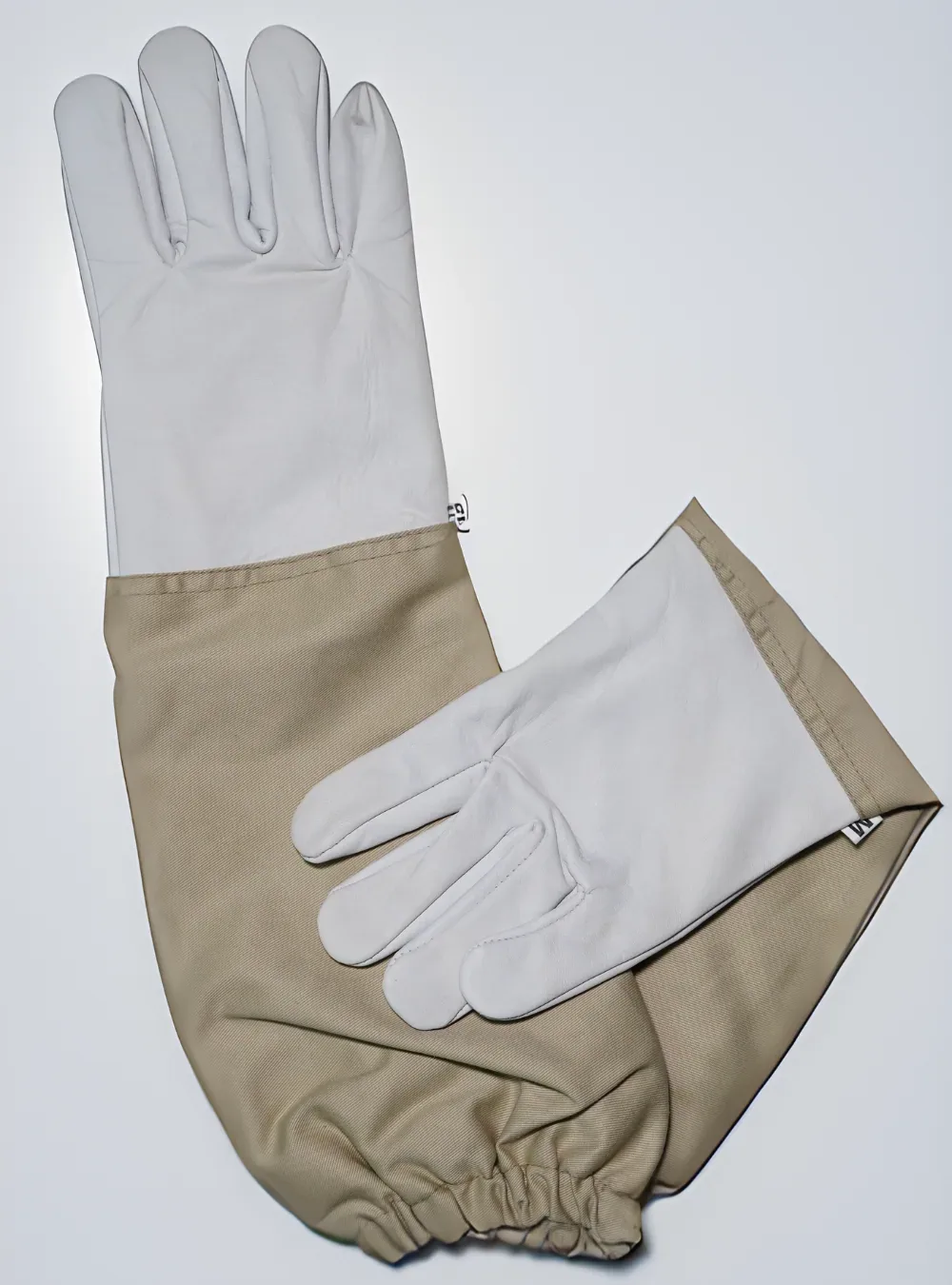
A colony you do not know. This is the whole argument. You cannot tell how a hive will behave until it is open, and by then your hands are in it.
Defensive bees. When bees work the glove rather than land on it, thin nitrile is not enough.
The gauntlet. Most hand stings arrive at the wrist, not the palm. Leather beekeeping gloves come with a long gauntlet; nitrile gloves stop at the wrist and leave that gap open.
Hive tools and box edges. Nitrile snags and tears on splintered timber and hive staples. Leather does not.
Cold and sun. Nitrile is airless in heat and thin in cold.
Our leather beekeeping gloves run $30 to $90 — the goatskin ventilated pair is $30, and the breathable yellow pair $38.
How each one actually fails
Knowing the failure mode is more useful than knowing the spec, because it tells you what to watch for.
Nitrile fails suddenly. It does not wear thin and warn you. It snags on a hive staple or a splinter and opens, and the tear runs. One moment you are protected, the next there is a hole across two fingers. That is why a spare pair in the pocket matters more with nitrile than with leather.
Leather fails slowly and quietly. The hide thins at the fingertips over seasons until a sting finds its way through somewhere that used to be safe. Nothing tears, nothing looks wrong, and you usually discover it during an inspection. Check the fingertips against a light at the start of each season; thin patches show.
Both fail at the same place for the same reason. Fingertips take every hive tool, every frame lug, every scrape of propolis. That is where to look, whichever you own.
If you sell your honey
This is worth its own section because it changes the answer.
Once honey leaves your own kitchen, how you handled it starts to matter to someone other than you. Leather cannot be washed or sanitised — it absorbs, and what it absorbs stays. For extraction, bottling, and anything where honey touches your hands, a washable or disposable glove is simply the more defensible choice.
That is not an argument against leather. It is an argument for owning both and drawing a line: leather at the hive, nitrile once the supers come off. Plenty of keepers who would never inspect bare-handed extract in nitrile without a second thought.
If your honey goes to a market, a shop, or anyone's kitchen but your own, check what your local food-handling rules expect before you settle on a routine.
The combination most keepers land on
Very few experienced beekeepers use one or the other for everything. The pattern that recurs:
- Leather for inspections, especially colonies you have not opened recently.
- Nitrile for harvest, extraction and anything sticky.
- Nitrile under leather in cold weather — a thin liner that keeps the leather clean and adds a little warmth.
- Bare hands on a hive you know well, on a calm day, once you have the experience to judge that.
Buying nitrile is not choosing against leather. It is buying the other tool.
The other synthetics you will see
Nitrile is not the only non-leather option, and the rest are worth knowing so a listing does not surprise you.
Nitrile-coated knit gloves — a fabric glove with a rubbery palm, sold as garden gloves. Better puncture resistance than bare nitrile and much better breathability, but the knit back is open and bees find it. Reasonable for moving equipment, poor at an open hive.
Coated nylon and polyurethane — thin, grippy, cheap, and no more sting-resistant than nitrile. Sold widely for beekeeping; buy them for the same jobs you would buy nitrile for, and nothing else.
Kevlar-blend gloves — genuinely cut-resistant, which is not the same as sting-resistant. Aramid fibers stop a blade sliding; they do nothing against a thin point pushed straight in.
That last distinction catches people out. Cut resistance and puncture resistance are different properties. A glove rated highly for cuts can be poor against a sting, and the rating on the packet is usually about the blade.
Getting the fit right
Fit decides more than material does, and it works in opposite directions for the two.
Nitrile should be snug. Loose nitrile bunches at the fingertips, which kills the feel you bought it for, and the slack catches on hive edges and tears. If it wrinkles across your palm when you make a fist, size down.
Leather should have a little room. A hide stretched tight over your knuckles has no slack left, and leather pressed flat against skin protects about as well as cloth pressed flat against a shoulder. Make a fist and spread your fingers; both should be easy.
What to check before you buy
For nitrile: thickness in mil. Examination gloves around 4 mil are for hygiene only. Heavier ones near 8 mil offer something against a glancing sting, though still nothing like leather. Buy a size that fits snugly; loose nitrile bunches and tears.
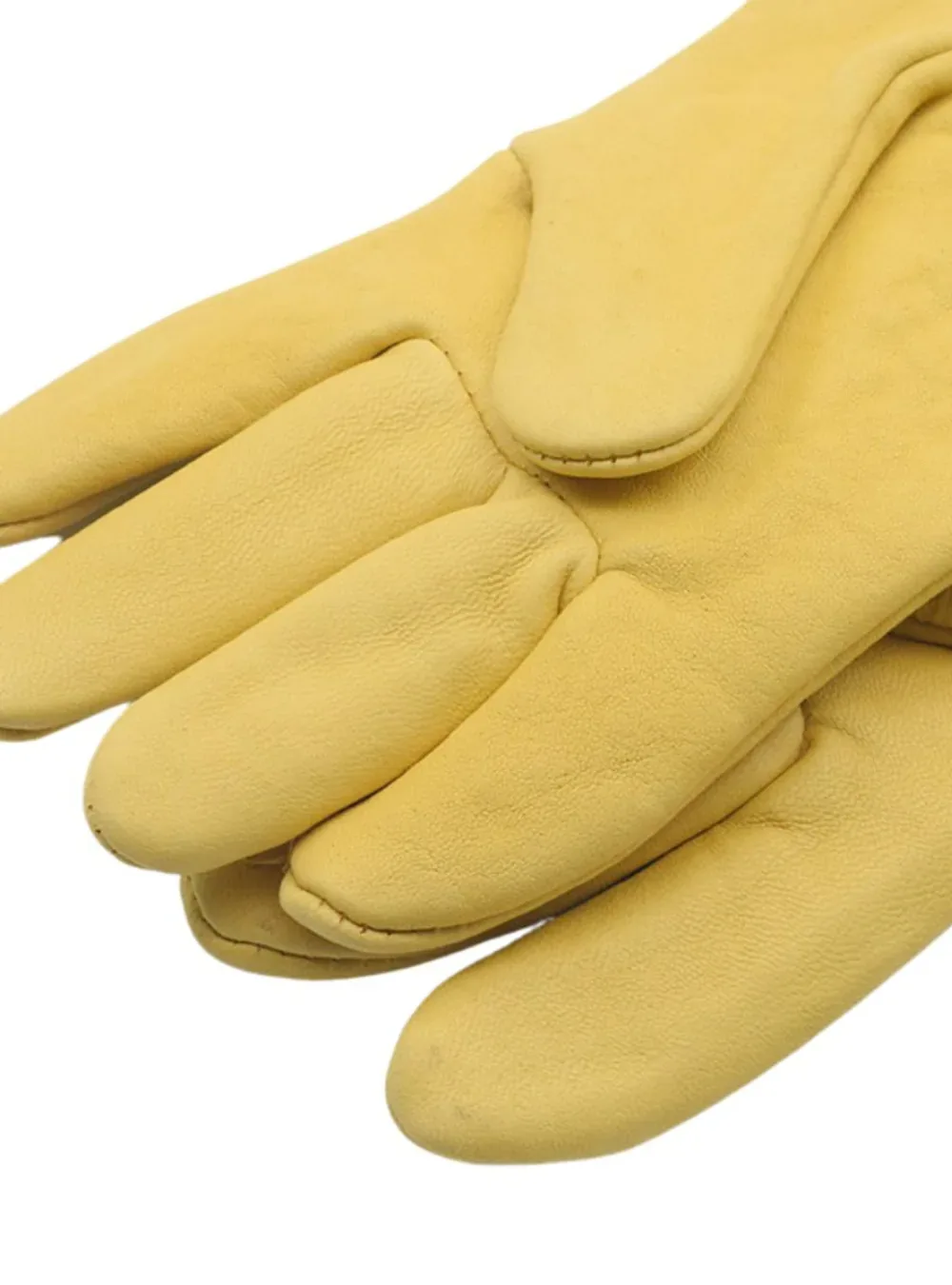
For leather: look for a smooth grain surface rather than suede on both sides, stitching doubled at the fingertips, and a gauntlet with elastic that still grips. Make a fist in the shop — good goatskin allows it immediately.
For both: the fingertips fail first. Leather thins there; nitrile tears there. Check before the season rather than during an inspection.
Which should you buy
Buy leather if you are buying one pair. It covers every job with some loss of feel, and it covers the job where being wrong hurts — an unfamiliar colony.
Add nitrile as the second once you are harvesting honey or doing precise work. It is cheap enough that this is barely a decision.
Do not buy nitrile as your only protection while you are still learning to read a hive. The feel is wonderful right up to the moment it is not.
If you are still assembling your kit, the guides to full suits and jackets and veils cover what goes with the gloves.
Common questions
Can bees sting through nitrile gloves?
Through thin disposable nitrile, yes. Examination gloves around 4 mil are a barrier against propolis and honey, not against a stinger. Heavier nitrile near 8 mil helps against a glancing sting but still does not match leather.
Why do some beekeepers prefer nitrile?
Feel and hygiene. You can work precisely through nitrile, wash or peel it off when it is sticky, and it carries no alarm pheromone from one hive to the next. Leather absorbs both propolis and pheromone and cannot be washed.
Can you wear nitrile gloves under leather ones?
Yes, and many keepers do in cold weather. The liner keeps the leather clean on the inside, adds a little warmth, and comes off easily when your hands get sweaty.
What thickness of nitrile glove is best for beekeeping?
Heavier than the examination gloves sold for cleaning. Around 8 mil gives noticeably more resistance than 4 mil while keeping most of the feel. Fit matters too: loose nitrile bunches at the fingers and tears on hive edges.
Do nitrile gloves protect your wrists?
No, and that is their biggest gap. Most stings on the hands arrive at the wrist rather than the palm. Leather beekeeping gloves come with a long gauntlet up the forearm; nitrile gloves stop at the wrist.
Which should a beginner buy?
Leather. While you are still learning to read a colony you cannot judge how a hive will behave before you open it, and that is exactly when puncture resistance matters. Add nitrile later for harvest and precise work.
Written by Alex, Bee suit maker, BEESUITWEAR · United States.
Writes about protective clothing from the workshop where the suits are made.