
Elastic cuffs vs thumb loops
Elastic grips; a thumb loop anchors. They solve different halves of the same problem, and the best suits have both.

Elastic cuffs vs thumb loops is not really a choice: elastic grips your wrist, a thumb loop anchors the sleeve to your hand, and they fail in different ways. Elastic stops bees walking in. A loop stops the whole sleeve travelling up your arm when you reach. A suit with both is better than a suit with either.
Elastic cuffs vs thumb loops: what each one does
Elastic cuffs vs thumb loops comes down to this. An elastic cuff closes the opening. It holds the fabric against your wrist so there is nothing to walk through, and it does that job well — while the elastic has its recovery.
A thumb loop does something else entirely. It is a tab of fabric you put your thumb through, so the end of the sleeve is attached to your hand rather than to your forearm. When your arm extends, the sleeve cannot slide up, because your hand is holding it down.
The distinction matters because the commonest failure at the wrist is not a bee walking through a gap. It is the entire cuff travelling four centimetres up your forearm as you reach into a box, leaving the glove gauntlet exposed. Elastic does nothing about that. A loop stops it completely.
Why elastic fails first, and quietly
Elastic loses recovery with heat, with ultraviolet and with time. A cuff that has been through a tumble dryer a few times, or hung in a sunny porch for a summer, stays stretched instead of springing back.
It looks identical. That is the problem — slack cuffs are the first thing to fail on any suit and almost nobody checks, because there is nothing to see. Stretch each cuff and let go: if it does not snap back, that opening has stopped closing.
A thumb loop has nothing to lose its recovery. It is a strip of fabric and a seam. It either exists or it is torn, and a tear is visible.
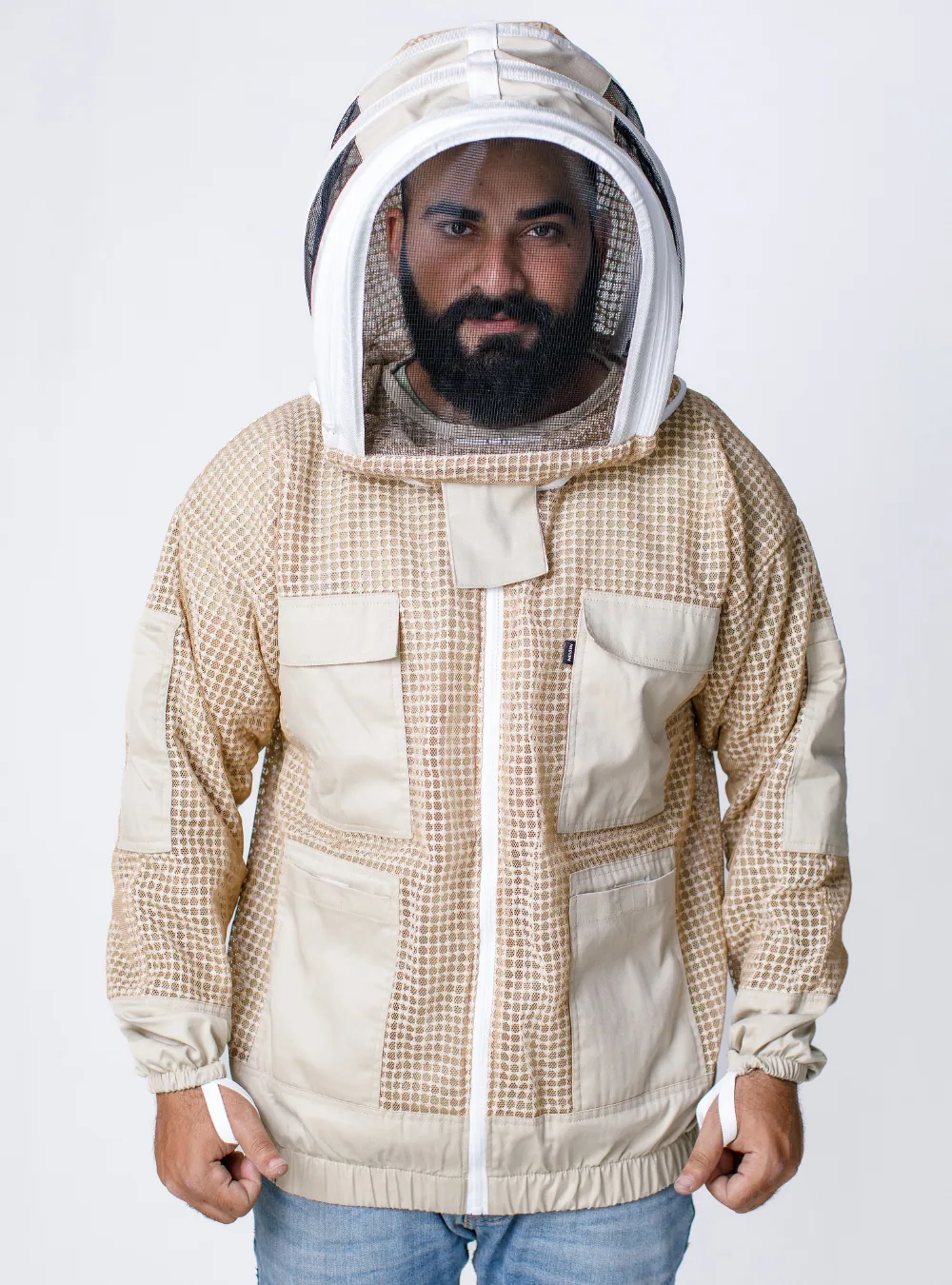
Elastic cuffs vs thumb loops, side by side
| Elastic cuff | Thumb loop | |
|---|---|---|
| Closes the opening | Yes | No |
| Stops the sleeve riding up | No | Yes |
| Fails over time | Yes, invisibly | Only if torn, and you can see it |
| Needs the right size | Yes | Less — it works on a long sleeve too |
| Comfortable all day | Yes, unless over-tightened | Can rub between thumb and finger |
| Repairable | Yes, new elastic | Yes, restitch |
| Gets in the way | No | Slightly, taking gloves on and off |
When a thumb loop is the thing you need
Four cases where elastic cuffs vs thumb loops stops being a preference and elastic alone will not do.
- Your sleeves are slightly short. Common on a tall frame. A loop holds what length there is where it belongs — suits for tall beekeepers covers the underlying fault.
- You reach overhead a lot. Removal work, cut-outs, anything above shoulder height. The sleeve travels furthest in exactly that movement.
- It is a first suit, or a child's. Children reach, crawl and twist constantly, and a loop removes a decision from someone who will not make it.
- The suit is shared. A teaching set is put on by people who have never worn one, and a loop is harder to get wrong than anything adjustable — see buying for a club.
When elastic alone is fine
Most ordinary inspections, on a suit that fits, with cuffs that still grip. If your sleeves are the right length and you are not working overhead, elastic does the job it was designed for and a loop is a convenience rather than a fix.
The honest summary of elastic cuffs vs thumb loops: elastic is adequate while it is new and correct, and a thumb loop is insurance against both of those stopping being true.
Adding a thumb loop to a suit that has none
Entirely possible, and a sensible alteration rather than a bodge.
It is a short strip of the same fabric, stitched into the cuff seam so it forms a loop big enough for a thumb with a glove on. Any alterations shop will do it in minutes, and it is the cheapest useful change you can make to a jacket you otherwise like.
Two things to get right. The loop goes on the palm side rather than the back of the hand, so the cuff is pulled down rather than twisted. And it wants to be slightly loose - a tight loop rubs between thumb and finger over an hour.
Elastic cuffs: what good elastic feels like
Worth knowing, because the test is not obvious and the failure is invisible.
Stretch the cuff to roughly double its relaxed width and let go. It should snap back immediately and sit snug against a wrist. If it returns slowly, or returns to something wider than it started, the recovery has gone.
A cuff that still grips but has to be pulled over your hand with effort is fine. A cuff you can slide on and off without opening anything is not.
What about adjustable cuffs?
Beyond elastic cuffs vs thumb loops, velcro tabs and drawstrings appear on some suits as a third option. They work, and they have a failure mode the other two do not: they have to be set correctly every time, and they can be left undone.
That is fine for your own suit and a bad idea for a shared one. Elastic has nothing to set, which is why teaching sets should specify it.
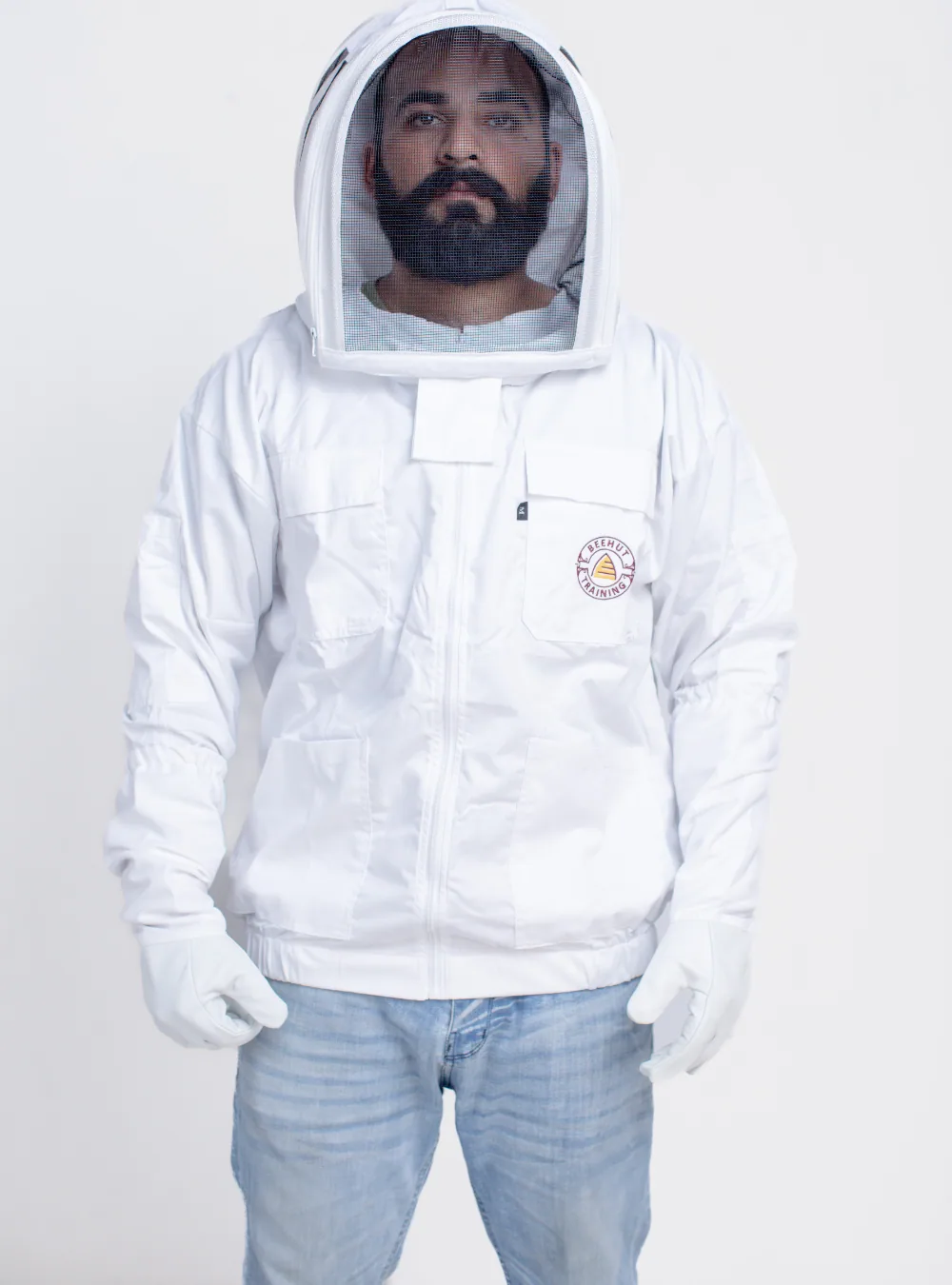
Keeping elastic cuffs and thumb loops working
- Never tumble dry a suit. It is the fastest way to ruin cuff elastic — wash cool and line dry.
- Store it out of the light. Ultraviolet costs elastic its recovery even hanging still.
- Stretch and release each cuff at the start of every season.
- Check the loop's stitching when you check the cuff. It is a seam under load.
Slack elastic is a repair rather than a write-off, and whether a supplier will do it — or sell you the part — says more than a warranty length does. What to check in a warranty goes through the questions.
Extension guidance treats full wrist coverage as the non-negotiable part of a kit, which is a useful standard to hold a feature list against: Penn State's beekeeping basics and the University of Georgia Bee Program. Sealing wrists and ankles covers the rest of the join, and our jackets and ventilated suits are elasticated at both ends.