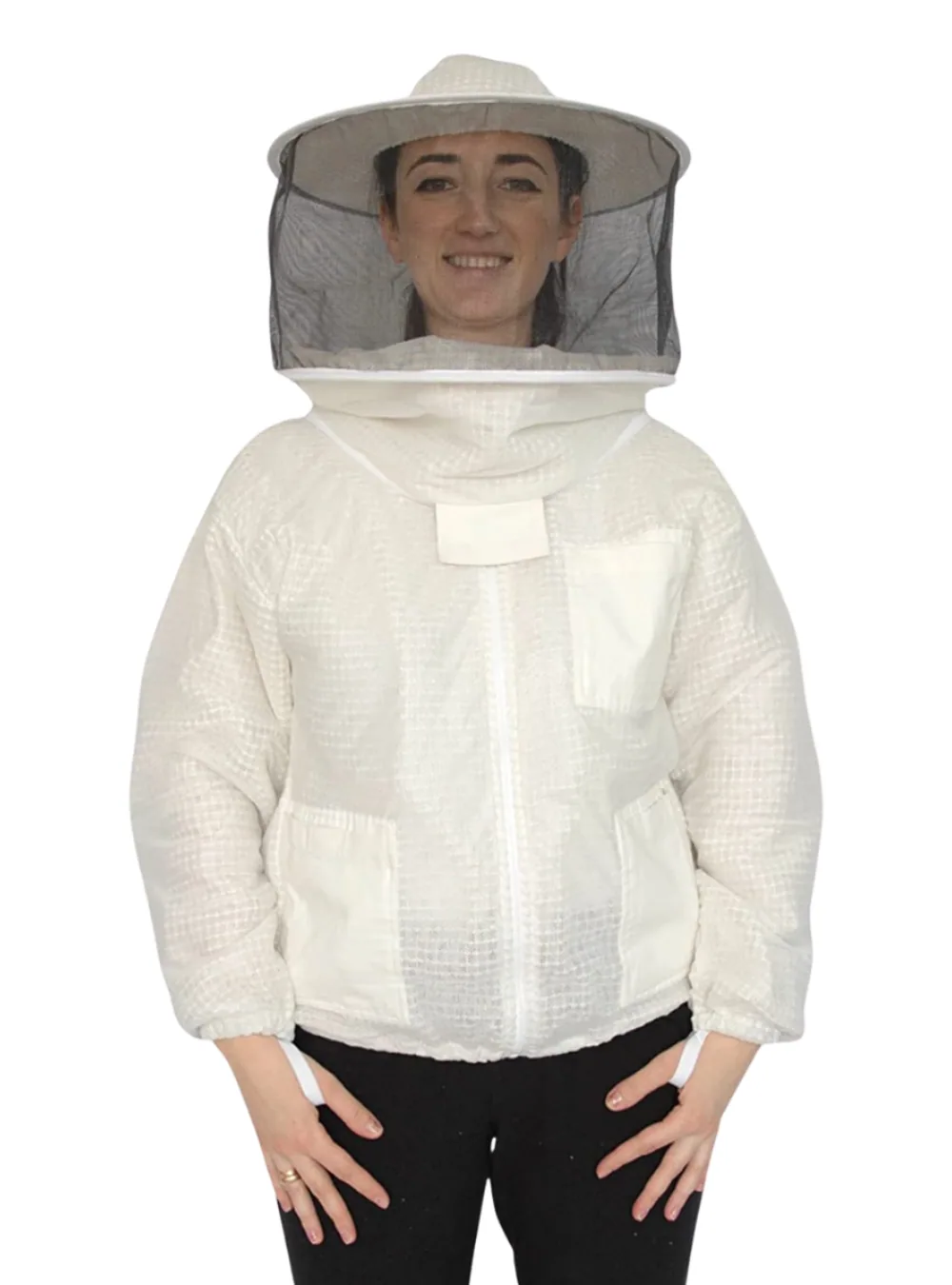
Is there a bee suit safety standard?
No. There is no sting-resistance standard for beekeeping clothing anywhere, which is why every protection claim on a label is the seller's own. Here is what to judge instead.

There is no bee suit safety standard. No sting-resistance test, no certification body, no rating you can compare two suits on. General protective clothing rules do exist. However, they cover sizing, labelling and whether a garment harms the wearer, rather than whether a bee can sting through it.
Which means every protection claim on a bee suit label is the seller's own claim. Including ours.
Why no bee suit safety standard exists
Partly scale. Protective clothing standards follow industries with regulators and injury statistics, for example chainsaw work, welding and chemical handling. Beekeeping is small, and the injury is usually minor.
Partly difficulty, too. A sting test would need live bees of a defined temperament, a defined fabric tension and a defined distance from skin. All three vary enormously in use. As a result, a number produced in a lab would tell you little about kneeling beside an irritable colony in July.
What the general rules do cover
Worth knowing, because sellers sometimes point at them as if they were a sting rating.
General protective clothing requirements deal with innocuousness, which means the garment must not harm you. They also cover sizing and marking, ageing and care instructions, and ergonomics. Even so, a suit can satisfy all of that and still be a single layer of thin polyester.
So a claim of conformity to general protective clothing rules is not a bee suit safety standard, and it is not a claim about stings at all. It is a claim about labels and seams.
What "sting proof" means on a label
It means the seller chose the words. Nothing more. In any case, no suit is sting proof in the sense the phrase implies.
However, what a good suit does is make a sting reaching skin unlikely in normal use. The honest version of the claim is "sting resistant", and because there is no bee suit safety standard, even that has no test behind it. Whether bees can sting through a bee suit explains why the mechanism is distance rather than armour.
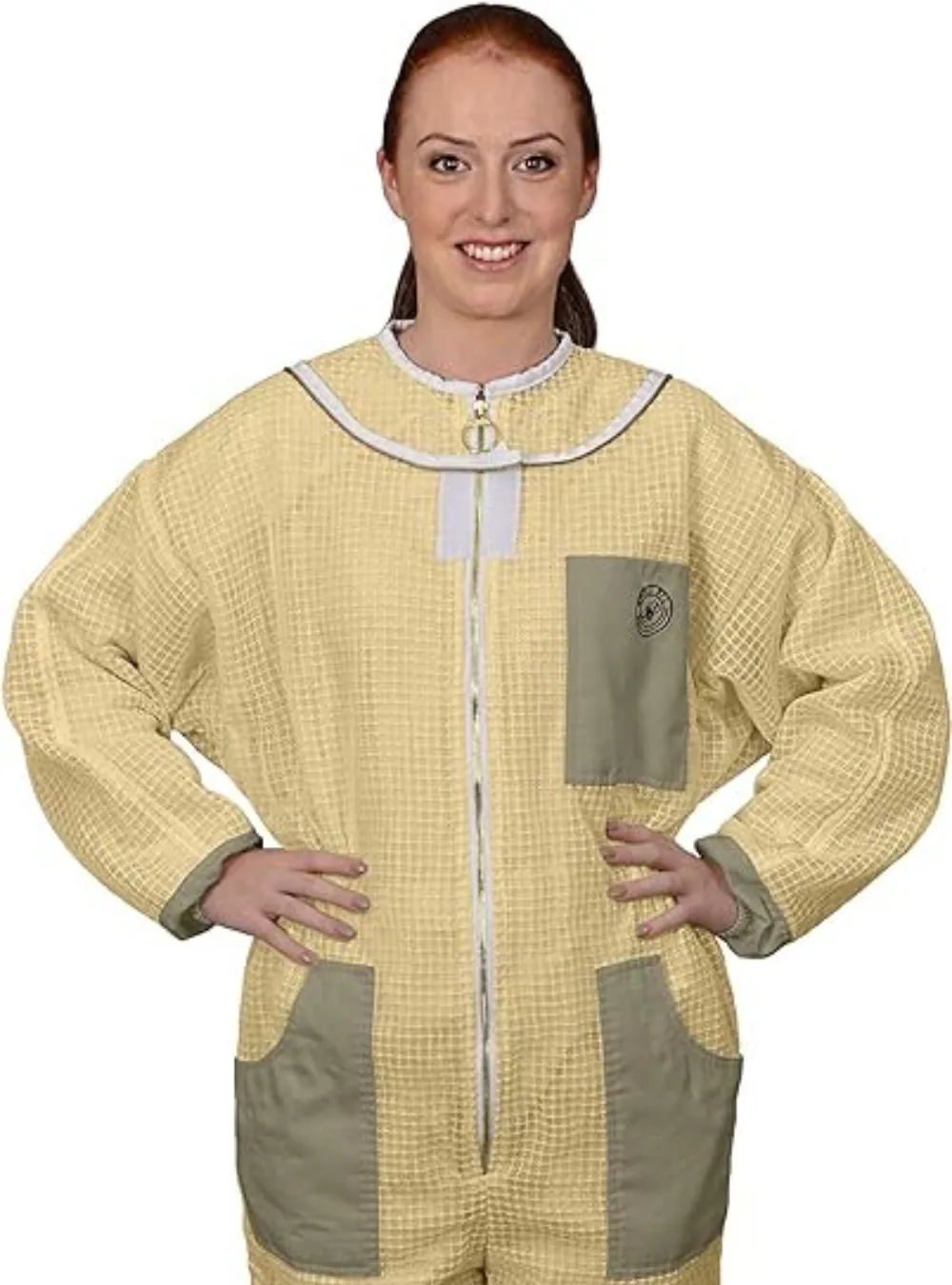
What to judge instead of a bee suit safety standard
Five things, all of which you can check yourself, in a shop or on arrival.
| What to check | Good | Walk away |
|---|---|---|
| Layers or weight | Three-layer mesh, or cotton at a stated GSM | "Heavy duty" with no number |
| Veil distance | 5-10 cm off the face, held by a collar or frame | Mesh that rests on your cheek |
| Collar closure | Two zip runs meeting with no gap | Velcro, or one zip with an open end |
| Cuffs and ankles | Elastic, with thumb loops or boot overlap | Plain hems |
| Zip backing | A fabric flap behind the full length | Exposed teeth |
That table is more useful than any certificate would be. After all, every row is a thing a bee actually exploits. What to do when your bee suit arrives turns it into a ten-minute check, and the pre-inspection checklist is the version you run each time.
Claims worth distrusting
- "Certified" with no body named. Ask which body and which test. There is no answer, because there is no bee suit safety standard to certify against.
- "Military grade" or "professional grade". Neither phrase has a definition in clothing.
- A GSM figure with no fabric named. 300 GSM of cotton drill and 300 GSM of loose polyester are different garments. What GSM means covers reading it properly.
- Layer counts that include the lining. Three-layer mesh means three mesh layers holding a gap, not mesh plus two cloth faces. Three-layer against two-layer shows the difference.
What a bee suit safety standard would have to measure
Useful to imagine, because it tells you what to look for in its absence. It would have to cover four things: the gap between fabric and skin under load, the mesh gauge at the veil, the integrity of every closure after washing, and the field of view through the panel.
Notice that three of those four are about construction rather than material. That is the real lesson. A suit's protection lives in its openings and its geometry, and both are visible to you without any laboratory.
Where the law does apply
Two places, and both are about selling rather than stinging. A suit sold in most markets must meet general consumer product safety rules. In addition, claims made about it must not be misleading. So if a suit is sold as sting proof and stings through in normal use, that is a consumer protection matter rather than a standards one.
For professional use, such as pest control, bee removal or education, an employer's own risk assessment is what governs. Typically it specifies construction rather than a certificate. Suits for bee removal professionals and bulk suits for clubs both cover what institutions tend to ask for.
What to do before you buy
Read the construction, not the adjectives. Count the mesh layers, look at the collar zip, check the cuffs, and ask for the GSM if it is cotton. Then check the fit by moving in it. A suit that gaps when you kneel is unprotected wherever it gaps.
In practice the three-layer suits and the triple-layer coverall are where the construction is easiest to see, which matters more than any bee suit safety standard would. For independent beekeeping guidance, the University of Georgia bee programme and Penn State Extension publish material with nothing to sell you.