
What to check in a bee suit warranty
Most bee suit warranties cover the thing that rarely fails and exclude the things that always do. These are the questions that tell you which one you are being offered.

Read the exclusions rather than the headline — and the specifications the same way, since GSM is the figure most quoted and least useful. Almost every bee suit warranty covers manufacturing defects — stitching that comes apart, a zip fitted wrong — and almost none covers the things that actually end a suit's life: worn elastic, snagged veil mesh, propolis staining, and a seam that failed because the suit was too small. Knowing which is which tells you what you are really being offered.
Bee suit warranty, guarantee and returns: three promises
Suppliers use these interchangeably and they are not the same thing.
A return window lets you send the suit back because you changed your mind or it does not fit. It is time-limited and usually requires the suit to be in saleable condition. This is the one you are most likely to use.
A warranty or guarantee covers the suit being faulty — made wrong. Longer, narrower, and much less likely to come up.
Your statutory rights exist regardless of what either document says, and in the UK and the EU they cannot be signed away. A warranty is in addition to them, never instead of them. Any wording implying otherwise is a reason to be careful.
What "defect" normally means
A defect is something that was wrong when the suit was made. A seam that opens the first time you reach, a zip that will not run, mesh bonded badly at a panel join. These are genuinely the maker's fault, and any serious supplier will replace the suit without an argument.
None of it covers wearing out, which is a separate question — how long a bee suit lasts depends on things no warranty mentions. What follows is the part people miss: a defect usually shows up early. If a suit is going to have one, you will find it in the first few wearings — which makes the return window a more useful protection than the warranty length. A two-year warranty on faults that appear in week one is a long guarantee on a short risk.
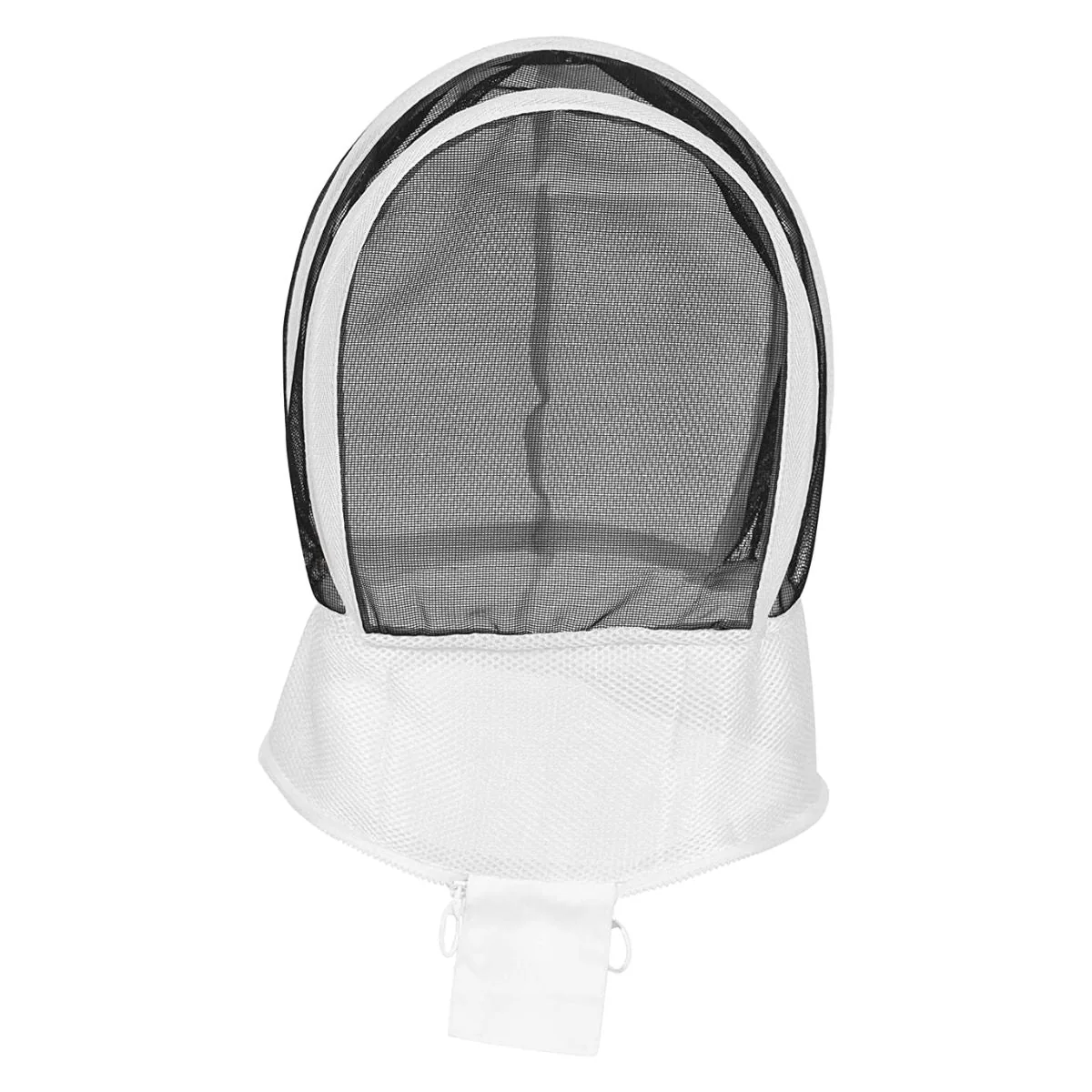
What a bee suit warranty almost never covers
| Failure | Usually covered? | Why not |
|---|---|---|
| Cuff or ankle elastic gone slack | No | Treated as wear. It is also the most common reason a suit stops protecting. |
| Torn veil mesh | No | Treated as accidental damage, whatever caught it. |
| Propolis and wax staining | No | Cosmetic, and unavoidable in use. |
| Seam split on a suit that was too tight | No | Attributed to fit rather than manufacture — and that is usually fair. |
| Knees worn through | No | Wear. Expected on anyone who kneels at a hive. |
| Zip worn out | Sometimes | Depends whether it failed or simply wore. Ask. |
None of that makes a warranty worthless. It means the warranty is not the thing protecting you from the failures you will actually have — and a supplier advertising a long one is not necessarily offering you more than a supplier who does not.
Five bee suit warranty questions worth asking
- Can I buy a replacement veil on its own? The most useful answer on this page. A suit whose veil can be replaced outlives one whose cannot, warranty or no warranty, because the veil is what gets damaged.
- Are cuffs and elastic repairable or replaceable? Same reasoning. Slack elastic is a repair, not a write-off, if the supplier will do it or will sell you the part.
- What is the return window? The checks to run while it is open take half an hour. A window you can actually use — after you have had the suit in the apiary once — beats a long warranty on defects you will never have.
- Who pays return postage, and from where? On an international order this is often the largest number in the whole exchange, and it is the one most often left unstated.
- What happens with a made-to-measure suit? A suit cut to one person cannot be resold, so it sits outside the statutory right to cancel in the UK and the EU. Ask what replaces that — a fit guarantee and alterations is the honest answer; silence is not. Whether a measured suit is worth it covers the rest of that decision.
What a fit guarantee should actually say
Since fit is the thing that goes wrong, this is the document worth reading carefully. A useful one answers four questions plainly:
- How long have you got? Long enough to wear it at a hive, not just to try it on.
- What happens — alteration, recut, or refund? All three are reasonable answers. Not saying is not.
- Who pays the postage each way?
- What if the measurements were wrong? If you gave the wrong numbers, who carries that? An honest supplier will alter it anyway and say so.
A guarantee that promises "perfect fit" and defines none of those four is marketing, not a promise.
The bee suit warranty signal that tells you most
Whether spare parts exist. A supplier selling replacement veils, cuffs and zip pulls has decided its suits should be repaired. A supplier selling only whole suits has decided they should be replaced. The second will often quote the longer warranty, because the warranty costs them less than a parts inventory does.
You can check this in two minutes without asking anyone: look for a veil or a pair of cuffs listed for sale on its own.
Making a bee suit warranty claim well
If something does go wrong, three things make it straightforward.
Photograph it immediately, in daylight, with something for scale, and take one of the whole garment as well as the fault. A close-up of a split seam with no context is hard to assess.
Say when and what you were doing. "It opened the first time I reached forward, on the second wearing" is a different claim from "I noticed it at the end of the season", and the first one gets resolved faster.
Keep the order number. Obvious, and the thing most often missing.
Make the suit last instead
Most of what a bee suit warranty excludes is avoidable.
- Buy the right size. A tight suit splits at the seams, and that is both the commonest failure and the one no warranty pays for. If the chart has never fitted you, women's sizing and suits for tall beekeepers cover the two commonest reasons why. See how a bee suit should fit and the signs of a wrong size.
- Store it dry and out of the light. Elastic and mesh both degrade under ultraviolet, faster than they wear out in use.
- Repair small tears the week you find them. Wash it cool, unzip the veil first, and never put mesh in a machine with anything carrying a hook or a zip of its own.
- Repair small snags the week you find them. A centimetre of torn mesh becomes a hole in a season.
Where ours are written down
Our own bee suit warranty and returns terms are on the returns and exchanges page and the terms page, including how a made-to-measure suit is handled. If something is not clear there, the contact page reaches a person — and a supplier that will not answer the five questions above in writing has told you something useful about which kind of supplier it is.
For advice on protective kit that has nothing to sell you, extension services are the right source: Penn State's beekeeping basics and the University of Georgia Bee Program both cover what a kit needs to do, which is the standard a warranty should be measured against.