
Is a bee suit necessary for beginners?
A veil is. The rest is a judgement — and for a first season the honest answer is that a jacket and gloves are enough, borrowed if possible.

A veil is necessary. A full bee suit for beginners usually is not — a jacket with a veil, worn over your own long trousers and boots, covers a first season properly, and it is cheaper, cooler and easier to get into. Borrow before you buy if you possibly can.
What a bee suit for beginners must have, and what it need not
One item. The veil.
Everything else on a beekeeper is a trade between protection and heat, and reasonable people land in different places. A sting on a forearm is a nuisance; a sting in the eye is not, and that is the whole argument. No experienced beekeeper opens a hive without a veil, however little else they are wearing.
After that: boots that cover the ankle, and one thin layer underneath. Both of those you probably already own.
Jacket or coverall as a bee suit for beginners?
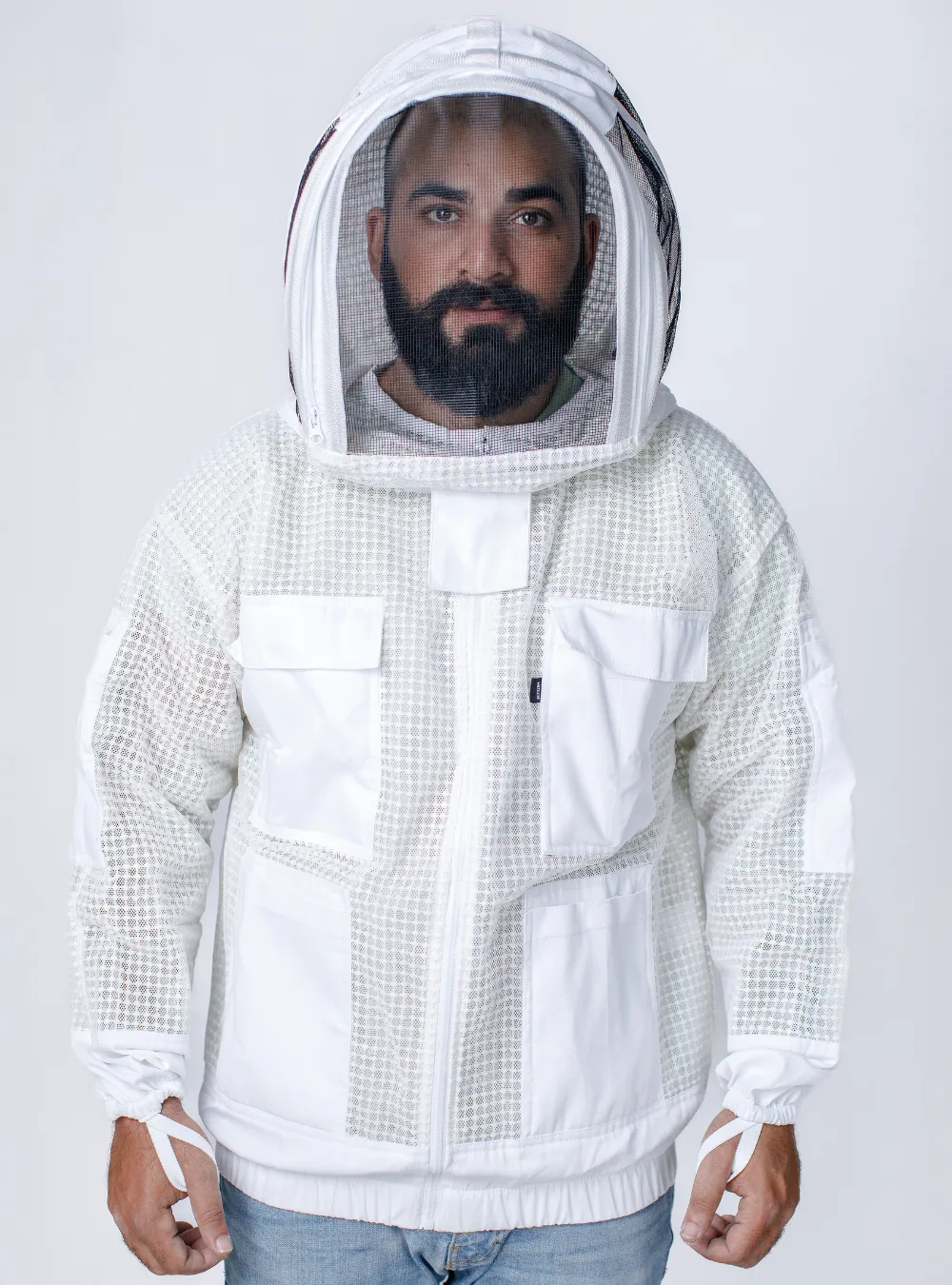
A jacket, for most people. It covers the half of you that is over the open box, it costs less, it is far cooler, and your own trousers do the rest — which is what a great many experienced beekeepers wear anyway.
A full coverall earns its place if you kneel at hives, work over rough ground, or are buying for a child who will sit down without noticing. Bee suit versus bee jacket is the comparison in full.
Borrow first
The single best piece of buying advice on this page, and it does not involve buying.
Most local associations keep spare kit and will lend it for a first visit. An afternoon in somebody else's jacket tells you more about what you want — how hot you get, whether a fencing veil suits your face, whether you mind gloves — than any description can, including ours.
It also means your first purchase is informed. People who buy before their first visit tend to buy the wrong thing, usually something heavier than they needed. Penn State Extension's beekeeping resources and Cornell's Pollinator Network are good places to find a group near you.
What a bee suit for beginners should have
When you do buy, four things matter more than the rest.
- Elasticated cuffs and ankles, not adjustable ones. Nothing to set, nothing to leave undone — elastic cuffs versus thumb loops covers why beginners want both.
- A veil that zips to the collar, rather than a hat-and-veil you have to seat correctly. One action instead of four.
- A dark face panel, because that is what you can see through.
- Room for a layer underneath. Buy slightly loose. Loose is protection; snug is not.
Do beginners need gloves?
Yes — and experienced beekeepers often do not, which confuses people.
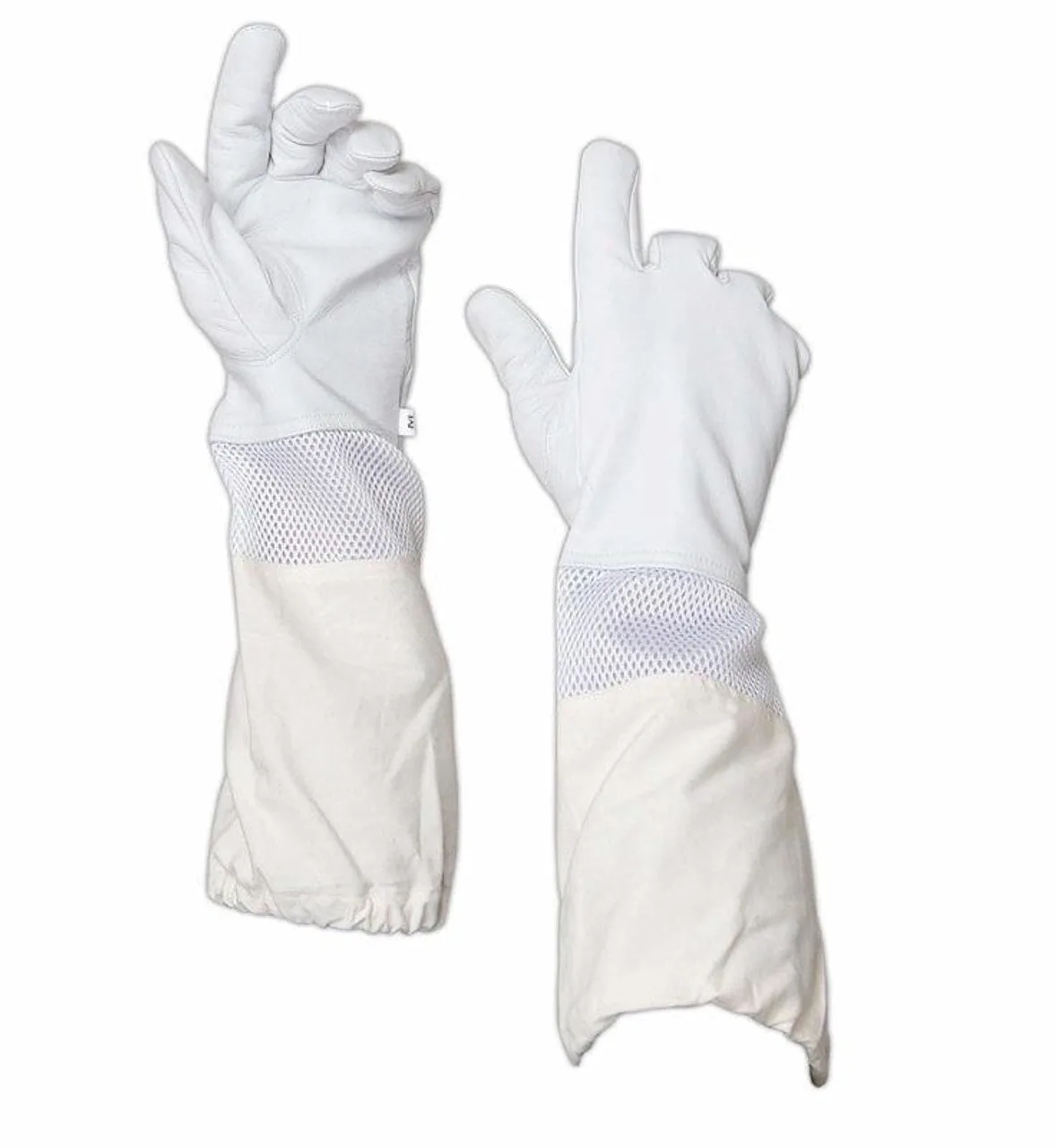
Gloves cost dexterity, and dexterity is what stops you crushing bees. Somebody with years of practice can work bare-handed and crush almost nothing. A beginner cannot, and crushed bees make a colony defensive, which is far worse than the stings the gloves were preventing.
So wear them, buy ones that fit your hand rather than the cheapest pair in the largest size, and clean them properly. An oversized glove causes the clumsiness it was meant to prevent — gloves sizing covers measuring properly.
What a first visit is actually like
Worth knowing, because it changes what you think you need.
You will be hot. Not from the weather — from standing still, concentrating, in a sealed garment, with adrenaline. People who bought the heaviest suit available discover this in the first ten minutes.
You will also be slow, and that is correct. A first inspection is mostly looking rather than doing, which means less reaching into boxes and a lower sting risk than the kit suggests. The thing most likely to go wrong is not a sting at all: it is dropping something, or standing in the flight path.
And you will want the veil off before you expect to. Walk clear of the hive first — the walk-away drill applies to taking kit off as much as to anything else.
Second-hand for a first season
Often the best answer, and under-used. Suits come onto the market constantly from people who tried a season and stopped, which means barely-worn kit at a fraction of new.
The checks are quick — stretch the cuffs, hold the mesh to the light, run the zips, try it on — and what to check on a used suit goes through them. Wash it before the first wear whatever it looks like.
The catch is that there is no fit guarantee, which is why trying it on matters more than it would in a shop.
What a bee suit for beginners does not need yet
| Item | When |
|---|---|
| A second suit | Once you know you will keep going |
| A made-to-measure suit | Second season at the earliest — you do not yet know what to specify |
| A spare veil | Useful, but not before the first one is damaged |
| Heavy-duty kit for removals | Only if you are doing removals |
| Extracting equipment | Borrow it. It is used two days a year |
The bee suit mistake beginners make
Buying the heaviest suit available on the theory that heavier is safer. It is not — a sting is defeated by distance rather than by mass — and a heavy suit in July is a suit you stop closing properly.
The second one: buying too large so it lasts. Slack across the body is fine and useful. Slack at the cuffs, ankles and collar is an open garment, and those are the places a sting actually gets in.
A first-season kit, honestly
- A veil, or a jacket with one attached. Ventilated if your summers are warm.
- Gloves that fit your hand.
- Boots you already own that cover the ankle.
- A thin long-sleeved layer and long trousers you already own.
That is a bee suit for beginners, complete. The rest is a decision for after a season rather than before one. What beekeepers wear is the full list if you want to see what you are deferring.
Our jackets are the usual starting point, gloves are listed by hand size, and the size guide has the measurements to take before ordering anything.