
Bee suit zipper types and failures
The zip is the part most likely to strand you mid-inspection, and the hood zip is the one that goes. Here is why, and what to look for.

A bee suit zipper fails more often than the fabric around it, and the hood zip fails first. It runs round a curve, it is opened and closed every visit, and it is handled with sticky gloves — three things that are hard on any zip. Knowing which type you have tells you what to expect and what to ask for next time.
The two kinds of bee suit zipper teeth
Coil zips are a continuous spiral of nylon stitched to tape. They are light, they bend easily round a curve, and they are self-healing in a useful way: if the coil is forced apart it will often re-mesh when you run the slider back over it.
Moulded zips have individual plastic teeth fixed to the tape. They are stronger under a straight pull and more resistant to grit, but they are stiffer round a curve and a broken tooth is permanent.
Most hoods use coil, because a hood is all curve. Most front zips on heavier suits use moulded. Neither is better in the abstract — they are chosen for where they sit.
Why the hood zip is the one that goes
Four reasons, stacked.
- It runs round a curve, so the slider is always under a sideways load the design does not love.
- It is used more than any other. Every visit, often several times within one.
- It is handled with gloves on, so it gets gripped at an angle and pulled rather than guided.
- Propolis and wax get into it. Grit in a zip is what wears the slider out.
The failure itself is almost always the slider rather than the teeth. A slider that has spread slightly stops pressing the teeth together, so the zip closes behind it and then opens again — which is exactly the fault you will not notice until a bee is inside the suit.
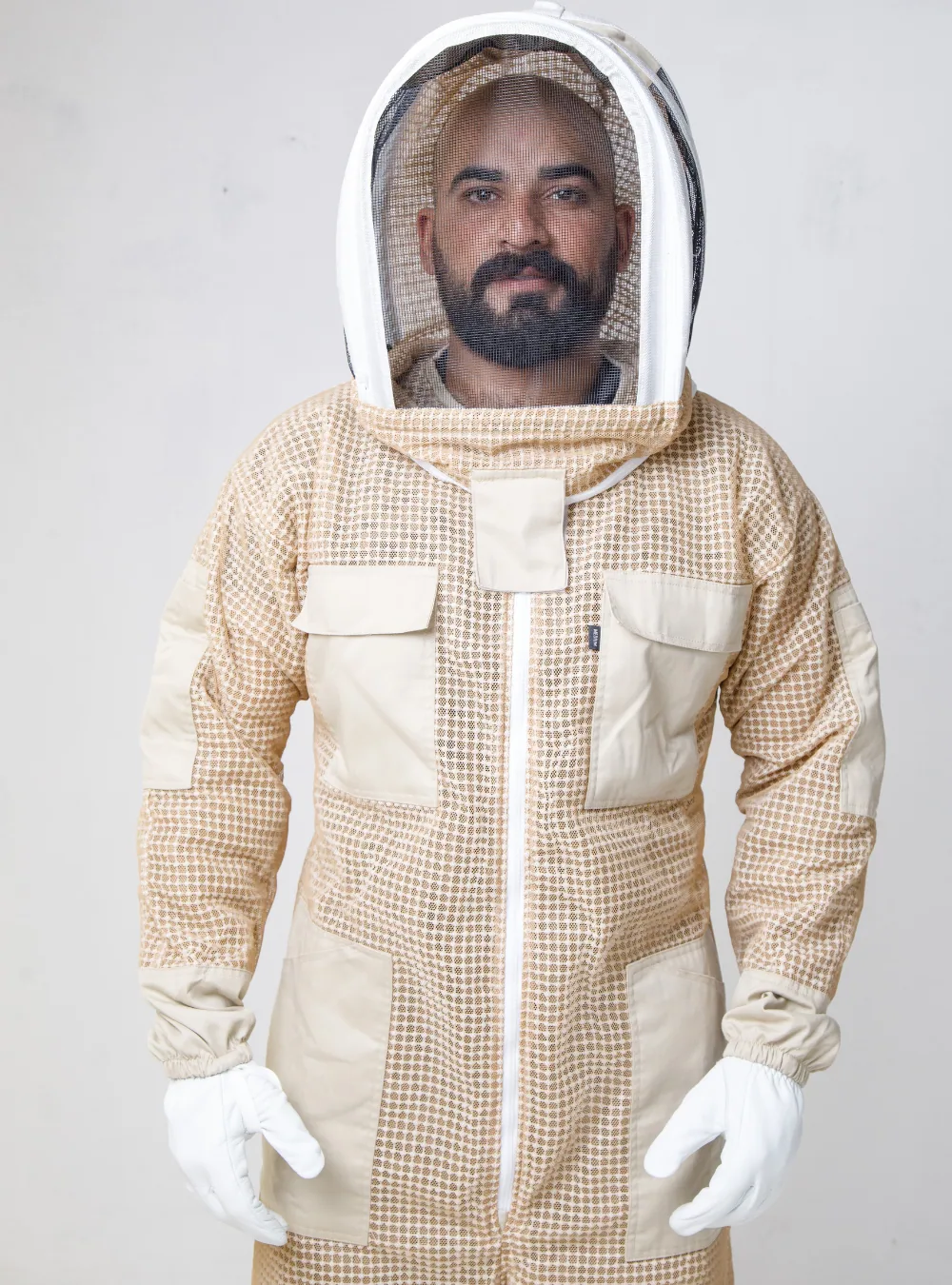
Bee suit zipper failures, and what each one means
| Symptom | Cause | Fix |
|---|---|---|
| Closes, then opens behind the slider | Slider has spread | New slider. Cheap, and the commonest repair |
| Catches halfway, every time | Grit, propolis, or a bent coil | Clean it; straighten the coil if you can |
| Catches fabric constantly | Loose lining or a frayed edge near the tape | Trim and restitch the edge |
| A tooth missing | Forced past an obstruction | Coil: sometimes recoverable. Moulded: new zip |
| Pull tab broken off | Normal wear | A split ring or a cord loop. Two minutes |
| Will not start at the collar | Box and pin misaligned, or a tired slider | Start it slowly; if it persists, new slider |
Note how many of those are a slider rather than a zip. A new slider is a job an alterations shop does in minutes and costs a fraction of a new zip — see repairing a torn bee suit for what else is worth mending.
What to look for in a bee suit zipper when buying
- Two sliders on the hood zip. The best feature there is: you can open the veil from the top without unzipping the whole collar, and if one slider fails the other still closes the suit.
- A pull tab you can grip in gloves. A small metal tab is unusable with sticky fingers. A cord loop is better than anything moulded.
- A storm flap over the zip, which also keeps a hive tool from catching on it. Keeps grit out and covers the line of teeth, which is a gap however small.
- Zip tape stitched to a reinforced edge, not straight onto mesh. Mesh tears at a zip line long before the zip fails.
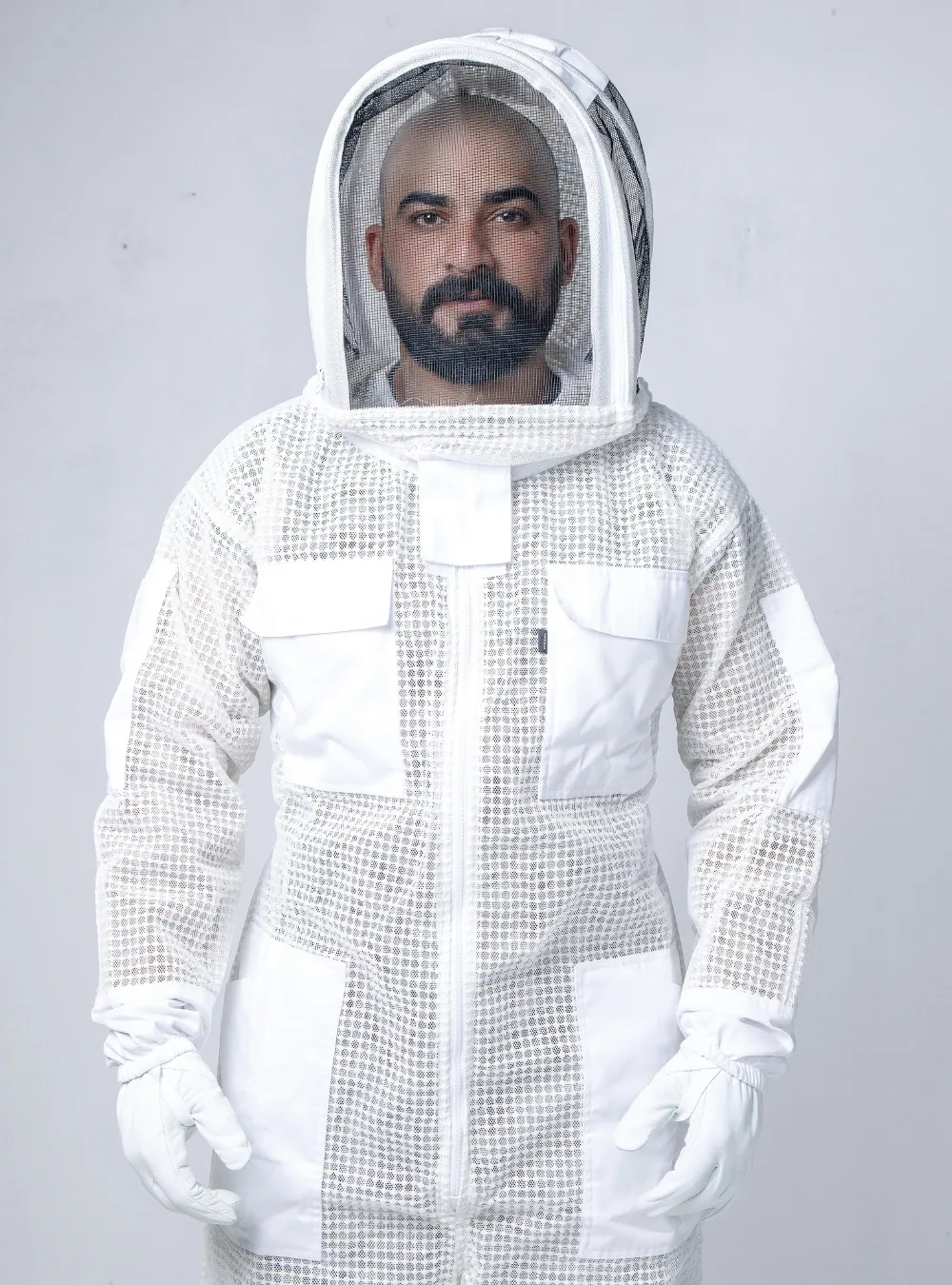
Two-way zips, and why they are worth asking for
A two-way zip has a slider at each end, and on a hood it is the single most useful feature available.
It lets you open the veil from the top — enough to drink, or to get air on your face — without unzipping the whole collar and exposing your throat. On a long summer inspection that is the difference between taking the veil off repeatedly and not.
It is also redundancy. A bee suit zipper that fails usually fails at the slider, and with two of them the suit still closes. For anyone working alone or at a distance from the car, that is worth more than it costs.
If a bee suit zipper fails at the hive
It will, eventually, and the answer is decided before it happens rather than during.
Close the hive first if you can do it in seconds, then walk clear before dealing with anything. A hood that will not close means your face is unprotected, so this is not the moment to finish the inspection.
Carry a few safety pins. Pinning a hood closed is ugly and it works, and it is the difference between going home and finishing. A spare veil in the bag is the better answer if your suit takes a detachable one — replacing a veil is a ten-minute job when the zip is the problem rather than the mesh.
Looking after a bee suit zipper
- Close every zip before washing. An open zip is a row of teeth dragged across fabric for forty minutes — and it is how veils get holes.
- Clean it rather than lubricating it. Oil and silicone attract grit; a soft brush and warm water is better, and it matters more in humid climates where nothing dries.
- Guide it, do not pull it. Run the slider with the fabric held straight either side.
- Keep propolis off it. Scrape your hive tool rather than wiping it near the collar — propolis is the main contaminant.
- Check it when you put the suit away. Run every zip end to end before storage, so a fault is a winter job rather than a cancelled inspection.
Why this matters more than it sounds
A zip is the only part of a suit that can strand you. A torn knee is an annoyance you finish the visit with. A hood zip that will not close means standing beside an open colony unable to protect your face, and that is the moment people make bad decisions.
It is also one of the few components that fails suddenly rather than gradually, which is why the thirty-second check before an inspection is worth the habit — the pre-inspection checklist puts it alongside the cuffs.
For protective-kit guidance with nothing to sell, Penn State's beekeeping basics and the University of Georgia Bee Program cover what a kit has to do. Our ventilated suits and jackets take detachable veils, so a failed hood zip is a veil to replace rather than a suit.