
Gauntlet length: why it matters
A long gauntlet is not better protection. Its only job is overlap with the sleeve, and a short one that stays put beats a long one that slides.

Gauntlet length matters for one reason: overlap. The sleeve of your suit has to cover the gauntlet with enough to spare that it is still covered when you reach forward and the sleeve rides up. Beyond that, a longer gauntlet buys you nothing — and a short one that fits properly beats a long one that slides on your hand.
What a gauntlet is for
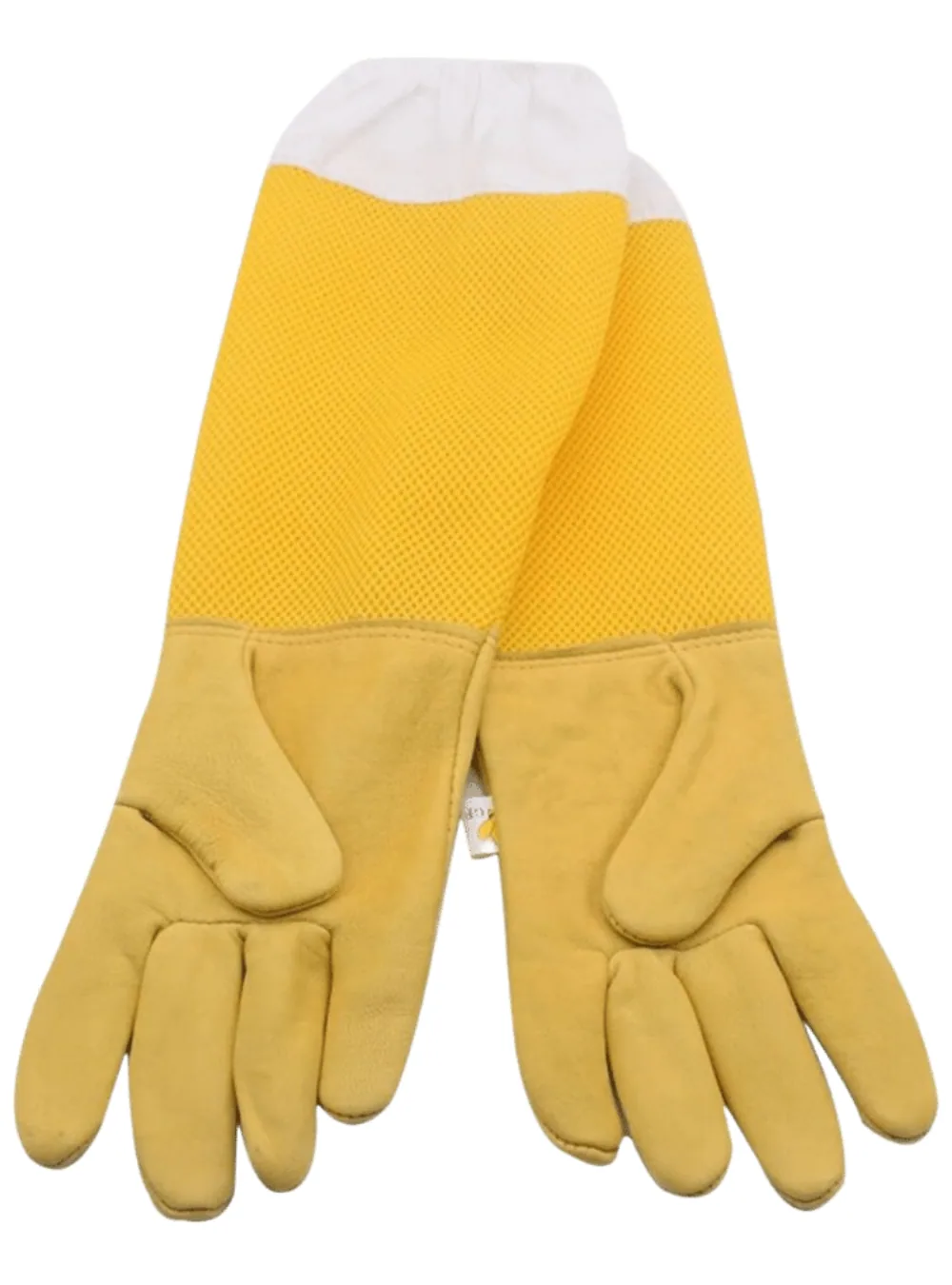
The gauntlet is the sleeve above the glove's wrist. People assume it is there to protect the forearm, and it is not — your suit already does that.
Its job is to bridge a join. Two garments meet at the wrist, and a join is always the weak point. The gauntlet gives the suit's cuff something to sit over, so that when the two move relative to each other there is still material in the way.
That is the whole function, and it explains why gauntlet length is measured against your sleeve rather than against your arm.
Why longer is not safer
Three reasons, and the third is the one people miss.
Your suit is already covering that forearm. A gauntlet reaching to the elbow is a second layer over a first, in the one place neither is under pressure.
Long gauntlets bunch. Fabric gathered at the forearm lifts the suit's cuff away from it, which opens the join the gauntlet exists to close.
Length encourages the wrong fit. A glove sold on gauntlet length is often sized loosely at the hand, and a glove that slides takes its gauntlet with it — gloves sizing covers buying for the hand first.
The order that decides everything
Gauntlet under the sleeve. Always.
Gauntlet outside the sleeve creates a funnel: a bee walking down your arm meets the opening of the gauntlet pointing upwards. Gauntlet inside, and the same bee meets fabric going the other way.
This is free, it takes no equipment, and it is the single most common thing people have backwards. Sealing wrists and ankles covers the rest of the join.
How much gauntlet length you actually need
Enough that the sleeve still covers it at full reach — which is one of the checks in the first half hour with a new suit. There is no universal figure, because it depends on your sleeve, so measure rather than guess.
- Put on the suit and gloves you use.
- Reach forward as if lifting a full frame, arms extended.
- Have somebody look at the wrist, or check in a mirror.
- If the cuff has ridden above the gauntlet, you need more overlap — from a longer gauntlet, a longer sleeve, or a thumb loop.
Most people need less than they think. A gauntlet of a few centimetres is enough on a suit whose sleeves fit; no gauntlet is enough on a suit whose sleeves are short.
Gauntlet length on different gloves
It varies more by material than by maker, for practical reasons.
Nitrile usually has little or none — the glove ends at the wrist or just past it. That is fine, and it makes the sleeve and its closure carry the whole job. If you work in nitrile, a thumb loop matters more than it would otherwise.
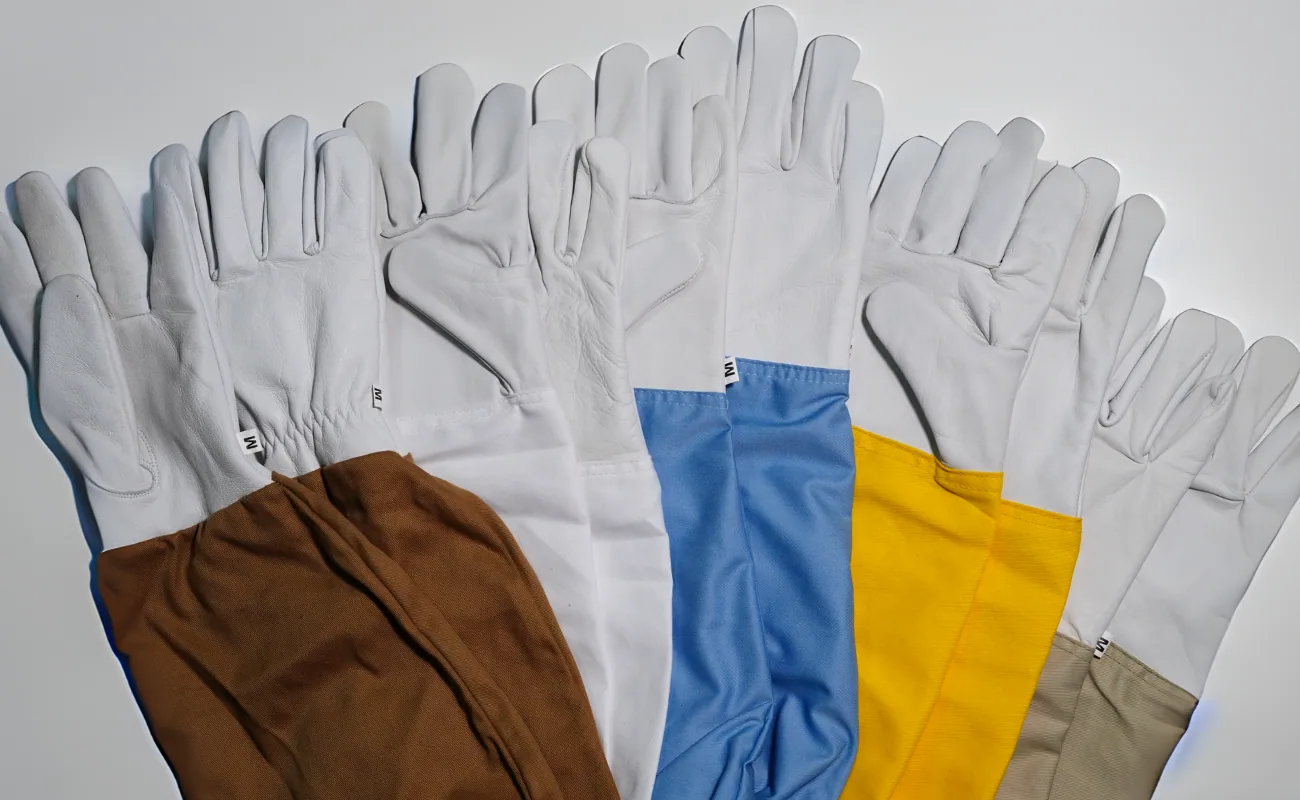
Goatskin and cowhide normally come with a fabric gauntlet stitched above the leather palm, often canvas or cotton. That part washes properly while the leather does not, which is worth knowing — cleaning gloves covers treating them as two materials.
Long-gauntlet gloves sold for removal and swarm work reach well up the forearm. They have a place, and it is not an ordinary inspection.
The gauntlet that has gone slack
Most gauntlets have an elastic top, and like every other elastic on a kit it loses recovery with heat and time.
A gauntlet that no longer grips the forearm does not stay tucked. It slides down inside the sleeve, bunches, and lifts the cuff — so the overlap you measured when the gloves were new is not the overlap you have now.
Test it the same way you test a cuff: stretch and release. If it stays stretched, the gauntlet has stopped doing its job, whatever its length. That is usually the pair rather than a repair.
When the sleeve is the problem
If the cuff rides above the gauntlet at every reach, buying longer gloves is treating a symptom.
The fault is sleeve length, and it is common on a long frame — suits for tall beekeepers covers it. The real fixes are a thumb loop, which anchors the sleeve to your hand, or a suit cut to your measurements.
Elastic cuffs versus thumb loops is worth reading here: elastic closes the opening, a loop stops the sleeve travelling, and gauntlet length only helps once the sleeve stays where it should.
What gauntlet length costs you
| Longer gauntlet | Shorter gauntlet |
|---|---|
| More margin if your sleeves are short | Easier to tuck cleanly under a cuff |
| Bunches, which lifts the cuff | Nothing to bunch |
| Hotter — another layer on the forearm | Cooler |
| Harder to get on and off quickly | Faster |
| Often sold with a loose hand fit | Usually fitted at the hand |
The exception: removal work
One case where generous gauntlet length genuinely earns its place. Crawling through a loft or reaching into a wall cavity puts your arms through far more movement than an inspection does, and the sleeve travels further.
There, longer is sensible — and taping the join is normal for a single bad job. Suits for removal work covers the rest of what changes.
The short version
- Buy the glove that fits your hand. Gauntlet length is the second question, not the first.
- Gauntlet under the sleeve, never over it.
- Check the overlap at full reach, not standing still.
- If the sleeve rides up anyway, fix the sleeve — a thumb loop, or a suit that fits.
For protective-kit guidance from somewhere with nothing to sell, Penn State's beekeeping basics and the University of Georgia Bee Program both treat full wrist coverage as the non-negotiable part. Our gloves are listed by hand size.