
Best bee suit colour for hot climates
Pale is better than dark, and that is most of it. But colour does far less for heat than construction does — a white cotton suit is hotter than a khaki ventilated one.

The best bee suit colour for hot climates is any pale one — white, cream, khaki, pale yellow. That is genuinely most of the answer, and it is also the smaller of the two things deciding how hot you get. Construction is the larger one: a white cotton suit is hotter to work in than a khaki ventilated one, every time. Choose the construction first and the colour second.
What a pale bee suit colour actually does
A pale surface reflects more of the sunlight that lands on it, so less of that energy becomes heat in the cloth. That is real, and on a suit standing in direct sun it is worth having.
What it does not do is move the heat you are already making. Most of the heat you have to lose in an apiary is your own, generated by lifting boxes in a sealed garment. Reflecting sunlight does nothing about that, which is why a white suit with no ventilation is still unbearable on a hot afternoon.
The four things making you hot, only one of which is bee suit colour
Worth separating, because colour only touches one of them.
- Your own metabolism. Lifting a full box is work. This is the biggest source and colour does nothing about it.
- Trapped air. Still air next to your skin stops carrying heat away. Ventilated construction addresses this; colour does not.
- Trapped moisture. Sweat that cannot evaporate stops cooling you. Again construction, plus what you wear underneath.
- Radiant heat from the sun. The only one colour touches.
Bee suit colour addresses the fourth, and only the fourth. That is why the gain from choosing white over khaki is small, and the gain from choosing ventilated over cotton is large.
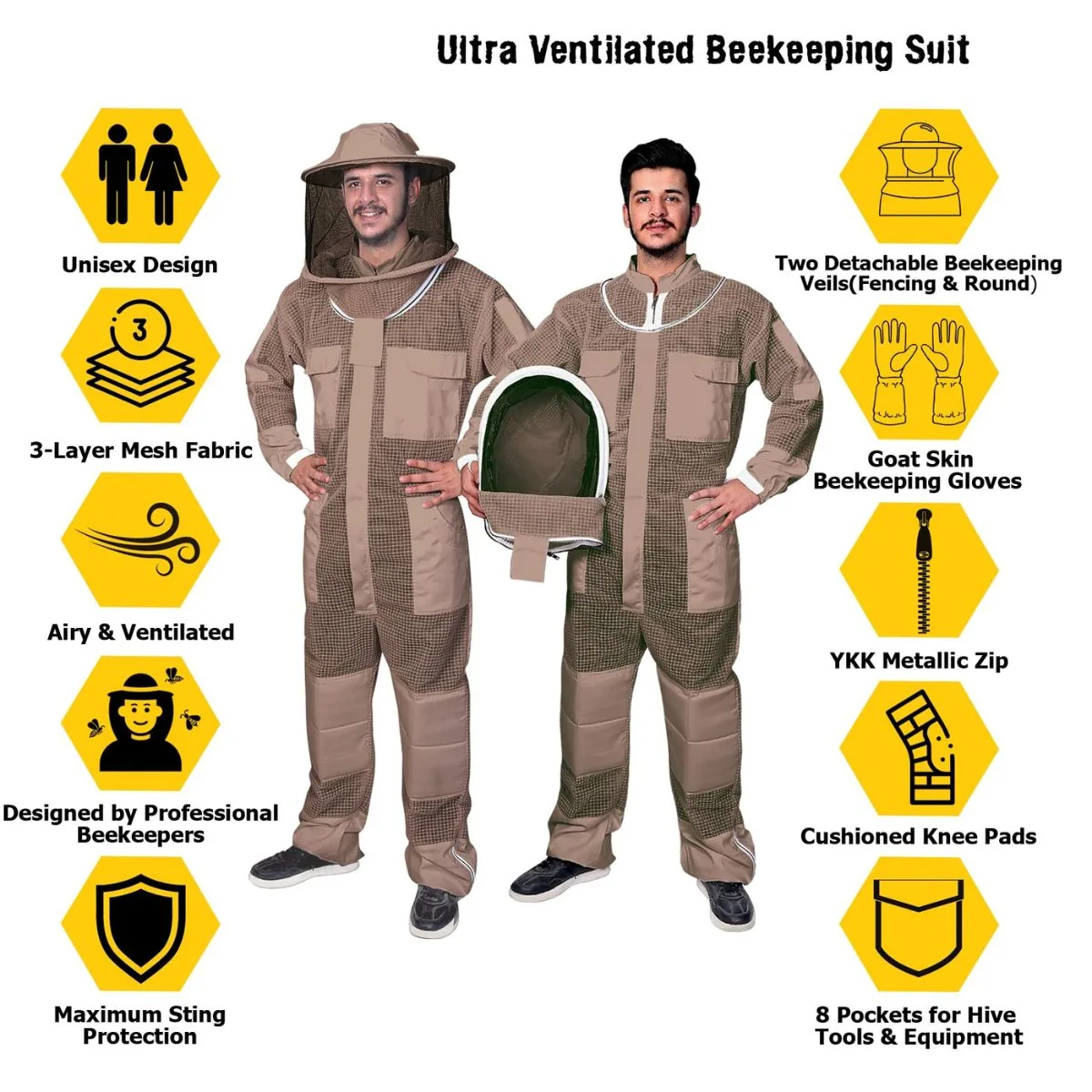
Why construction beats colour
A ventilated suit is built around a gap. Bonded layers hold a space open between the outer surface and your clothing, and air moves through that space whenever you do. That is a mechanism for carrying heat away from your body — the thing colour cannot do at all.
It is also what stops a sting: the gap holds the outer surface far enough from your skin that a sting cannot bridge it. Three-layer versus two-layer mesh goes into how the layers differ. The point here is that one structure is doing both jobs, and neither depends on what colour it is.
If you only read one more page, read ventilated versus cotton. It is the decision that actually changes your afternoon.
Does bee suit colour matter to the bees?
Bees respond to dark colours and to fast movement. Pale clothing is the long-standing convention in beekeeping for that reason, and it is why most suits are white, cream or khaki rather than navy.
So the best bee suit colour for hot climates is pale rather than specifically white — pastels included. Khaki, cream, pale yellow and pale blue all sit in the same bracket, and the choice between them is yours. Why bee suits are white covers where the convention comes from and how far it goes.
One thing to be careful about: the veil. Veil mesh is usually dark on the inside for a good reason — it cuts glare so you can see through it. That is a visibility decision, not a heat one, and a pale veil mesh is harder to see through in bright sun.
The best bee suit colour for hot climates, ranked against everything else
| Choice | Effect on how hot you get |
|---|---|
| Ventilated rather than cotton construction | Large. This is the decision. |
| Working early morning or late evening | Large, and free. |
| Keeping sessions short and taking the veil off between hives | Moderate to large. |
| What you wear underneath | Moderate. One thin layer beats none. |
| Pale rather than dark | Small but real, and larger in direct sun. |
| White rather than khaki or cream | Very small. |
What to wear underneath
Counter-intuitively, something rather than nothing. A thin cotton layer next to the skin spreads sweat over a wider area so more of it can evaporate, and it keeps the suit's inner surface off your skin — which is both cooler and safer.
Avoid heavy synthetics that hold moisture against you. Avoid nothing at all, which puts a sweating back directly against fabric. What to wear under a bee suit goes through it properly, including why a dark layer showing through pale mesh defeats the point.
The one bee suit colour trade-off worth knowing
A pale suit shows propolis, and propolis does not wash out. A khaki or cream suit looks presentable for longer than a white one in the same use — not because it stays cleaner, but because it hides what it has.
That is a laundry and presentation decision, not a safety one. It matters if customers see you; it does not matter in your own apiary.
Humid heat is a different problem
Everything above assumes the sweat can evaporate. Where the air is already near-saturated it cannot, and the advice changes — beekeeping clothing for humid climates covers it.
Sun, not just heat
Two things that get forgotten in the colour conversation.
A suit cut to you will not change any of this — whether a measured suit is worth it is a question about fit, not heat. Mesh is not shade. A ventilated suit lets light through as well as air, and a long session in strong sun is a long session of exposure. Cover up underneath rather than relying on the suit.
And sunlight is what degrades a suit. Elastic and mesh both break down under ultraviolet, so the single best thing you can do for a hot-climate suit is store it out of the light rather than leaving it hanging in the sun between visits. This is the one piece of care advice that genuinely changes how long a suit lasts.
Timing the work around the heat is the other half, and it is local knowledge rather than product knowledge. Extension services in hot regions publish seasonal guidance worth reading alongside this — the University of Georgia Bee Program and Penn State Extension's beekeeping resources are two starting points.
What about camouflage?
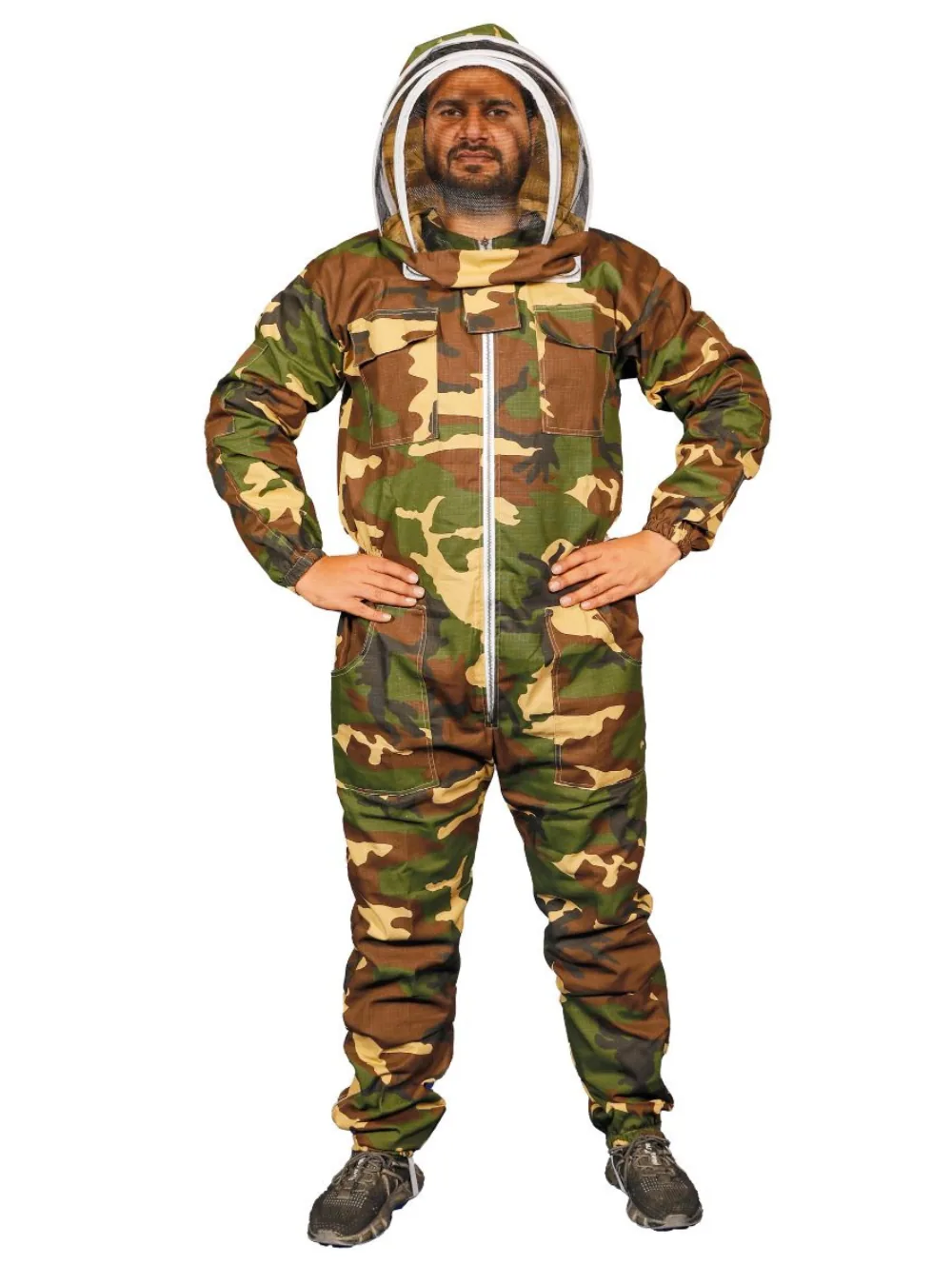
Camouflage suits exist for a practical reason that has nothing to do with heat: a white suit in a hedgerow or on a roadside apiary advertises that there are hives there. Beekeepers who have had equipment stolen, or who keep bees on land where they would rather not be noticed, buy them for that.
The colour question is worth being straight about. Camouflage patterns are mid-tone rather than pale, so on the sunlight argument above they are a small step backwards, and the convention about dark clothing applies to the darker elements in the pattern. In ventilated construction that matters much less than it would in cotton, because the construction is doing the work. If concealment is a real problem for you, it is a reasonable trade; if it is not, pale is the simpler choice. Ours are in the camouflage collection.
Does bee suit colour affect how long a suit lasts?
Only indirectly, and not in the direction people expect. What degrades a suit is ultraviolet, not visible colour, and ultraviolet attacks the mesh and the elastic in a pale suit and a dark one alike.
What does differ is when you notice. A pale suit shows wear, staining and small snags early, which means you repair them early. A darker suit hides a torn seam until it is a long one. If you are the sort of beekeeper who inspects gear rarely, pale is quietly the safer choice for that reason alone.
What to do
If you work in real heat: buy ventilated, in whichever pale colour you like the look of. The colour is yours to choose because it is not the thing deciding your comfort — and liking your suit is a real benefit, because you will wear it.
If you are buying for children, the margin is smaller and the answer leans ventilated sooner — the children's guide explains why. If you work in a mild climate or early mornings: cotton is fine, cheaper, and pale is still the sensible default. Polycotton versus cotton covers the choice within that category.
Our ventilated bee suits are made in several pale colours, the ventilated jackets are the lighter option for short sessions, and and the custom-fit suit is cut in whichever colour you choose.