
Family beekeeping kit: what to buy
Kitting out a family is mostly an exercise in not over-buying. Two adults and two children do not need four of everything — but they do need four veils.

A family beekeeping kit divides cleanly in two: protective gear is per-person, and everything else is shared. That one line is most of the answer. A household of four needs four veils and four pairs of gloves, one smoker, a hive tool each if you can manage it, and no more hives than one adult can lift alone.
A family beekeeping kit: what has to be one each
Anything that sits between a bee and a person.
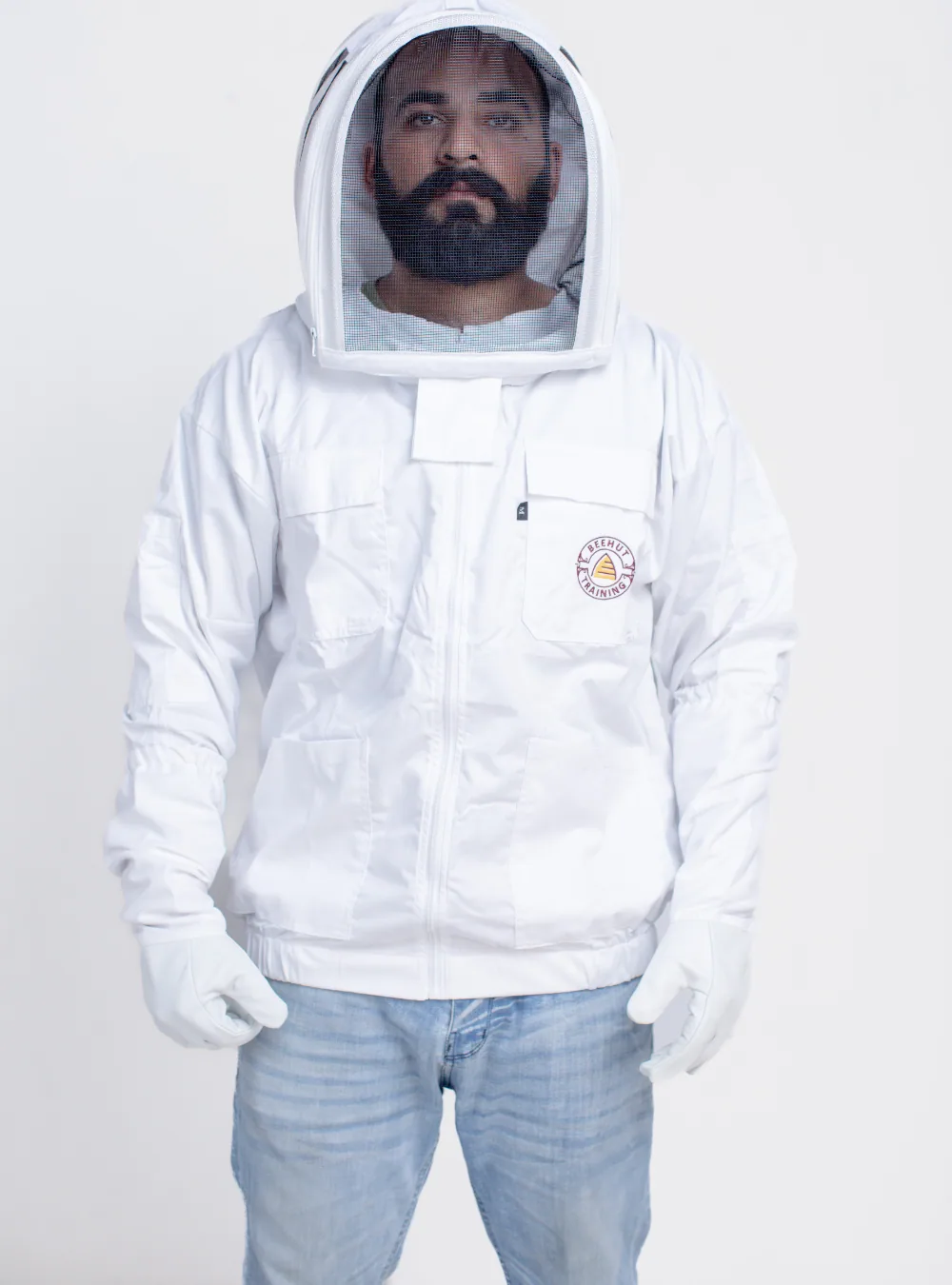
- A suit or jacket. Fitted to the person wearing it. Sharing does not work, because the closures only protect when they grip — and a cuff sized for an adult is an open sleeve on a child.
- Gloves. Sized — see gloves sizing, and children's gloves for the smaller hands. Oversized gloves make hands clumsy, and clumsy hands crush bees.
- Boots. Anything that covers the ankle, so the suit's elastic has something to sit over rather than resting on a sock.
For children, buy a suit drawn as a child's garment rather than a small adult's. The reason is in the children's buying guide: shrinking a hood brings the mesh closer to a smaller face rather than further from it, which is the opposite of what you want.
What a beekeeping kit shares
- Smoker. One. An adult lights it and an adult carries it, always — beekeeping with children covers why.
- Hive tool. Nominally shared, but they get put down in the grass and lost, so one each is a kindness to yourself.
- Brush, buckets, a frame perch, a queen cage. Shared.
- Extracting gear. Shared, and worth borrowing from a local association for the first year or two rather than buying. It is used for two days a year and takes up a shed for the other three hundred and sixty-three.
- Books. Shared, and better bought second-hand.
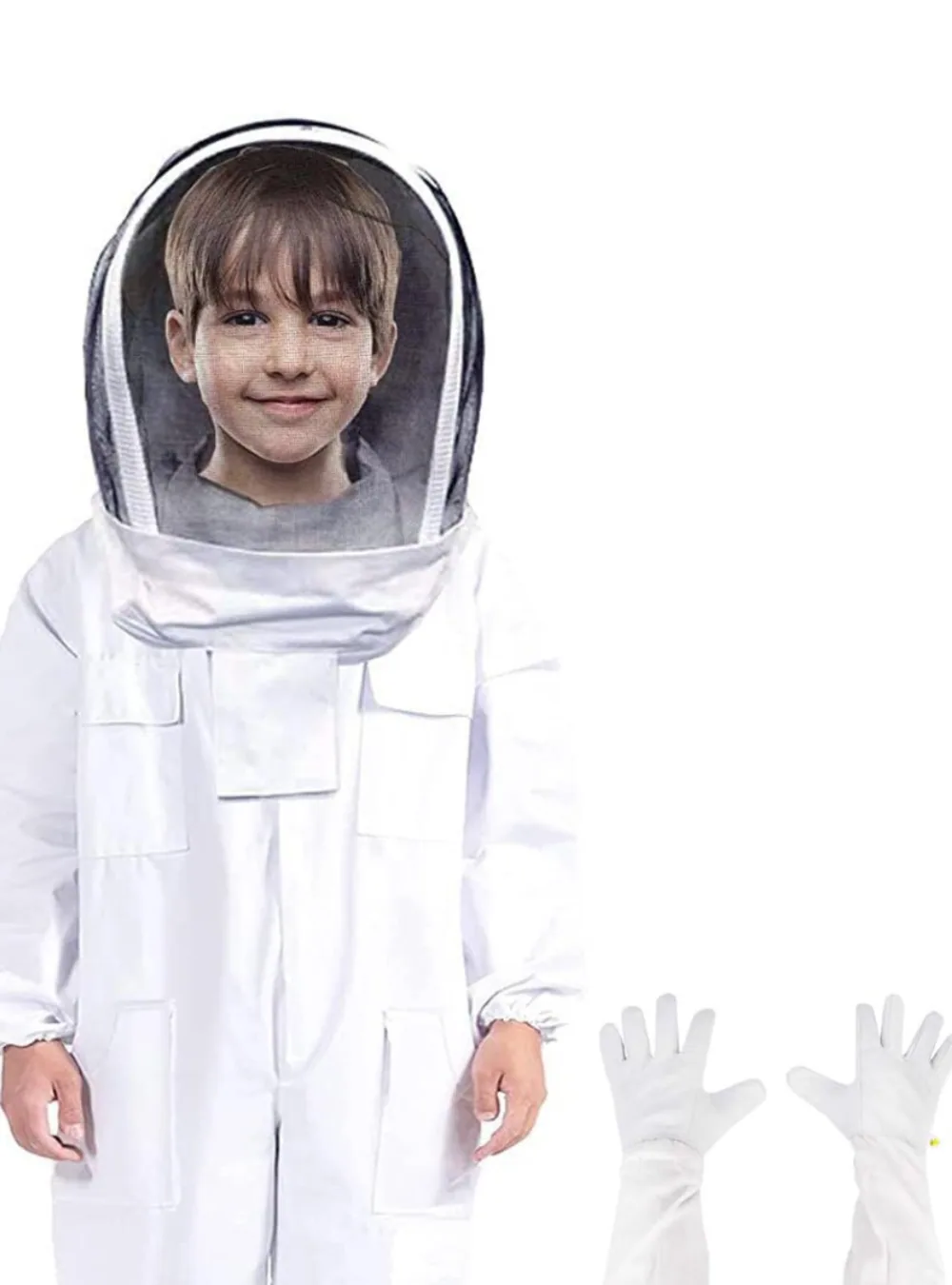
A two-stage beekeeping kit shopping list
A beekeeping kit bought all at once is how families end up with a shed full of things nobody uses.
| Stage | What to buy | Why then |
|---|---|---|
| One | One adult's suit, gloves, boots, smoker, hive tool | Enough to go and learn at an association apiary before committing the household |
| Two | Second adult's gear, then children's as they ask | Lifting a full box is a two-person job more often than the books admit |
| Three | Your own hive, bees, stand, feeder | After you know whether the household actually likes it |
| Later | Extracting gear, a second hive | Borrow first. A second hive is the best thing you can buy — once you can manage one. |
Buying everything at once is how families end up with gear nobody uses and a shed full of regret. The sequence above costs the same in the end and loses nothing if it turns out one of you hates it.
Jackets for the adults, suits for the children
A reasonable default. Adults are usually comfortable in a jacket with their own trousers and boots, which is cheaper, cooler and easier to launder. Children are better in a full suit, because they sit down, crawl and kneel without noticing, and a jacket leaves everything below the waist to a pair of jeans.
If you would rather have one answer for everyone, bee suit versus bee jacket sets out the trade, and colour in hot climates covers what to buy if your summers are long. And if anybody in the household feels the heat, read ventilated versus cotton before buying — children in particular overheat faster than adults and are much worse at noticing it.
Who can do what, and when
There is no age that answers this, but there is a test: a child is ready when they can follow an instruction they do not like, immediately, without arguing. Standing still when told to stand still is the whole of apiary safety for a child.
Beyond that, a rough progression that works in most families. Watching from a distance in a veil comes first. Then holding things, carrying the brush, passing a tool. Then lifting a frame with an adult's hands on it too. The smoker stays with an adult for a long time — it is a lit fire, and that is a separate risk from the bees.
One hive or two?
Two is the better answer once you can manage one, because a second colony gives you something to compare against — a frame of brood to spare, a queen to borrow, a way of telling whether a colony is struggling or whether that is just how April looks.
But start with one. A family learning on two hives is a family doing twice as much of something it does not understand yet.
Which beekeeping kit to borrow rather than buy
Most local associations lend or hire equipment, and most will let you use their extractor. Borrow the things that are used rarely and stored badly: extractors, settling tanks, uncapping trays, a spare hive for a swarm. Buy the things used every visit.
Associations that lend gear have usually bought it the way a club buys suits, so the sizes will be a spread rather than a fit. The exception is protective gear. Borrowing a suit for an afternoon to see whether you like beekeeping is sensible. Borrowing one all season is not, because it will not fit, and the whole of its protection is in fitting.
Storing a beekeeping kit at home
Four suits take more space than people expect, and they are damaged more by storage than by use.
Storing suits over winter is the same job four times over. Hang them, dry, out of direct light. Ultraviolet degrades mesh and elastic faster than wearing them does, so the sunny spot in the porch is the worst place in the house. Keep veils unzipped from the suits and hung separately so the stiffening keeps its shape. And keep the smoker somewhere it cannot be a fire — cold, empty, and not in the same box as the suits.
The parts of a beekeeping kit that are not gear
Two household rules matter more than anything you buy.
Everyone knows the drill. A bee inside a suit is walked away from, not swatted at. Agree it before you open anything.
"Stop" means stop. Anyone can say they want to leave and it happens immediately, without discussion or negotiation. That rule is what makes a child willing to come back next time, and it costs nothing.
Everyone can work their own zips. Practised indoors, before the first visit, until they can do it in gloves and without looking. A child who cannot open their own veil will panic when they want it open, and panic near a hive is the actual hazard — not the bees.
Stings: agree the plan before you need it
Everyone in a beekeeping household will be stung eventually, and the difference between a non-event and a bad afternoon is almost entirely what you worked out beforehand.
Three things to settle while nobody is upset. Find out whether anyone in the household has ever reacted badly to a sting of any kind, and if so, talk to your doctor before they come to the apiary rather than after — that conversation is a medical one and not something to take from a shop's website. Agree who stays with the person and who closes the hive, because both need doing and in that order. And decide in advance that a sting ends the session, at least for a child: carrying on teaches them that saying it hurts does not change anything.
Keep whatever your doctor advises with the gear rather than in the house, and check it is still in date at the start of each season. The gear bag is where you will be when you need it.
If one person loses interest
Plan for it. Children in particular will be enthusiastic in May and busy in July, and a child who is made to come stops liking bees permanently.
The practical version: buy their gear when they ask, not in advance; keep the household's hive count to what one adult can manage alone; and let a child who has stopped coming stop, because the ones who are allowed to leave are the ones who come back.
For the beekeeping itself rather than the kit, start with somebody local and free. Extension services and university programmes — Penn State's beekeeping basics and Cornell's Pollinator Network among them — are a better first year than any amount of equipment.
A family beekeeping kit is mostly four suits and one of everything else. Ours are grouped by who wears them: children's suits, jackets, cotton suits, gloves and veils. The size guide is measured the same way for everyone in the house, and how a bee suit should fit is the page to start on if this is all new.