
Do you need a hat with a bee veil?
With a round veil, yes — the hat is what holds the mesh away from your face. With a fencing veil you do not need one, and you will still want one.

Whether you need a hat with a bee veil depends on the shape. A round veil needs one — the hat is the frame that holds the mesh away from your face, and without it the veil is a bag. A fencing or square veil holds its own shape and needs nothing. But a thin cap under either is the cheapest useful thing you can add to a kit.
Which veils need a hat with a bee veil
| Veil | Needs a hat? | Why |
|---|---|---|
| Round | Yes | The hat brim is the hoop. It is what creates the standoff |
| Fencing | No | Stiffened mesh holds its own shape from the collar |
| Square | Usually no | A frame or stiffening is built in |
| Hood attached to a suit | No | Shaped as part of the garment |
If you have bought a round veil on its own and it arrived limp, nothing is wrong with it. It is waiting for a hat.
What a hat with a bee veil actually does
Three things, and only the first is obvious.
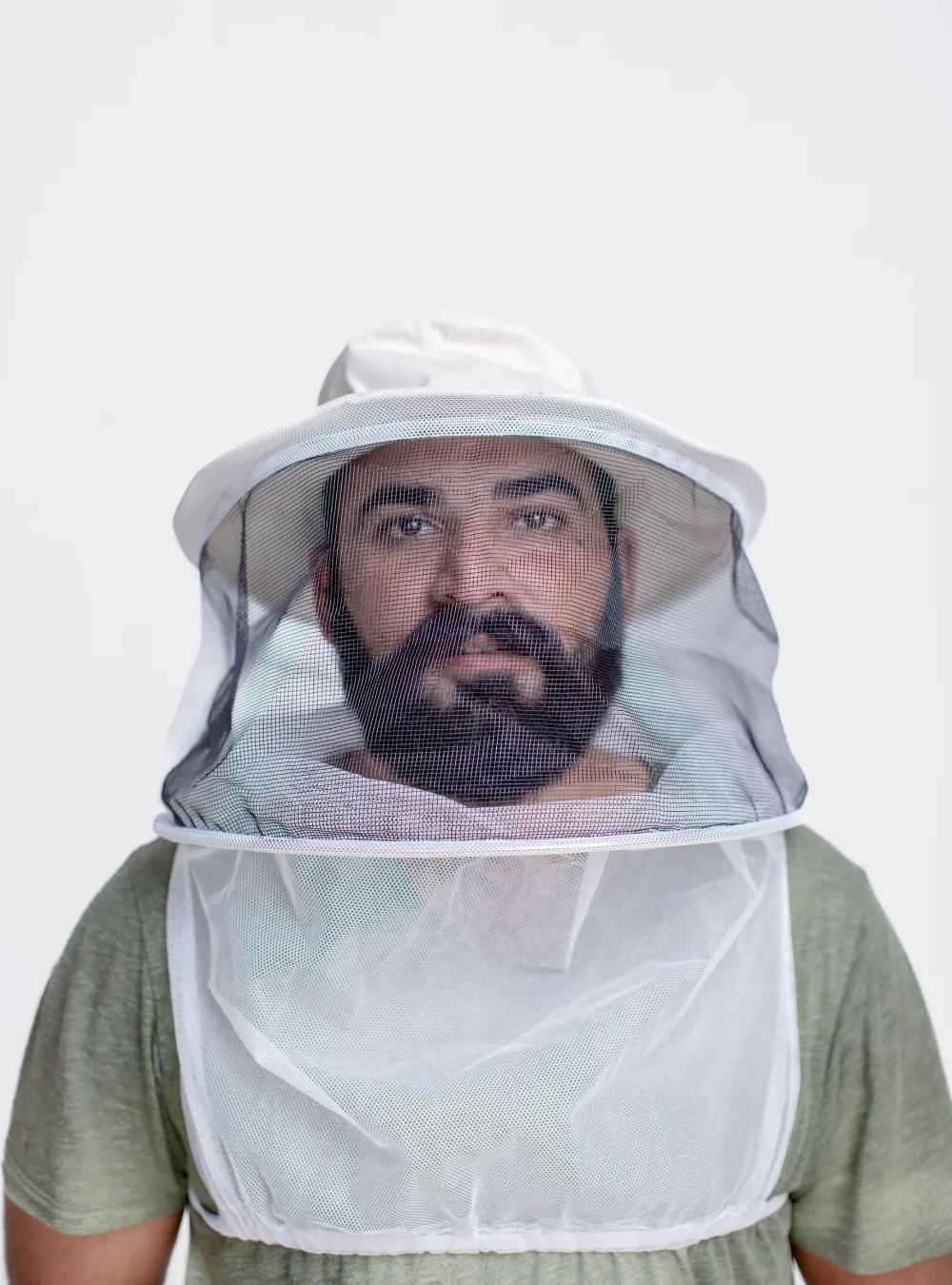
It creates the standoff. The brim pushes the mesh out beyond your face in every direction, and that gap is what stops a sting — the whole mechanism in one component.
It keeps the clearance when you move. This is the round veil's real advantage. A hat sits on your head, so the mesh moves with your head rather than hanging from your shoulders and meeting your face when you look down — which is the position every veil is worst in.
It cuts glare. A brim shades the top of your vision, and glare on mesh is a large part of why veils are hard to see through in bright sun.
What kind of hat with a bee veil
A wide, stiff, round brim — and it is on the accessories list for a reason. Traditionally a pith helmet or a straw hat, and plenty of beekeepers still use exactly that.
What matters is the brim: wide enough to hold the mesh clear of your nose, and stiff enough not to droop in rain or under the weight of the veil. A soft floppy sunhat will not do it.
It also has to fit. A hat that is too large rotates, and the veil rotates with it — which puts the gap somewhere you did not intend. Many beekeeping hats come with an adjustable band for this reason.
The cap, which is a different thing
Worth separating, because it is the advice most people have never heard.
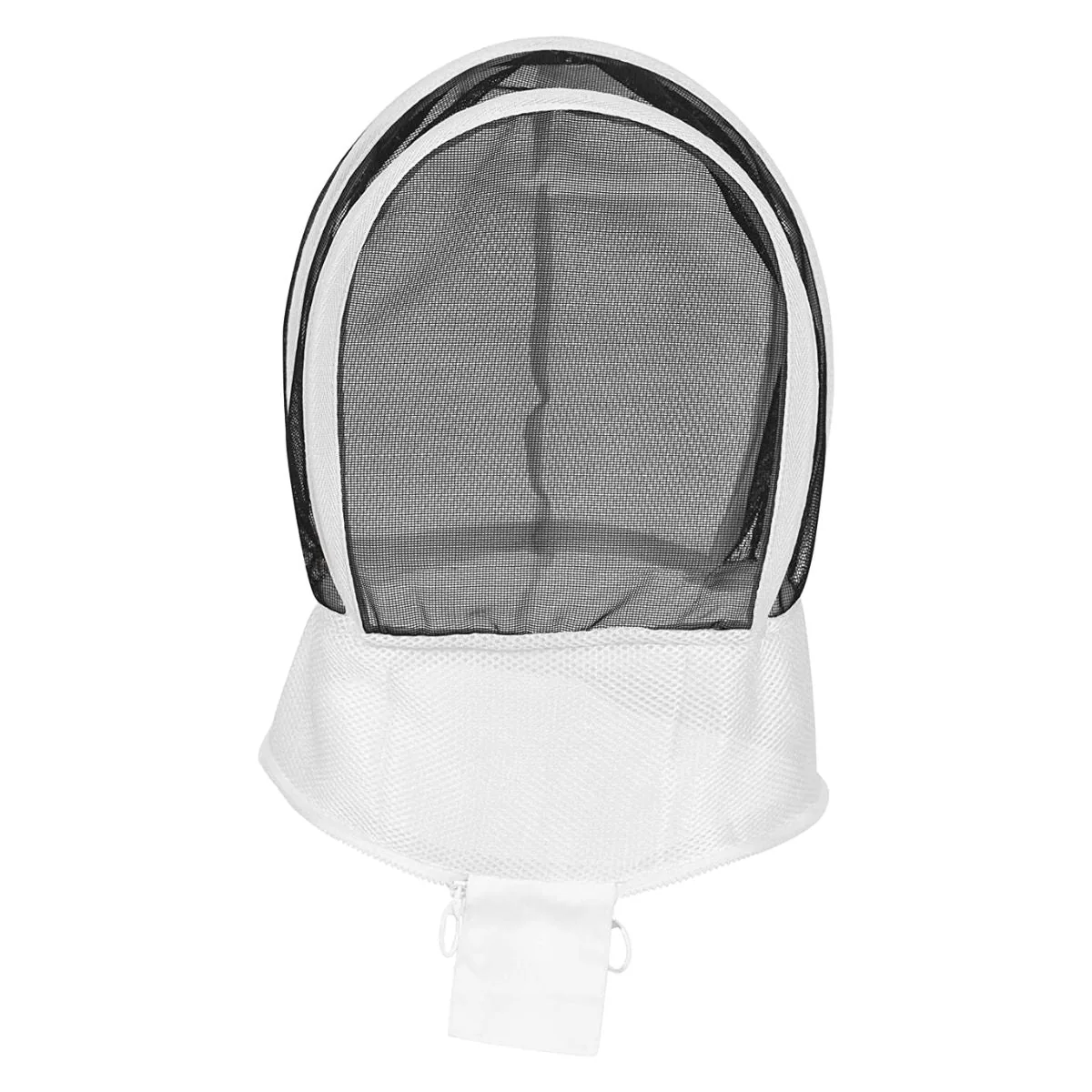
A thin peaked cap worn under a fencing veil does a smaller version of the same job: it pushes the mesh forward a centimetre or two, keeps it off a sweating forehead, and shades the glare. It costs very little and it removes the fencing veil's main complaint.
So the honest answer to whether you need a hat with a bee veil is: with a round veil it is mandatory, and with a fencing veil a cap is optional and worth it anyway. The fencing veil in detail covers why.
The trade you are making
A hat-and-veil is the oldest arrangement and it has real costs against a modern fencing veil.
- Slower. Seat the hat, drop the veil, attach it to the jacket, tie off. Four actions against one zip.
- It can rotate if you do not tie it off properly.
- It will not pack flat. The hat takes a box of its own.
- The brim crosses your vision at the top, which some people never get used to.
Against which: the most clearance of any shape, and clearance that does not change when you tip your head. Fencing versus round is the comparison in full.
Who should use a hat with a bee veil
Four cases where the older arrangement is the better one.
- Defensive colonies, or long sessions where the mesh will be tested.
- Glasses wearers, because the hat sets the clearance and keeps it off the lens — a veil for glasses covers it.
- Anyone who has been stung through a veil. That is the fault the brim exists to fix.
- Hot, bright apiaries, where the brim's shade is worth having on its own.
A hat with a bee veil, or a hood instead
If your suit has an attached hood rather than a separate veil, the hat question changes shape but does not disappear.
A hood is built with its own standoff, so nothing is required. But a thin cap underneath still pushes the mesh forward, still cuts glare, and still keeps wet mesh off a sweating forehead — and on a fencing-style hood, which follows the shape of your head, that is the difference between comfortable and not.
The one thing not to wear under any veil is a hat with a hard peak that pushes the mesh into your eyes, or anything bulky enough to change where the collar sits. Thin and soft is the rule.
Fitting it properly
- Seat the hat first, adjusted so it does not turn when you shake your head.
- Drop the veil over, with the dark panel at the front.
- Attach it to the jacket at the collar — zip, studs or ties — all the way round.
- Tie off any cords under the arms so the veil cannot lift.
- Look down at your own boots. If the mesh touches your nose, the brim is too narrow or the hat is sitting too far back.
That last check is the one that matters, and it is the same test for every veil shape — it is on the pre-inspection checklist for exactly this reason.
Looking after it
The hat is the part people forget. Keep it dry and in shape — a crushed brim is a lost standoff, and a straw hat left wet goes soft permanently.
Store the veil flat or hung rather than stuffed inside the hat, and keep both out of the light. Storing a suit over winter covers the principle, and a hat-and-veil needs it more than a hood does.
Our hats and veils include both arrangements. For protective-kit guidance from somewhere with nothing to sell, see Penn State's beekeeping basics and the University of Georgia Bee Program.