
Buying guides11 min read
Round Veil vs Square Veil: Which Beekeeping Veil Should You Wear?
A round veil holds the mesh further from your face and gives a clearer all-round view. A square veil folds flat and packs anywhere. Here is how to choose, and how to wear either one so bees stay out.

The round veil vs square veil choice comes down to distance and storage. A round veil hangs from a wide brim, so the mesh sits well away from your face on every side and you can see clearly to the left and right. A square veil folds flat and packs anywhere, but its corners and side panels come closer to your skin. For a main veil, most beekeepers are better served by round.
Key takeaways
- Distance is protection. A bee can only sting you where the mesh touches skin. The round veil's brim keeps the mesh further away, all the way round.
- Round wins on visibility. One continuous ring of mesh gives a clear view to the sides. Square veils can have blind spots at the corners or behind fabric side panels.
- Square wins on storage. Hinged flat panels fold into a square that fits a bag, a glovebox or a coat pocket.
- Both need a hat. Without a hat or helmet underneath, either veil drops onto your face.
- The seal matters more than the shape. The weak point of any hat veil is the bottom edge at the neck and shoulders, not the mesh.
What a round veil is
A round veil is a cylinder of mesh that hangs from the brim of a hat. The top edge is fixed to, or stretched over, a wide circular brim. The bottom edge ends in a fabric skirt with a drawstring or elastic, which pulls down over your shoulders and ties around your chest.
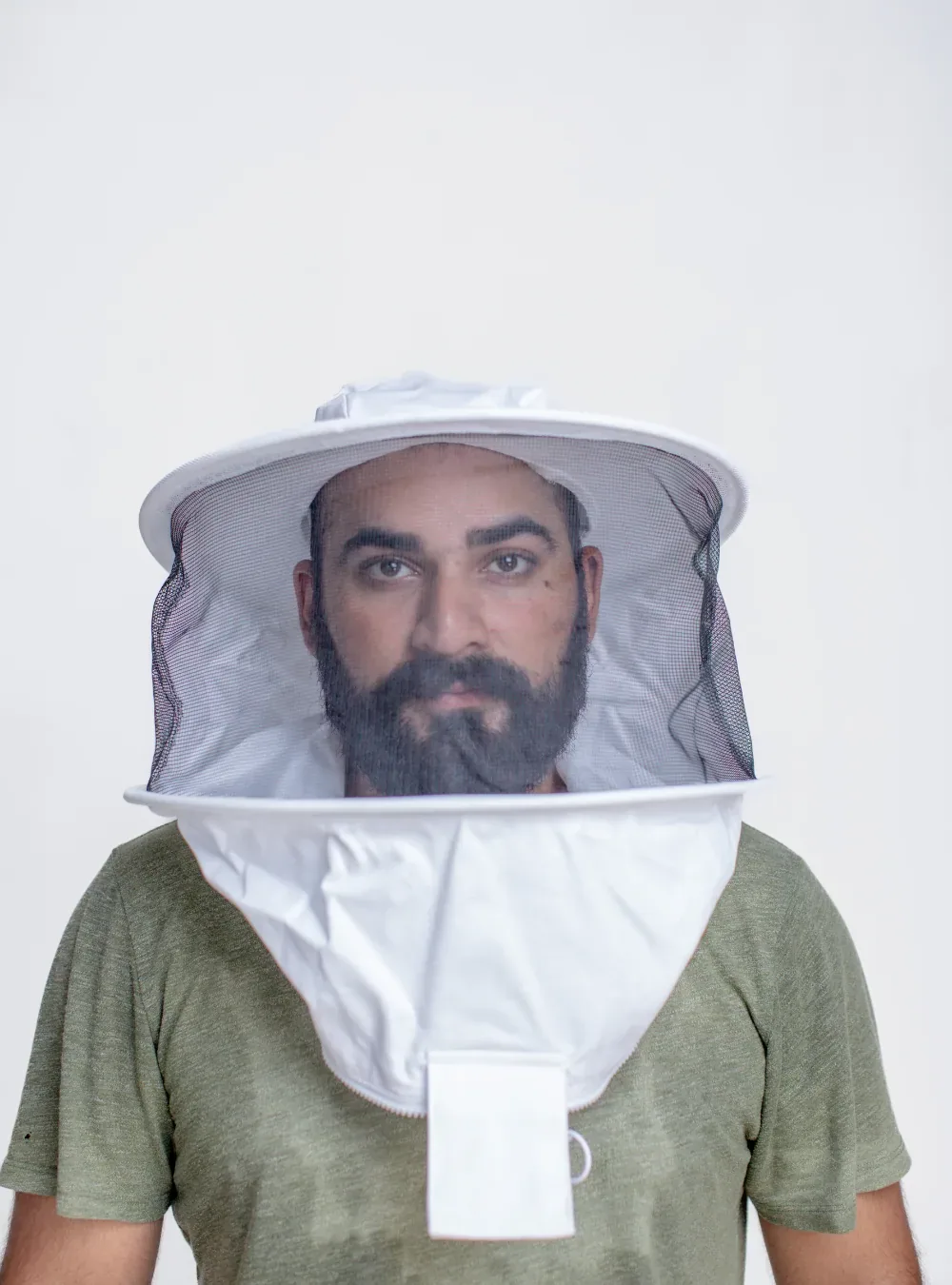
Because the brim is wide and round, the mesh hangs at roughly the same distance from your face whichever way you turn. Your nose, cheeks, ears and the back of your neck all have air between them and the screen.
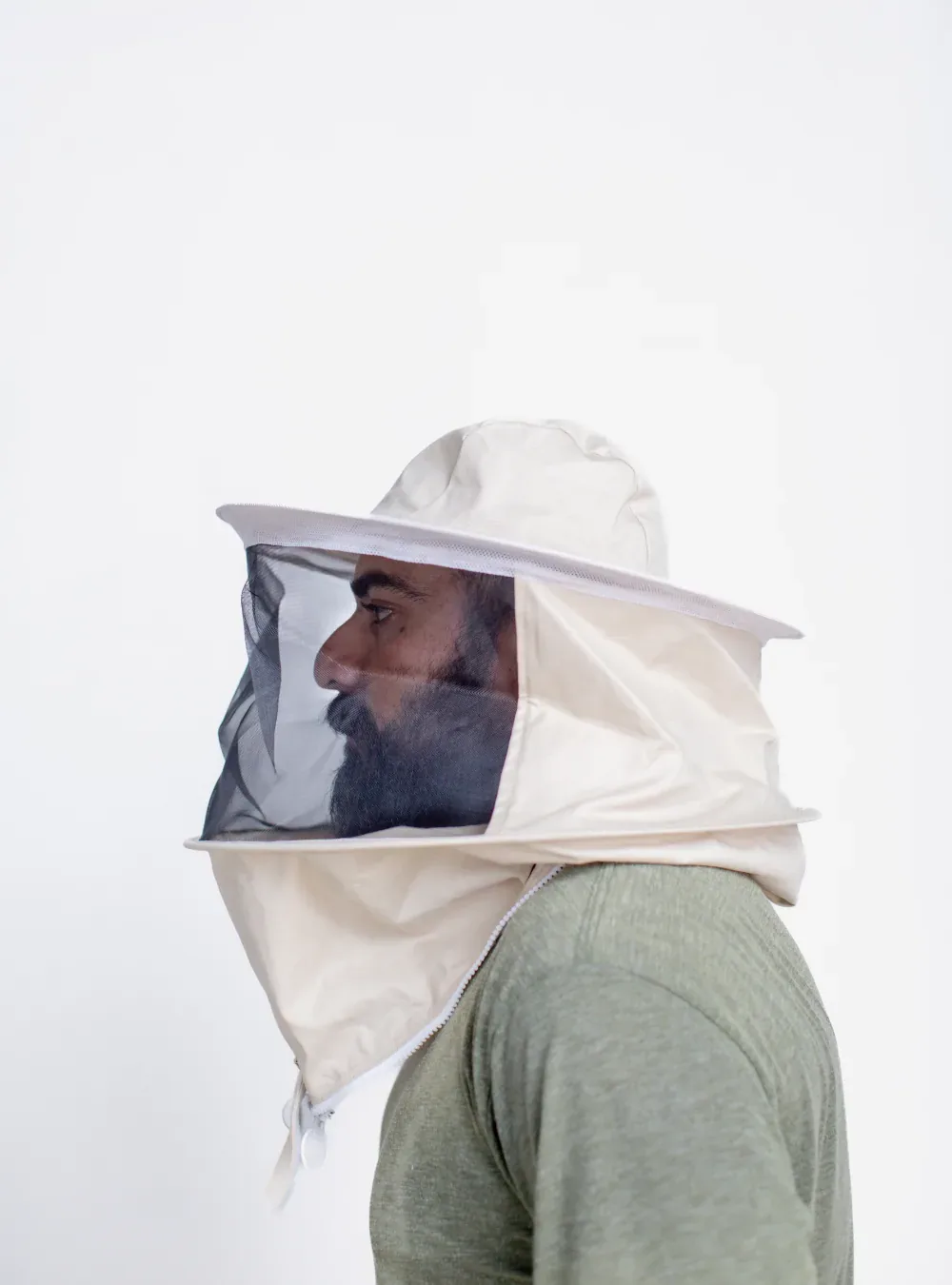
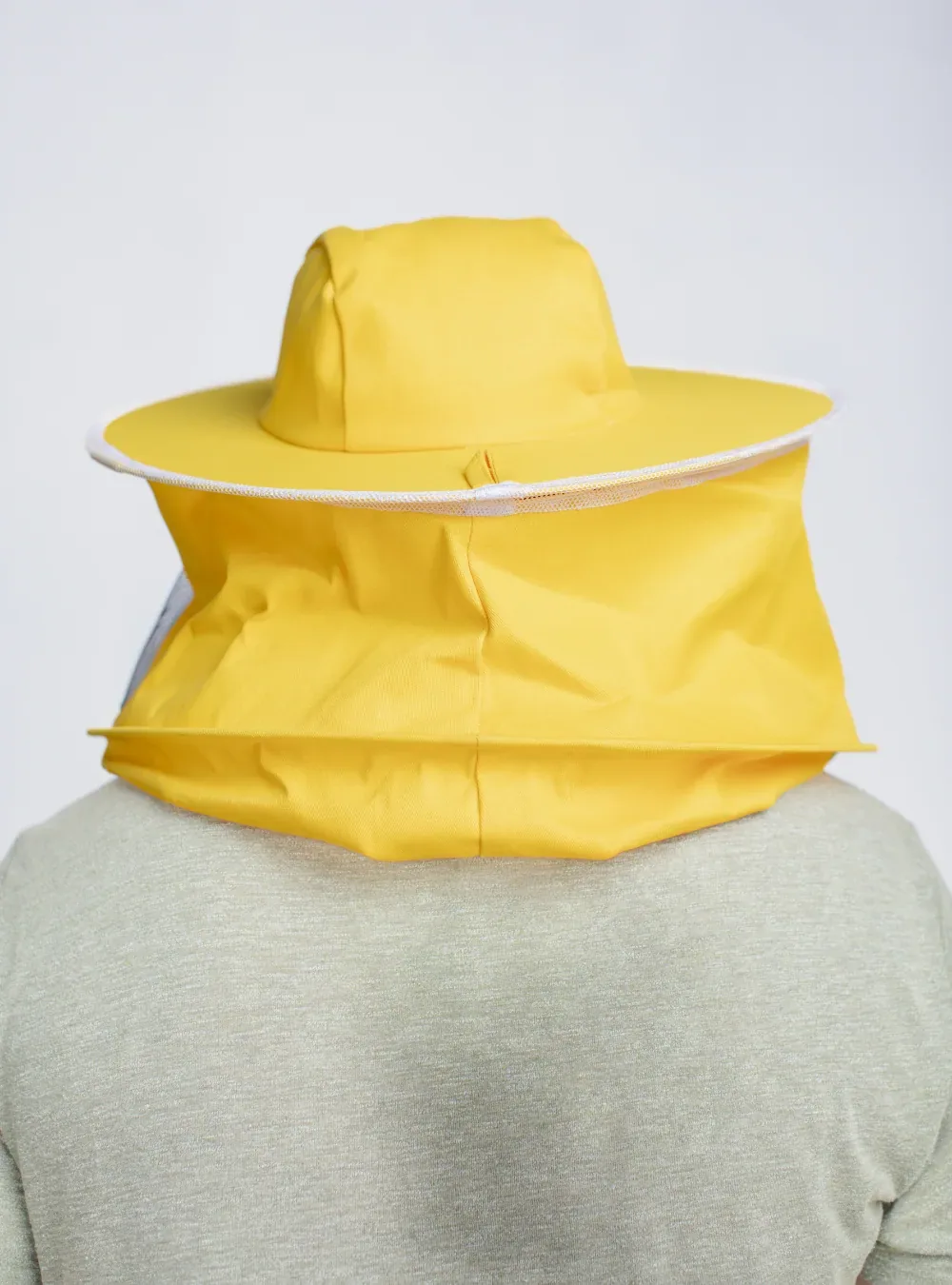
All four of our hat veils are this style: the BeeSafe Ultra Veil, the HiveSafe Beekeeping Veil, the BeePro Ventilated Veil and the Yellow HoneyGuard Beekeeping Veil. Each has an adjustable headband inside the hat and a closure at the neck.
What a square veil is
A square veil, often sold as a folding veil, is four flat panels joined at hinged corners. Typically the front and sides are wire mesh, framed so they stay rigid. The top is open, or has an elastic edge, so the veil drops over a hat or helmet. A cloth skirt at the bottom ties down with a cord.
Because the panels are flat and hinged, the whole thing collapses into a single square. That is its reason to exist. It is the veil you can keep in a car door pocket, take on a plane, or hand to a visitor without worrying about crushing it.
We do not make square veils. That is a deliberate choice, explained below, but it does not make them bad equipment. Plenty of beekeepers prefer them.
Round veil vs square veil, side by side
| Round veil | Square veil | |
|---|---|---|
| Shape | Continuous ring of mesh hung from a wide brim | Four flat panels joined at hinged corners |
| Distance from face | Even all the way round | Good at the front, closer at the corners |
| View to the sides | Clear, no frame in the way | Corners and any fabric side panels block part of the view |
| Airflow | Mostly open mesh, good | Good through the wire, less where there are fabric panels |
| Storage | Bulky; the brim does not fold | Folds flat into a square |
| Needs a hat | Yes, usually built in | Yes, worn over your own hat or helmet |
| Seal at the bottom | Fabric skirt with drawstring or elastic | Fabric skirt with drawstring or elastic |
| Best for | A main veil you wear every inspection | A spare veil, travel, visitors |
| Our range | Yes, from $20 | No |
The table shows the trade in one line: round gives you distance and vision, square gives you portability. The rest of this article is about when each of those matters.
Visibility: how much you can actually see
Working a hive is mostly looking. You are scanning frames for eggs, watching the entrance, keeping an eye on a smoker you have set down, and noticing when bees start to fly at you rather than past you.
University of Florida guidance for people working with honey bees puts it plainly: a veil "should offer complete protection of the head and face area. It should also provide ample space for peripheral vision." (UF/IFAS, ENY-145)
Peripheral vision is where the two shapes differ most. Turn your eyes to the side in a round veil and you look through the same mesh you look through straight ahead. Turn your eyes in a square veil and you look into a corner, where two panels meet at a frame or seam. On some square veils the side panels are fabric rather than mesh, and then the view to the side stops altogether.
This is easy to dismiss in a shop and hard to ignore at a hive. You turn your head more in a square veil to see the same things, and every turn moves the veil.
Standoff: how close the mesh comes to your face
A honey bee's stinger is short. If the mesh is pressed against your skin, a bee standing on the outside can sting straight through it. If there is air between mesh and skin, it cannot reach.
That is why both shapes are built around a hat. The University of Delaware's beekeeping guidance says "a wire or fabric veil that stands out away from the face worn over a wide-brim, lightweight hat that fits securely offers the best protection." (MAAREC, University of Delaware)
A round veil gets its distance from the brim, and the brim is a circle, so the distance is roughly the same at your nose, cheek and ear.
A square veil gets its distance from rigid flat panels. At the front, the panel stands well clear. But a square drawn around a round head is closest to the head at the middle of each side, and if the veil shifts on the hat, one side panel can come up against your cheek or ear. That is the place to watch in a square veil.
Heat and airflow
On a hot afternoon the veil is the warmest part of a beekeeper. Your breath is trapped in it and the sun is on your head.
A round veil is mostly mesh from the brim down to the skirt, and the mesh sits away from your skin, so air can move past your face. Our hat veils add a solid brim that shades your face and eyes, which helps more than people expect.
A square veil's wire mesh breathes well too. Where a square veil loses out is on designs that use cloth for the side or back panels, which block part of the airflow, and on the corners, where the veil may sit closer and feel stuffier.
Neither shape is a reason to suffer. If heat is your biggest problem, the bigger win is the suit: a ventilated mesh suit makes far more difference to how hot you feel than the shape of the veil does.
Storage, travel and lending
Here the square veil wins outright.
A round veil's brim is stiff and wide. It will not fold without bending, and if you crush it in a bag, the brim may not hold its shape afterwards. You hang it on a hook or carry it by hand.
A square veil folds flat. Beekeepers who drive to out-apiaries, keep a veil in the car for swarm calls, or travel to teach often keep one for exactly this reason. It is also the easy veil to lend: a visitor puts it over any hat, ties the cord, and goes.
If you are choosing your one and only veil, storage should not decide it. If you are choosing a second veil, storage is the best reason to pick square.
The seal at the bottom: where bees actually get in
Every veil, round or square, has the same weak point: the bottom edge.
The University of Arkansas Cooperative Extension describes the usual arrangement: a veil "may have attached cords, elastic bands or other straps that pull the veil down snugly across the shoulders, to keep bees out." (Beekeeping Basics, University of Arkansas)
Mississippi State University Extension adds the catch: drawstring veils "are easy to put on and take off, but the strings can loosen with prolonged activity." (Mississippi State Extension, P3594)
That is true of both shapes, and it matters more than mesh or brim. A bee that finds a gap at your armpit walks straight up inside the veil. The fix is the same for both:
- Pull the skirt down over your shoulders, not just around your neck.
- Cross the cords under your arms and tie them at the chest, so the skirt cannot ride up when you lean over a hive.
- Check the knot halfway through a long inspection.
The best seal of all is a veil that zips to the suit. UF/IFAS says "veils that attach with a zipper to the sting suit are the recommended type because they prohibit bee entry." If you already wear a full suit, the attached veil is usually the one to use; a separate hat veil is for when you wear a jacket, a shirt, or nothing special at all.
Durability and care
Wire mesh is tough but can dent and kink; a dent pushes the mesh inward, closer to your face. Fabric mesh does not dent but can tear on brambles or a hive corner. Either kind can be repaired: the Texas A&M AgriLife Extension notes that "holes in the veil can be covered up using flexible or silicon glue." (Texas A&M AgriLife Extension, ENTO-097)
On a square veil, the hinges at the corners are the parts that wear. On a round veil, the brim is the part to protect. Hang it up, do not sit on it, and do not pack heavy things on top of it.
Hat veils are best washed by hand. Rinse off honey and propolis in lukewarm water with a mild soap and let the veil air-dry on a hook, brim up.
Which veil for which beekeeper
Choose a round veil if:
- It will be your main veil, worn at most inspections.
- You want the clearest view to the sides.
- You want the mesh as far from your face as possible.
- You work in hot weather and want the brim's shade.
Choose a square veil if:
- You already own a main veil and want a spare.
- It has to live in a car, a bag or a glovebox.
- You lend veils to visitors who bring their own hats.
- You travel to apiaries and pack light.
There is a third option worth knowing about. A fencing veil, the hood-shaped kind with a round mesh window held out by hoops, usually zips onto a suit or jacket. It gets its distance from the hoops rather than a brim. We compared it with the round veil in fencing veil vs round veil, and it is the veil most full-suit wearers end up with.
How to wear either veil so bees stay out
Put the hat on first and set it level. Tighten the headband so the hat does not tip when you bend over a hive. A hat that slides forward drops the mesh onto your nose.
Settle the veil evenly. On a round veil, check the mesh hangs the same distance all the way round. On a square veil, make sure the front panel is in front of your face, not off to one side.
Pull the skirt down over your shoulders. It should lie flat over your collarbones and upper back, not bunch at your neck.
Cross the cords under your arms and tie them at the chest. This holds the skirt down when you lean forward, which is exactly when it wants to ride up.
Tuck long hair away. Hair pressed against the mesh is a path for a sting, and a bee caught in hair is a bad few minutes.
Bend over and look sideways once before you open the hive. If the mesh touches your face, or the skirt lifts, fix it now.
The Texas A&M guide adds one useful detail for hooded suits and veils alike: "some beekeepers also prefer to wear a headband to protect their eyes from sweat and prevent their ears from touching the sides of the veil."
Why we make round veils, not square ones
We make protective clothing, and we decide what to make by asking where stings actually happen. With veils, the answer is wherever the mesh meets skin, and a round brim keeps the mesh furthest from skin in every direction. That is the whole reason.
Square veils solve a different problem, and solve it well: storage. If that is the problem you have, buy one, and wear it carefully over a hat that fits. If you are choosing the veil you will wear every week, choose round.
If you are still choosing the rest of your kit, start with bee suit vs bee jacket, which explains how much body cover you need before you think about what goes on your head.
Choose your veil
Our round hat veils start at $20, with an adjustable headband, a wide brim and a closure at the neck. If you would rather have the veil fixed to your clothing, several of our suits let you choose a zip-on fencing or round veil.
Common questions
Is a round veil or a square veil better for beginners?
A round veil, for most people. It holds the mesh further from your face on every side, gives a clearer view to the left and right, and is harder to wear badly. A square veil is a good second veil to keep in the car or lend to a visitor.
Can a bee sting through a square veil?
Only where the mesh touches your skin. A square veil's wire panels stand off from your face at the front, but the corners and side panels sit closer than a round veil's mesh does, so leaning your cheek against a panel is the risk. Keep the hat on and the veil square on your head.
Do I need a hat with a square or round veil?
Yes, for both. The hat or helmet is what holds the veil up and away from your face. Without it the mesh drops onto your nose and ears. The University of Delaware's beekeeping guidance makes the same point: a veil standing away from the face over a wide-brim hat protects best.
Why do square veils fold flat?
Their sides are separate flat panels joined at hinged corners, so the whole veil collapses into a square that slides into a bag or glovebox. A round veil's continuous circular mesh cannot fold the same way without creasing.
Which veil is cooler in summer?
Usually a round veil. More of it is open mesh and it sits further from your skin, so air moves past your face. Some square veils use fabric side or back panels, and those block part of that airflow.
Can I attach a round or square veil to my bee suit?
Hat veils of either shape sit on a hat and close with a drawstring or elastic around the chest or shoulders. If you want a veil that zips to the suit, choose a suit with a zip-on veil instead; University of Florida guidance recommends zip-on veils because they keep bees out.
Do you sell square veils?
No. We make round hat veils and fencing veils, because both keep more distance between the mesh and your face. If you mainly need a veil that packs flat for the car, a square veil from another maker is a reasonable choice for that job.
Written by Alex, Bee suit maker, BEESUITWEAR · United States.
Writes about protective clothing from the workshop where the suits are made.