
Buying guides6 min read
Bee Suit vs Coverall for Bee Removal: What You Actually Need
A beekeeping coverall is a bee suit in one-piece form. A disposable coverall is a dust barrier with no veil. Removals are the worst possible place to confuse the two.

The bee suit vs coverall for bee removal question turns on one word. A beekeeping coverall is a bee suit in one-piece form, with an integrated veil and sealed cuffs — the right tool. A generic coverall, the disposable painter's or Tyvek kind, is not protective clothing for bees at all: no veil, no standoff, and fabric that a stinger goes straight through where it touches you. Removals are the worst place to find that out.
Key Takeaways
- "Coverall" means two different garments. One is a bee suit; the other is a decorating overall. The listings will not always make that clear.
- A disposable coverall has no veil. Your face and neck are where a defensive colony goes first.
- Thin fabric pressed against skin stops nothing. Tyvek keeps dust off. It does not hold a stinger away from you.
- Removals are harder on a suit than inspections are — confined spaces, ladders, nails, insulation, hours rather than minutes.
- If you do removals, buy for the worst hive you will meet, not the average one.
Why removals are different
An apiary inspection is a controlled event. You choose the day, the hour and the weather, you use smoke, and if it goes badly you walk away.
A removal is none of those things. The colony is established in a wall, a roof or a floor, it has brood and stores to defend, and you are cutting into its home. You cannot leave halfway. You are often on a ladder, in an attic in summer, or crouched in a crawl space, and the job runs for hours.
That changes what the clothing has to do. It has to keep bees out for a long time, in awkward positions, while being dragged across nails, staples, insulation and torn timber.
What each garment actually is
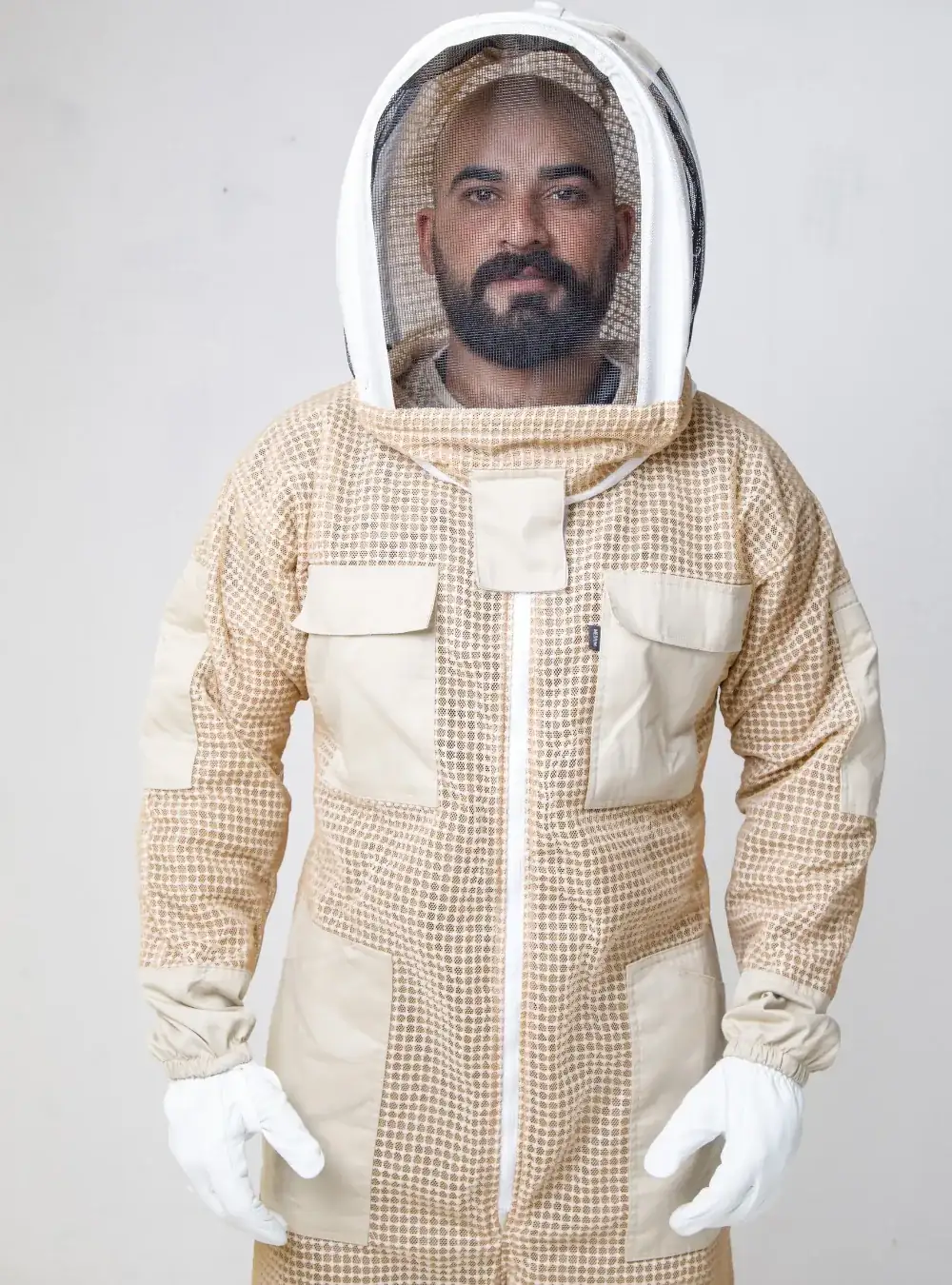
A beekeeping coverall is a one-piece bee suit: veil attached or zip-on, elasticated wrists and ankles, a flap over the main zip, and either heavy woven fabric or three-layer mesh. Everything about it is designed around one problem — bees finding a way in.
A generic work coverall is a boiler suit: one layer of cotton or poly-cotton, a plain zip, open wrists and ankles, no veil. Bees walk in at the neck.
A disposable coverall (Tyvek and similar) is a barrier against dust, spray and splashes. It is thin, it tears on the first nail, and it has no standoff at all — pressed against your shoulder, it is closer to your skin than a sting is long.
Bee suit vs coverall for bee removal, side by side
| Beekeeping coverall | Work coverall | Disposable coverall | |
|---|---|---|---|
| Integrated veil | Yes | No | No |
| Sealed wrists and ankles | Yes | No | Elastic, not sealed |
| Standoff from skin | Yes, in mesh suits | No | No |
| Stands up to nails and staples | Yes | Yes | No — tears |
| Heat over a long job | Good in mesh | Poor | Very poor |
| Reusable | Years | Years | Often single use |
| Right for removals | Yes | No | No |
Where a generic coverall fails
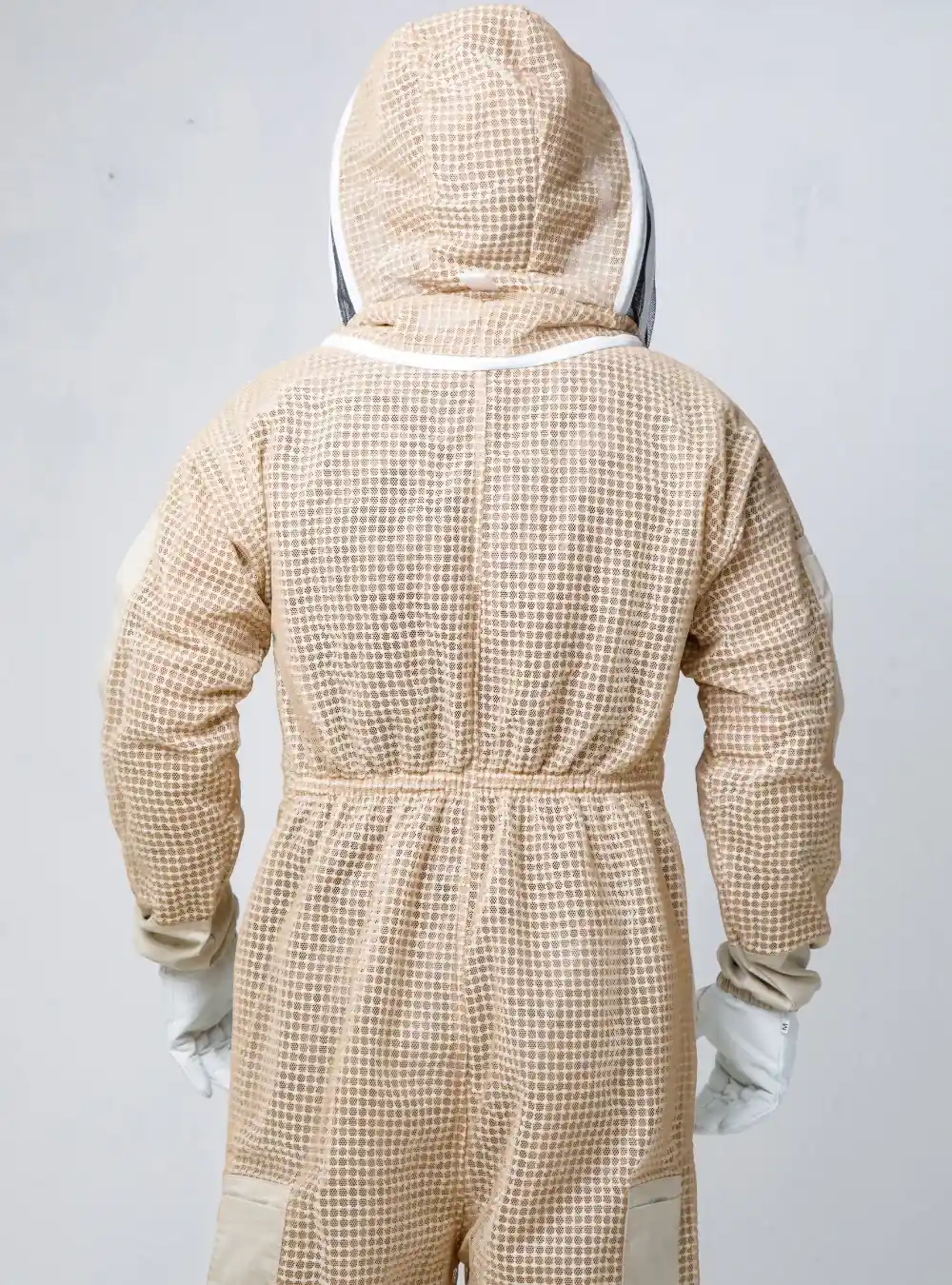
The neck. No veil means no protection for the face, throat and scalp. A colony defending brood targets exactly there. Taping a separate veil to a boiler suit leaves a seam, and bees find seams.
The wrists and ankles. Open cuffs are an invitation. Texas A&M AgriLife Extension makes the point about ordinary suits too: bees can find and fit through small holes, even some seemingly smaller than their body, which is why many beekeepers tape any accidental opening around a zip.
Contact points. Knees on a joist, shoulder against a rafter, forearm braced on a wall. Single-layer fabric pressed flat protects nothing, and a removal has you pressed against something almost continuously.
Heat. An attic in July in a sealed poly coverall is genuinely dangerous — and a beekeeper who has to come out for air mid-cutout has left an open colony and a half-finished job.
What to look for in a removal suit
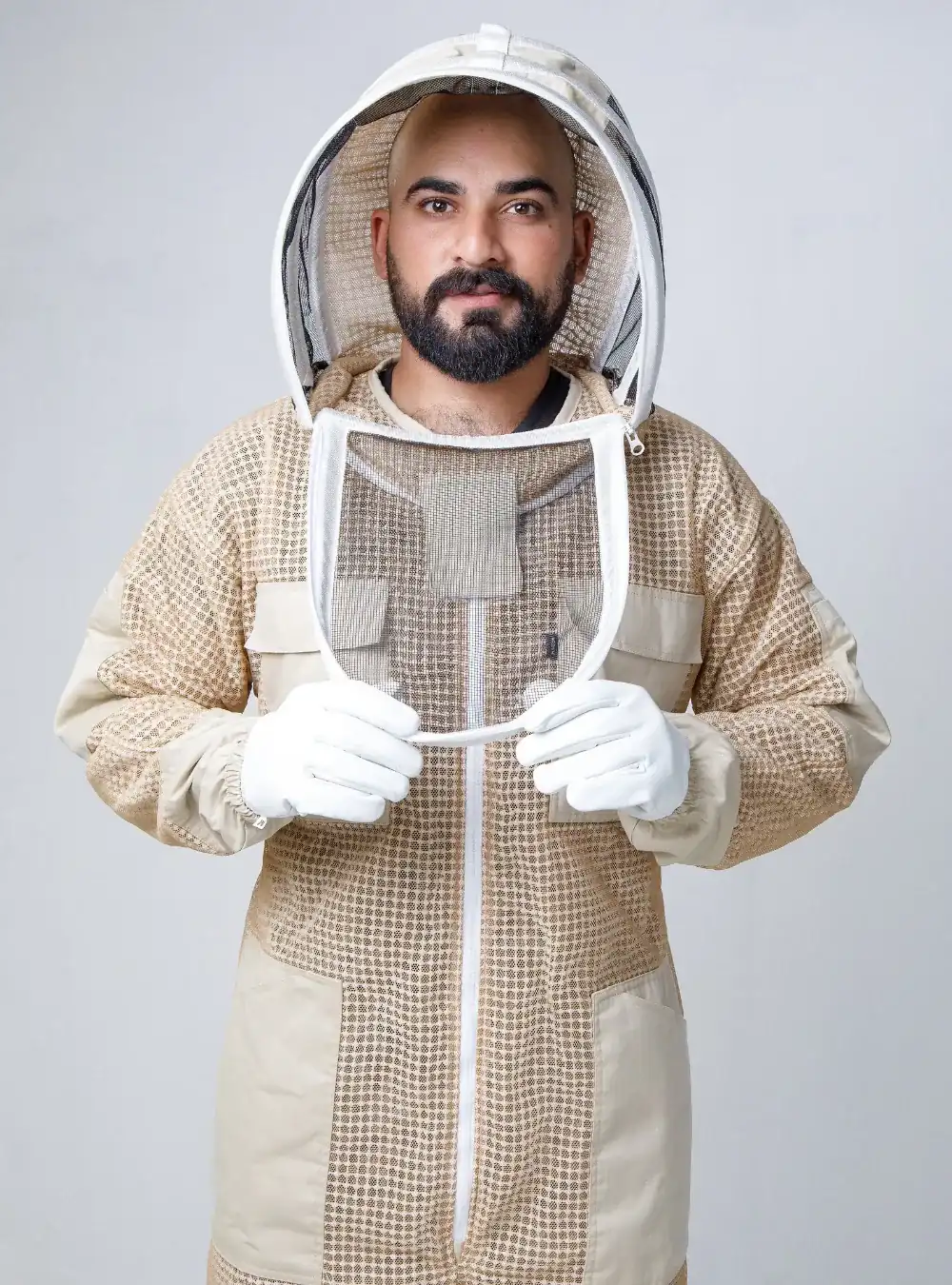
Three-layer ventilated mesh. Removals are long and often hot, and mesh protects by holding a gap rather than by thickness — which keeps working when you are pressed against a joist. We cover the mechanism in 3 layer vs 2 layer mesh.
A veil you can open without undressing. Between cutting and vacuuming you will want air. A zip-back veil gives you that without exposing your neck at the wrong moment.
A flap over the main zip. The zip line is the single most common way in.
Thumb loops or long elastic cuffs. Reaching overhead pulls sleeves up; thumb loops stop it.
Pockets you can reach while kneeling. Chest pockets, not hip pockets.
Room to move. Removal work is all squatting, reaching and climbing. A suit that pulls tight across your back when you bend is both uncomfortable and, where it presses, unprotective.
Our TripleGuard coverall is $135 to $150, and the wider three-layer ventilated range runs $100 to $160.
The rest of the kit matters more here
On an inspection the suit is most of your protection. On a removal it is about half.
Boots, not shoes. Extension guidance is specific about this: footwear should cover the ankle, and the suit legs go over the boot rather than tucked in. On a removal you are standing in debris and comb, and anything that funnels bees towards your ankle will.
Gloves with a long gauntlet. Reaching into a wall cavity puts your forearm somewhere you cannot see. Goatskin keeps enough feel to work; the gauntlet is what actually protects the arm. We compare the options in leather vs goatskin gloves.
A cap under the hood. A simple trick worth knowing — it keeps the veil mesh off your forehead when you tip your head down to cut, which is exactly when it would otherwise touch.
A second suit, or at least a plan for a torn one. Removals tear clothing. A nail through a sleeve two hours into a cutout is a real problem if you have nothing else.
Before you take the job
Worth saying plainly, because the suit is not the only thing that decides whether a removal goes well.
Height. Most removals are above head level. A ladder, a veil that limits your downward view and a defensive colony are a bad combination. If you are not comfortable working at height, that is the deciding factor, not the suit.
Confined spaces. Attics and crawl spaces are hot, awkward and hard to leave quickly. Know your exit before you open anything.
Time. A cutout is hours, not minutes. Your suit, your water and your patience all need to last that long.
Knowing when to say no. Structural work, electrics, a colony in a chimney, a customer who wants it done cheaply — these are reasons to walk away, and a better suit does not change any of them.
What about a coverall over a bee suit?
Some removal operators wear a cheap disposable coverall over their bee suit. That is a sensible use of one, and worth separating from the mistake this article is about.
The disposable layer is not doing the protecting — the suit underneath is. It is there to take the insulation dust, the soot, the honey and the smell, so the bee suit does not. At the end of the job it comes off and goes in the bin, and the suit underneath is still clean.
Used that way, a disposable coverall is a good idea. Used instead of a bee suit, it is not protective clothing at all.
Which should you buy
For removals: a three-layer ventilated beekeeping coverall. One piece, integrated veil, sealed everywhere, and cool enough to stay in for hours.
Add a disposable over the top if your work is dirty — attics, soot, insulation.
A work coverall has no place in this job. It is the right garment for a workshop and the wrong one for a colony in a wall.
If you are choosing your first suit generally rather than for removals specifically, start with ventilated vs cotton, and pair it with the right gloves.
Common questions
Can you do a bee removal in a Tyvek suit?
Not safely. A disposable coverall has no veil, no standoff from your skin and tears on the first nail. It is a barrier against dust and spray, not against a stinger. Worn over a proper bee suit to keep it clean, it makes sense; worn instead of one, it is not protective clothing.
What is the difference between a bee suit and a beekeeping coverall?
Usually nothing but the wording. A beekeeping coverall is a one-piece bee suit with an integrated or zip-on veil, elasticated cuffs and a flap over the main zip. The confusion comes from generic work and disposable coveralls sold under the same word.
Why is a ventilated suit better for removals?
Removals run for hours, often in attics and crawl spaces in summer. Three-layer mesh is dramatically cooler than woven fabric, and it protects by holding the outer surface away from your skin — which still works when you are pressed against a joist.
Do you need to tape a bee suit for a removal?
Many operators tape any accidental opening around zips and cuffs, and extension guidance recommends it for less gentle colonies. A well-made suit with a zip flap and elastic cuffs needs it less, but tape costs nothing and a removal gives bees hours to find a gap.
Can bees sting through a work coverall?
Yes, wherever the fabric touches you. A single layer of cotton or poly-cotton pressed against a shoulder, knee or forearm is thinner than a sting is long. Removal work has you braced against something almost constantly.
What else should a removal suit have?
A veil that unzips so you can get air between stages, thumb loops so sleeves do not ride up when reaching overhead, chest pockets you can use while kneeling, and enough room to squat and climb without the fabric pulling tight anywhere.
Written by Alex, Bee suit maker, BEESUITWEAR · United States.
Writes about protective clothing from the workshop where the suits are made.