
Ventilated bee suit: how to stay cool through July
How a ventilated bee suit keeps you working through the hottest inspections: what the mesh does, how it compares with cotton, and what to check before buying.

A ventilated bee suit is the difference between finishing an inspection and cutting it short. In July the inside of a cotton suit reaches body temperature within minutes, and a beekeeper who is overheating starts making the small, rushed mistakes that end in stings. This guide covers how the mesh actually works, what to check before buying, and how to keep one alive for more than a season.
How a ventilated bee suit stays cool
Three layers do the work. An outer mesh takes the impact, a spacer layer holds a gap of air against the body, and an inner mesh keeps that gap off the skin. Because the gap keeps moving as you move, sweat evaporates instead of pooling against the cloth.
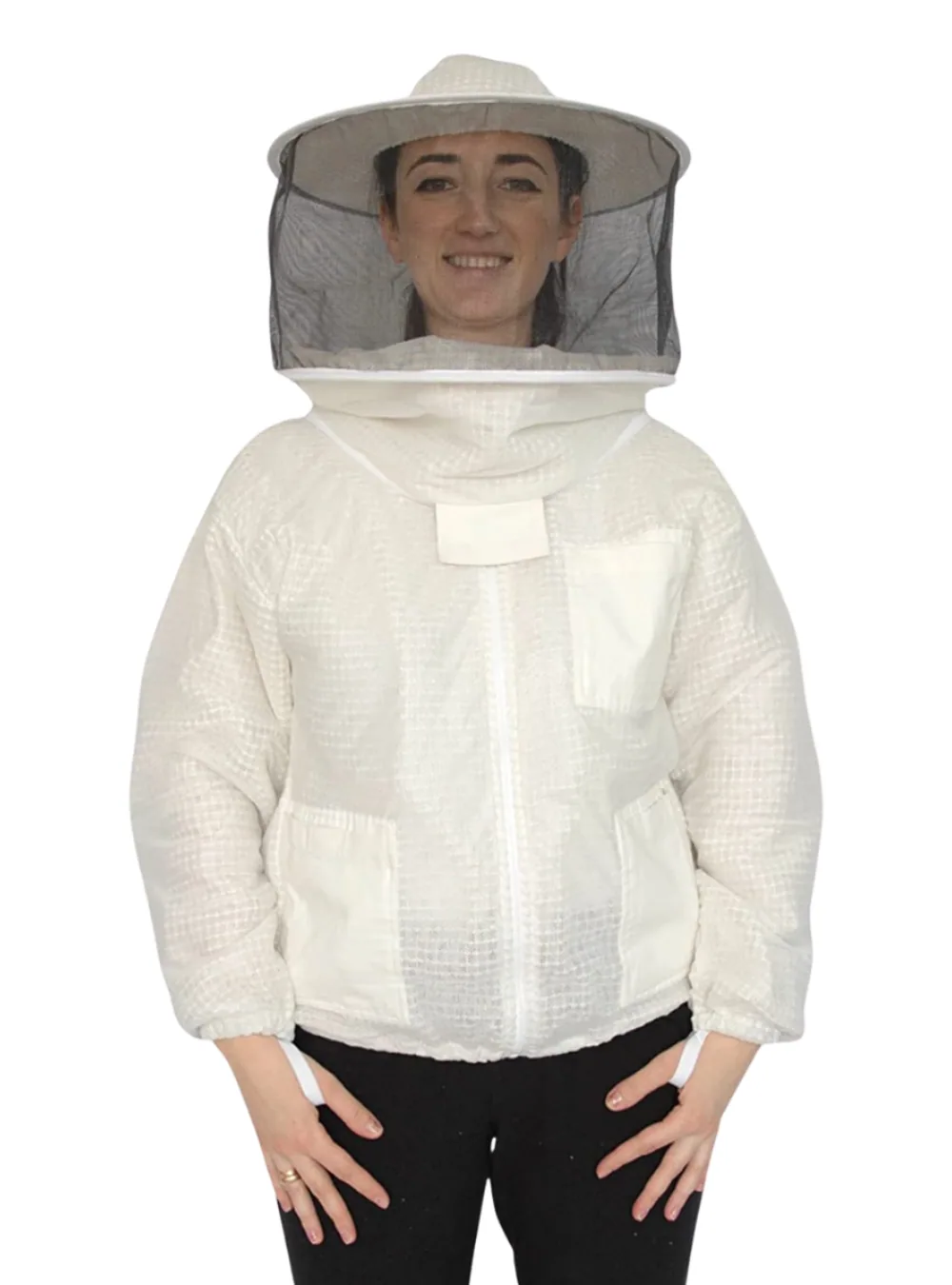
The second job that gap does is mechanical. A sting has to reach skin, and it cannot cross a spacer that holds the outer surface a centimetre away. That is why a ventilated bee suit can be lighter than cotton and still protect better.
Ventilated against cotton, side by side
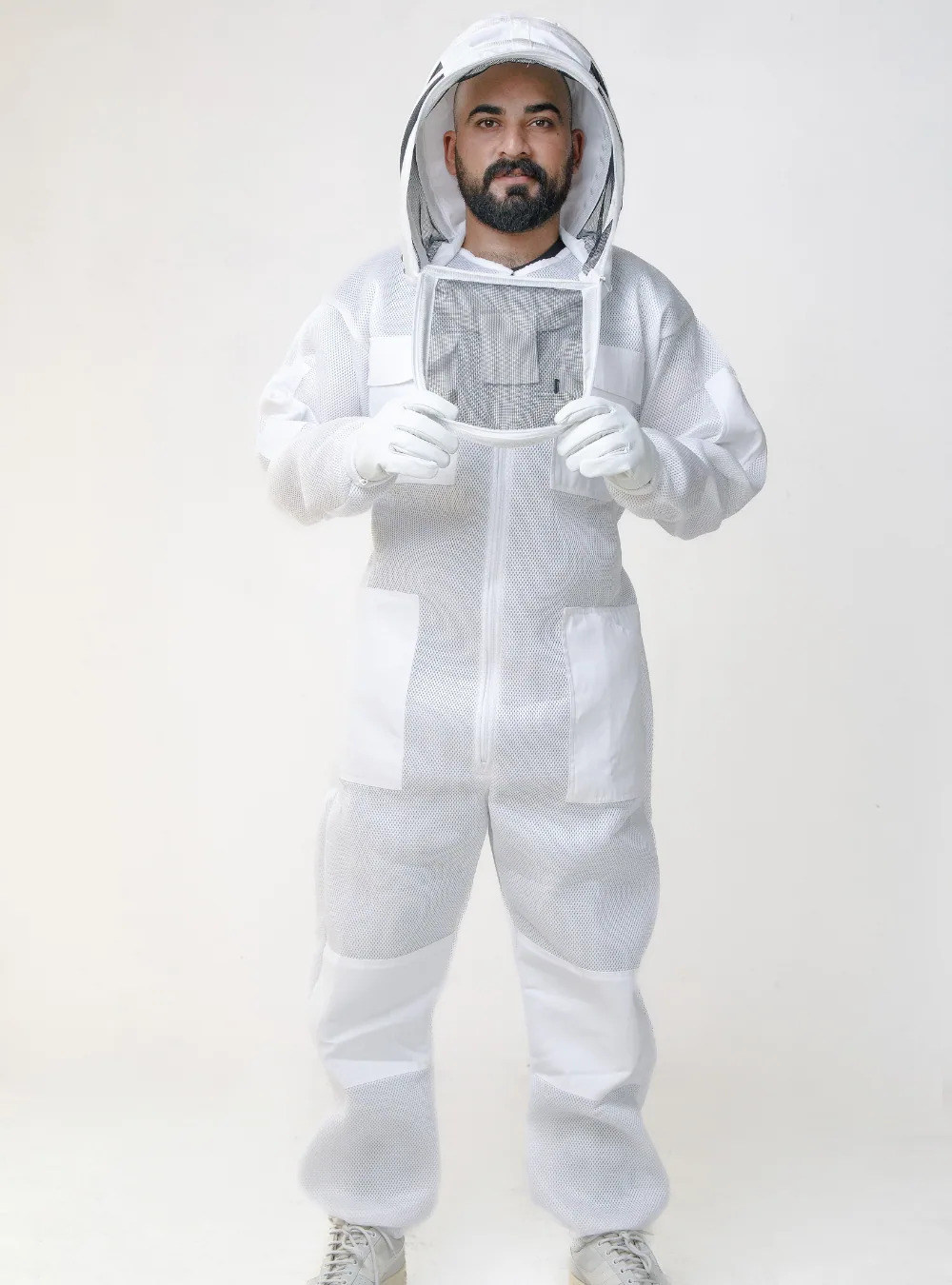
Ventilated
Cooler by several degrees on a still day, and more with any wind. Dries in an hour. Better sting protection through the spacer. Costs more, and the mesh can snag on a wire frame if you are careless.
Cotton
Cheaper, tougher against brambles, and easier to patch. But it holds sweat, it takes a day to dry, and once damp it stops breathing altogether. Still the right choice for winter work and for heavy scrub.
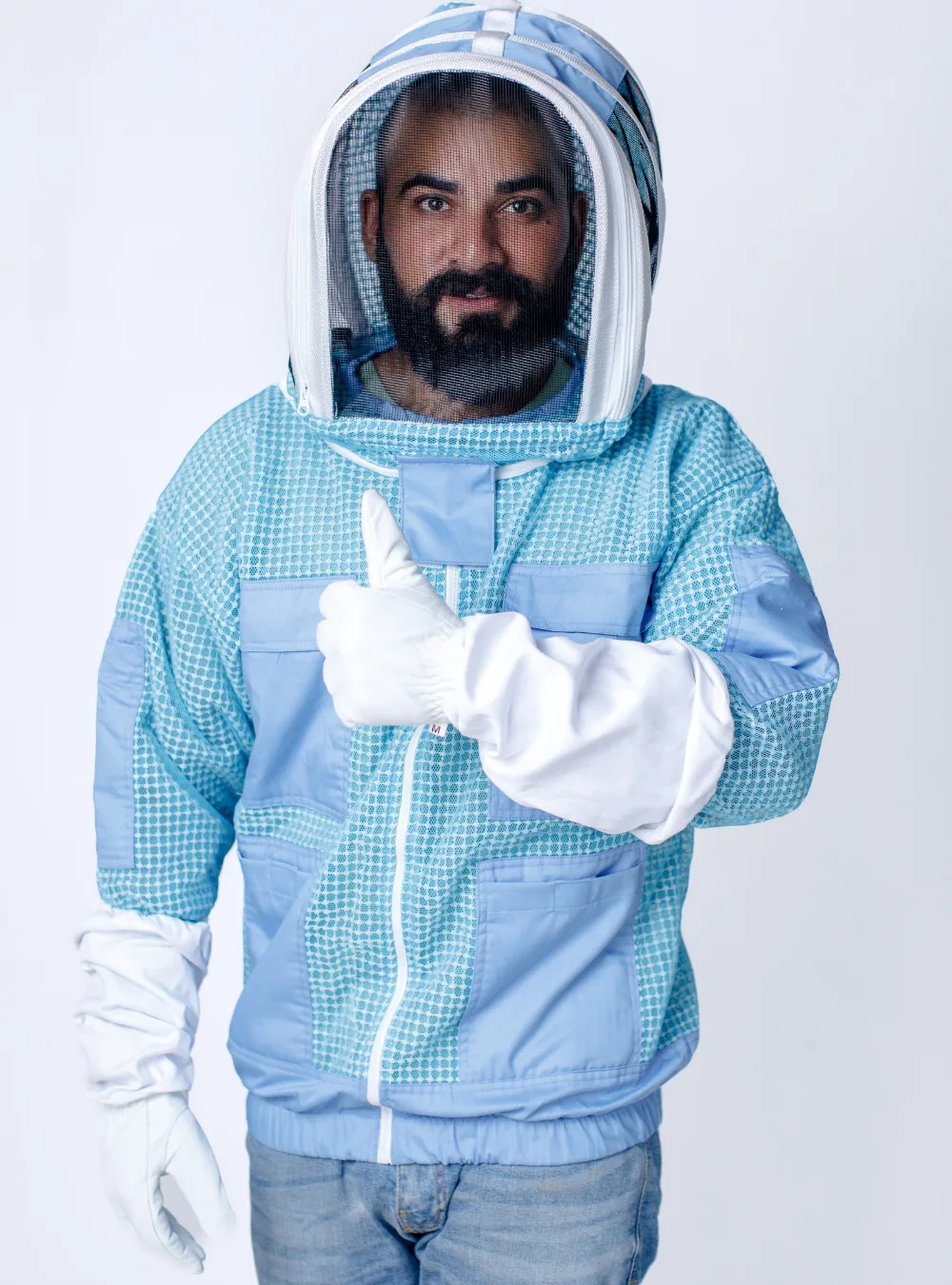
Most working beekeepers end up owning one of each and choosing by the month rather than by preference. If you only buy one, buy the ventilated bee suit: you can add layers underneath in winter, but you cannot take heat out of cotton in July.
What to check before you buy
Fit
Try it over the clothes you actually wear to the apiary. Raise both arms — if the waist rides up far enough to show skin, the body is cut too short for you. Then crouch. A suit that binds at the knee binds every time you lift a box.
The veil
Look at how the veil meets the collar. A veil that separates under load is the one failure that matters. The zip should run all the way down both sides, not stop at the shoulder.
The zip
Worth more attention than the fabric. A zip is what fails first and it is what you cannot repair in the field. Metal teeth outlast nylon by years.
Mesh spacing matters more than most buyers realise. Too open and the spacer collapses under a shoulder strap; too tight and it stops breathing. Anything between two and three millimetres works. For everything else about sizing, our guide to measuring for a custom fit walks through it with a tape measure.
Caring for a ventilated bee suit
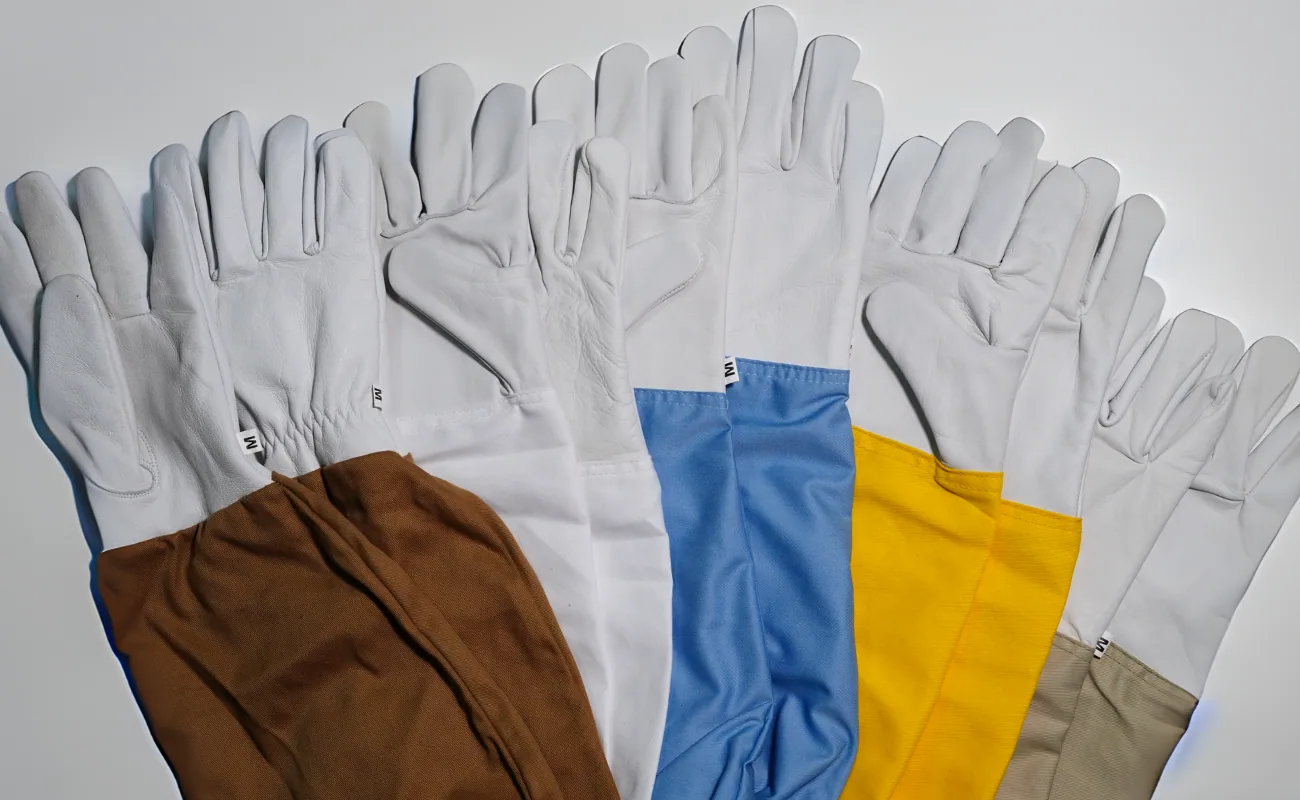
Wash cool and never wring the mesh. Propolis lifts with a cold soak; heat sets it permanently. In short, treat the suit as clothing rather than as equipment and it will outlast two cotton ones. Our washing and storage guide has the full routine.
Finally, hang it to dry away from direct sun, because ultraviolet light is what makes the spacer brittle. A suit stored in a dark cupboard between seasons is still serviceable in five years; one left on a hook in a sunny shed will not see three.
Common questions
- Is a ventilated bee suit warm enough for winter?
- On its own, no. The mesh is designed to move air, which is exactly what you do not want in January. Layer a fleece underneath and it works down to about five degrees; below that a cotton suit is more comfortable.
- Can bees sting through a ventilated bee suit?
- Not through the panelled areas. The spacer layer holds the outer mesh about a centimetre off the skin, which is further than a honeybee sting can reach. Stings get through at the seams, the cuffs and the veil join — which is why those are the parts worth inspecting before you buy.
- How do you wash a ventilated bee suit?
- Cold soak, gentle cycle, no fabric softener, and never wring the mesh. Propolis lifts in cold water and sets permanently in hot. Hang it to dry out of direct sunlight.
Written by Ayesha Karim.